Loading Data
Please wait a moment...
Update Cal.
2026.08
03
Mon
04
Tue
05
Wed
06
Thu
07
Fri
08
Sat
09
Sun
Update Calendar
2026.08
01
Sat
02
Sun
03
Mon
04
Tue
05
Wed
06
Thu
07
Fri
08
Sat
09
Sun
10
Mon
11
Tue
12
Wed
13
Thu
14
Fri

Loading Data
Please wait a moment...
Morning features and interviews. A morning story over a cup.
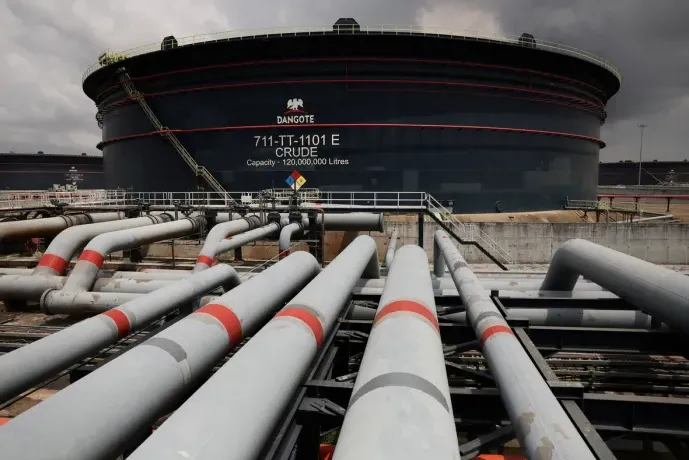
A Monday morning in March 2026. Mr. Park, a public servant working in Gangnam-gu, Seoul, left home an hour earlier than usual. With a license plate ending in ‘3,’ he had to take the subway to work due to the public sector five-day vehicle rotation system that went into effect that day. On his way home, he picked up a pack of instant noodles at a convenience store near his house. Looking at the price tag, it had gone up by 400 won compared to two months ago. “Ah, oil!” crossed his mind. The noodle packaging, the plastic bag holding it, the logistics truck delivering it… the end of that chain of thought points to one place: the Strait of Hormuz, the heart of the world’s energy artery.The World’s Energy Artery Is BlockedMaritime transport volume through the Strait of Hormuz — a critical chokepoint through which 20 million barrels per day, or about 20% of global oil consumption, passes — has plunged. The crisis, which began when Iran declared control of the strait in the aftermath of the U.S.-Iran war, is brutally demonstrating how immediate and all-encompassing a shock geopolitical tensions can deliver to the energy supply chain. From the moment the strait blockade was announced, crude oil prices have been steadily rising, and the resulting logistics bottleneck has strained the market. Crude oil prices instantly exceeded USD 100 per barrel. According to analysis by the Korea Ocean Business Corporation, cargo volume passing through the Strait of Hormuz has decreased by approximately 80% compared to normal levels, and freight rates for large crude oil carriers on the Middle East-China route have risen roughly 3.3-fold. What about taking alternative routes? When the Strait of Hormuz is closed, additional transport costs from alternative routes are estimated to surge by at least 50–80% compared to existing maritime freight rates. That cost will ultimately be passed on to consumers’ wallets.[Strait of Hormuz © gettyimages]Daily Life Changes: Rising Prices and Intensified Five-Day Vehicle RotationThe ways in which this crisis reaches South Korean consumers are denser and faster than one might think. What hits home first is the price display at the gas station. As diesel and gasoline prices surge, the logistics and delivery industries are taking a direct hit. Increases in courier fees and delivery charges are already a foregone conclusion. The airline industry is also seeing its operating costs rise due to higher jet fuel prices, while the shipping industry is suffering from further increases in tanker freight costs. Food prices at the table are also serious. Coffee, chocolate, meat, and seafood prices are expected to rise due to increased fuel and fertilizer costs. Off-season agricultural products and imported seafood are particularly expected to be heavily affected by higher transport costs.[Qatar LNG © QatarEnergy]To respond to the energy supply crisis related to the Middle East situation, the government intensified the five-day vehicle rotation system for the public sector starting March 25. As the prolonged Middle East situation increased energy supply uncertainties, the resource security crisis alert for crude oil was upgraded from the ‘Attention’ level to ‘Caution’ on the 18th. The business community is also quickly joining in. Samsung has implemented a 10-day vehicle rotation system across all domestic workplaces, and SK Group, while applying a 5-day rotation system, has decided to mandate lights-off during lunch breaks and after work hours, and to apply temperature standards of cooling at 26°C or above and heating at 18°C or below. The Korea Chamber of Commerce and Industry and the Federation of Korean Industries are also promoting daily energy-saving activities such as switching to video conferences, collective lights-off during lunch hours, and encouraging the use of public transportation. At a Cabinet meeting, President Lee Jae-myung urged public cooperation, noting that “there is no place in daily life where petrochemical products are not used, from delivery containers to medical tools.” [12 National Action Items for Energy Conservation by the Ministry of Climate, Energy and Environment]The IEA’s 10 Commandments, and Remote Work as a VariableThe International Energy Agency (IEA) has pointed out that demand suppression is essential, warning of prolonged oil supply disruptions due to the Middle East war. It presented ten recommendations including expanding remote work, using public transportation, implementing private car rotation by day of the week, and expanding carpooling. Among the ten commandments, remote work is drawing attention as the most powerful demand reduction measure. The IEA assessed that if workers in occupations capable of remote work did so for an additional three days a week, automobile oil consumption could be reduced by 2–6%, with potential reductions of around 20% on average for individual drivers.However, in South Korea, expanding remote work carries implications beyond simple energy conservation. While the five-day vehicle rotation system is a regulation that ‘restricts driving,’ remote work eliminates the commute itself, cutting fuel consumption at the source. At the same time, the changes it brings to daily life are far more complex. If the shift to remote work increases, lunchtime demand at downtown restaurants and cafés decreases, and public transit congestion eases, but office commercial districts such as bakeries and convenience stores take a hit. The so-called ‘energy transfer’ effect — in which commuting fuel decreases but household heating, cooling, and electricity use increases — must also be considered. The government has stated that it will examine whether recommending remote work would be possible if the crisis alert is raised to the ‘Alert’ level. CJ has already established a plan to adjust its entire work mode — including remote work, satellite offices, and flexible work — to reduce energy use if the alert level is raised. This is a point where the speed of crisis response policy diverges between companies and government.The Real Question Posed by the Oil CrisisEvery time an energy crisis strikes, South Korea repeats the cycle of demand reduction, expansion of strategic oil reserves, and conservation campaigns — and this very pattern reveals the structural vulnerability of its energy policy. Since most of the crude oil that South Korea imports from the Middle East passes through the Strait of Hormuz, a blockade of the strait is expected to deliver a fatal blow to the manufacturing supply chain. If the same prescription is repeated every time a crisis hits, it means we are still waiting for the same crisis. If expanding strategic reserves and diversifying supply sources are the immediate breakwater, then expanding renewable energy and restructuring industrial and lifestyle systems based on energy efficiency are the seawall that can absorb repeated shocks. When Hormuz is blocked, our daily lives are shaken along with it. For this shaking not to be repeated in the next crisis, we must accept today’s discomfort not as a ‘temporary sacrifice’ but as a ‘starting point for structural transformation.’ by Editor L

Light spilling onto bustling streets, fluorescent lamps shining through every building window, and the neon of signboards — the Earth is always, ceaselessly, filled with light.Then, on one particular day, when the appointed time arrives, the lights begin to go out one by one, and a moment arrives in which the tirelessly moving Earth finally catches its breath. This is Earth Hour — a moment of promise created together by people all around the world.One Hour Created Together by the Entire World‘Earth Hour’ is a global nature conservation campaign in which lights are turned off for one hour from 8:30 PM on the last Saturday of March each year to raise awareness of the severity of the climate crisis. Launched by the World Wide Fund for Nature (WWF), this campaign began in Sydney in 2007 and has grown into the world’s largest environmental campaign, with approximately 190 countries now participating. Landmarks in major cities around the world — the Eiffel Tower, the Sydney Opera House, the Great Wall of China, and others — also participate by turning off their lights at the same time, so around this time each year we often hear about it in the news. The goal of Earth Hour is not simply to save electricity. It has established itself as a symbolic practice that invites us to reflect on our everyday energy consumption and raise environmental awareness.[Sydney, Australia, taking part in Earth Hour 2019 © WWF]Amid the global movement to join Earth Hour, South Korea has also been consistently participating in the campaign. Seoul and various other local governments have joined by turning off the lights at public office buildings and major facilities. Gwangmyeong City will also participate in Earth Hour on the upcoming 28th from 8:30 PM to 9:30 PM. Domestic companies are also coming together. Lotte Property & Development has participated in Earth Hour for seven consecutive years since 2019, turning off the lights of the Seoul landmark Lotte World Tower. KakaoPay has also been participating in the campaign as part of its ESG management since 2023. In 2025, the participation of Kakao subsidiaries — KakaoPay Securities, KakaoPay Insurance, PayMint, and KP Insurance Service — added further significance.This year again, major domestic landmarks including Sungnyemun Gate, the National Assembly Building, Lotte World Tower & Mall, 63 Building, Banpo Bridge, and Gwangan Bridge, as well as public institutions such as Seoul Metropolitan Government, Sejong Center for the Performing Arts, and Seoul Arts Center, and various companies have announced their participation in the lights-out event.The Change Brought About by Just One HourOne might wonder, ‘What difference can a brief lights-out make?’ But the effect of Earth Hour is far from small. According to WWF Korea, during Earth Hour 2016, just one hour of lights-out at domestic public buildings was confirmed to have saved approximately 6,927,000 kWh of electricity and reduced about 3,000 tons of greenhouse gases. Moreover, the Ministry of Climate, Energy and Environment has stated that even if public institutions, apartment complexes, and major landmarks participated in just 10 minutes of lights-out, an estimated 41,189 kWh of electricity savings and 20.3 tons of greenhouse gas reduction could be expected. This is equivalent to the amount of carbon dioxide absorbed by 3,077 thirty-year-old pine trees in a year, and comparable to taking approximately 4,486 cars off the road during commuting hours. An action that seems brief has created a change greater than expected. [2026 Earth Hour Poster © WWF]Filling the Space Where Lights Went Out with Action for the PlanetFor Earth Hour 2026, WWF Korea has put forward the slogan ‘Resting for the Planet’s Sake.’ Emphasizing that the act of turning off the lights and resting is both personal rest and action for the planet, it has shone a light on the meaning of ‘a moment to pause.’ An event is being held through Instagram until March 30, with various WWF merchandise being offered through a drawing. Additionally, from March 21 to 29, a WWF Earth Hour campaign booth is being operated at Lotte World Mall, where the significance and importance of nature conservation are being promoted and various hands-on programs allowing citizens to participate directly are underway.Amid the still-unresolved climate crisis, we stand each year before the ‘choice to turn off the lights.’ It is fine if the action is not grand. Through the simple act of turning off a light switch for just one hour, we can all look in the same direction at the same time. In that moment, the city’s lights briefly disappear, but our will fills that space and shines again. by Editor L
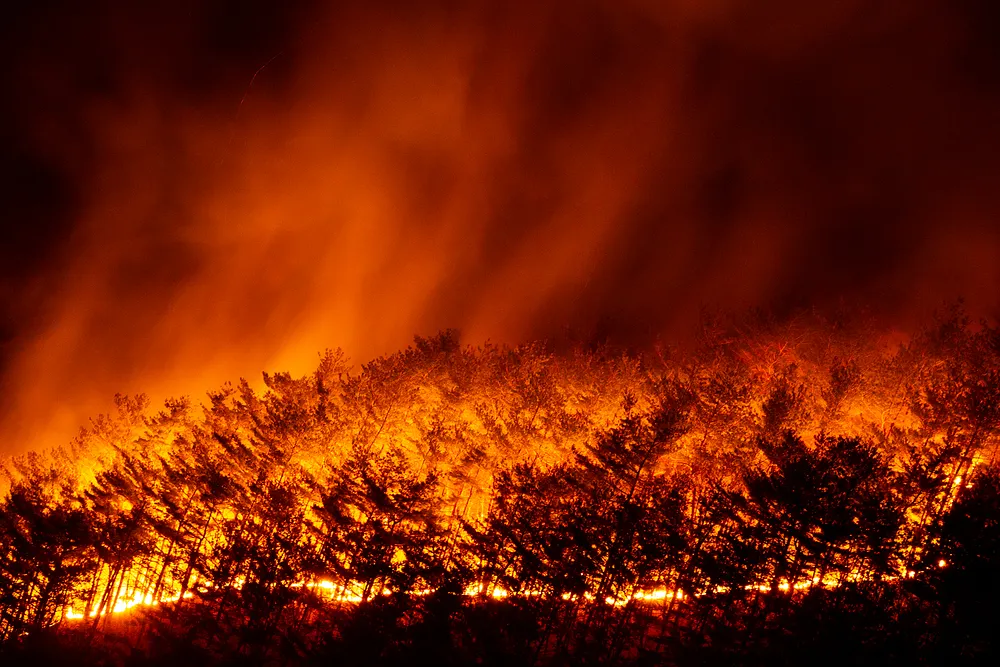
With the passing of Gyeongchip (Awakening of Insects), the air is turning to spring. News of spring festivals is coming in from all around, but the disaster authorities’ tension over wildfire risk is higher than ever. Statistics from the past 10 years show that approximately 55.5% of all wildfires occur between March and May, with March alone accounting for the highest share at around 25.4%. The scale of wildfire damage is also gradually increasing, with the proportion of large-scale wildfires exceeding 100 ha (approximately 300,000 pyeong) on the rise. What warning are spring wildfires sending us? Why Do Wildfires Intensify in Spring?On March 21, 2025, flames that started near Jirisan National Park in Sancheong-gun, Gyeongsangnam-do spread terrifyingly. The wildfire, which lasted over ten days, reduced 260 ha of forest in Korea’s first national park, Jirisan — an area equivalent to about 360 football pitches — to ashes. Four people lost their lives in the firefighting effort, and 57 structures including homes and temples were damaged. Indirect damage also occurred as smoke spread widely, sharply increasing fine dust concentrations in surrounding areas.Along with wildfire damage, the region suffered another disaster. Just months after the forest was damaged, in July 2025, record-breaking torrential rains triggered successive landslides and flooding. The mountain ridges that had lost their forests to the flames could not hold the rainwater, and the soil simply washed away. The large-scale wildfire that occurred last March was an event that went beyond a mere regional disaster, showing just how powerless humans can be in the face of nature.[Passenger car destroyed by the Sancheong-gun wildfire in Gyeongnam © News1]According to Korea Forest Service statistics, among the causes of domestic wildfires, ‘accidental fires by mountain visitors’ — where hikers, grave visitors, and others who enter the mountains accidentally start fires — account for the highest proportion at about 30%. The remaining causes, such as waste incineration and the burning of rice paddy and field edges, also mostly originate from human activities. Particularly in spring, fallen leaves accumulated over the winter remain in a dry state, and with farming activities ahead of the agricultural season combining with increased numbers of hikers, the wildfire risk grows even greater. Three factors — weather, fuel, and topography — determine how a wildfire that has started will spread. Among these, the greatest factor intensifying spring wildfires is ‘weather conditions.’ In spring, the Korean Peninsula frequently experiences a pressure pattern in which a high-pressure system sits to the south and a low-pressure system to the north. The westerly winds formed between them become even hotter and drier as they cross the Baekdudaegan mountain range. When dry air and strong winds meet, even a small spark can spread into a massive wildfire in an instant.‘Climate Abnormalities’ Are the Main Cause of Recent WildfiresWhile the direct causes of wildfires mostly begin with human carelessness, the scale and frequency of recent large-scale wildfires have reached a level that is difficult to explain simply as human error. The massive Australian wildfires known as ‘Black Summer’ continued from the fall of 2019 through the spring of 2020, leaving enormous damage. Police in New South Wales, Australia, took legal action against a total of 183 people, including 53 who violated fire prevention provisions and 47 who discarded cigarette butts or matches. However, according to BBC reporting, fires caused by arson accounted for only about 1% of the total. The main cause was spontaneous ignition due to extreme drought. At the time, Australia was experiencing its worst prolonged drought, recording its lowest precipitation since 1965, with temperatures exceeding 40°C in some regions. Wildfires are now disasters directly linked to climate change, going beyond the dimension of forest management and prevention. Although wildfire damage continues to occur, we are still failing to address the root cause.Post-Wildfire Forest Restoration Must Consider Ecosystem Structure and DiversityWildfires are not a problem that ends with extinguishment. Restoring the damaged forest remains an important task. Since the massive East Coast wildfire of 2000, South Korea has actively utilized artificial reforestation in its forest restoration process. Artificial reforestation is a method in which burned mountain areas are cleared, and fast-growing saplings such as pine trees are planted to restore the forest. However, debate over the effectiveness of this restoration method has continued in recent years.The mountain area of Okgok-myeon, Gangneung-si, Gangwon-do, which suffered approximately 1,033 ha of damage from a 2019 wildfire, has been used as a case study site to compare artificial reforestation and natural restoration methods. When the site was surveyed six years later, in the natural restoration area, oaks had grown to a height of 4–5 meters and the forest had recovered quickly, whereas in the artificial reforestation area, planted trees had either died or showed stunted growth.[Artificial Reforestation vs. Natural Regeneration © KBS Window Episode 444 Green Cartel]The environmental group Green Korea United also confirmed that natural vegetation recovery was actively underway in its survey of areas damaged by the 2025 Gyeongbuk wildfire. In this way, forest restoration is a long-term task that must take into account ecosystem structure and diversity. Nevertheless, in some areas, pine-centered reforestation continues for economic reasons such as pine mushroom production. We need to reflect on whether we are pursuing short-term gains while overlooking the recovery of the forest.Wildfires are no longer a problem of distant regions. The news of large-scale wildfires in recent years may be the starting point of the disasters that the climate crisis will bring about. Such disasters can reach beyond the stories of unfamiliar strangers in the Southern Hemisphere to come near our neighbors, our families, and ourselves.Whether March, when spring begins, remains a season of anticipation or repeats as a memory of disaster has yet to be decided. What is clear is that wildfires make unmistakably plain the fact that a changing natural environment cannot be overcome by human strength alone. The landscape of the spring we will greet will be determined by the way we treat our forests and our response to the climate crisis.[Related Articles] The Climate Crisis: Fanning the Flames of a Burning HouseA New Type of Disaster Created by Climate Change: The Threat of ‘Flash Droughts’

When March arrives, the earth awakens. The frozen soil thaws, and seeds prepare to sprout. March 11 ‘Soil Day’ is a statutory commemorative day established in 2015 with the purpose of widely promoting the preciousness of soil and protecting healthy soil. The date itself carries meaning: ‘3’ represents the three elements of heaven (天), earth (地), and humanity (人), as well as the three agricultures of farming, rural areas, and farmers; ‘11’ is derived from the Chinese character 土 (to, meaning soil), which separates into 十 (십, ten) and 一 (일, one), thus March 11 was designated as Soil Day. Yet every year when this day returns, a question arises: is this land that we tread upon every day truly okay right now?Soil ≠ Just the Ground (X), It Is Something to Manage (O)Soil is not just the ground. It is not merely an object of cultivation but the foundation of life that produces food, stores water, and absorbs carbon to respond to climate change. Though not easily visible, a healthy handful of soil is home to billions of microorganisms that decompose organic matter and supply nutrients to plants. When soil becomes contaminated, this cycle breaks, and the impact ultimately reaches our tables. According to a survey by the Food and Agriculture Organization of the United Nations (FAO), 25% of the world’s soil is already in a severely degraded state. South Korea is no exception. Domestically, forest soil is quietly undergoing acidification. An analysis of agricultural land by the Jeju Agricultural Research and Extension Services found that the average soil acidity (pH — one of the important conditions for crop cultivation, as the availability of nutrients in soil varies depending on soil acidity) over the past 10 years (2014–2023) was 5.8, an improvement from the previous 10-year average of 5.4 (2004–2013), but orchards and greenhouse cultivation sites still averaged 5.6, failing to reach the optimal range (6–7). As long as conventional farming with continuous use of chemical fertilizers continues, the problem of agricultural soil acidification will not be easily resolved. Sustained nutrient and soil management is needed to improve soil acidification.[Soil Contamination Status Graph © Ministry of Climate and Environment Soil Monitoring Network Survey Results]Contamination in the Heart of the City: Yongsan Park Needing Site RemediationNot only mountains and fields but urban soil is also becoming contaminated. The site where the Yongsan Children’s Garden now stands was where U.S. Forces Korea had been stationed for decades, and issues of oil spills and heavy metal contamination have been consistently raised. Toxic substances have indeed been detected within the garden in areas such as the General’s Quarters complex, baseball field, and sports field. According to a 2023 Korea Environment Corporation report, soil contaminants were also confirmed in approximately 5,000 m² of land surrounding six U.S. military bases including Camp Red Cloud, Gwangju Airfield, and Warrior Base. In effect, land whose fundamental safety concerns remain unresolved is now open to citizens. Environmental groups are demanding that thorough site remediation work be carried out first for the returned U.S. military bases. Their position is that the process must go through preparatory stages including permit filings, facility demolition, and waste disposal, followed by remediation work (excavation and backfilling of contaminated soil, soil purification, groundwater purification), and finally post-verification procedures.[Yongsan Children’s Garden Bird’s-Eye View © Ministry of Land, Infrastructure and Transport]Contamination Beyond Concern: The Results of Our Soil Health CheckupThe government assesses the state of soil nationwide each year through two methods. One is the ‘Soil Monitoring Network,’ which surveys soil contamination levels at 1,000 fixed points across the country. The other is the ‘Soil Contamination Survey,’ which selects and intensively investigates areas with suspected soil contamination risk, such as near factories, industrial zones, and waste landfill sites. If the monitoring network is a ‘health checkup’ that regularly inspects general land, the contamination survey is akin to a ‘detailed examination’ that scrutinizes places already suspected of contamination.According to the 2023 Soil Monitoring Network results, when 23 items including pH were analyzed at 1,000 points nationwide, all items were found to be within the soil contamination concern standards. However, in the Soil Contamination Survey, 48 out of 2,457 points nationwide (2.0%) exceeded the soil contamination concern standards. The figure of 2% may seem small, but it must be taken into account that the survey targets were areas already judged to have high contamination potential — factories, industrial complexes, abandoned mines, waste landfill sites, and the like. In other words, roughly 50 locations among high-risk areas exceeded the soil contamination concern standards.The types of contaminants are also diverse. Twenty-three substances are designated and managed as soil contaminants, including cadmium, copper, arsenic, heavy metals, and benzene, phenols, and benzo compounds. Soil contaminants do not end as a mere ‘underground problem,’ as they can affect the growth of plants and animals as well as human health, requiring ongoing management.For Soil Day Not to End as a Passing ‘Commemorative Day’Soil contamination is invisible. It has no smell and does not cause immediate pain. That is why it has been neglected for so long, and by the time the problem surfaces, decades of contamination have already accumulated. On March 11, Soil Day, let us think about what we can do: reduce the use of chemical fertilizers and pesticides and choose organic produce. And take an interest in the status of soil contamination in our own region and raise our voices. Healthy soil does not protect itself. It is only protected when we pay attention. by Editor L

The Strait of Hormuz, called the ‘world’s energy artery,’ has been blockaded. The news that the Iranian Revolutionary Guard Corps (IRGC), which came under airstrikes from the United States and Israel, blockaded the Strait of Hormuz to block vessel passage reached us even before the March 1st Independence Movement Day holiday was over. The Strait of Hormuz is not merely a logistics passage. With approximately one-fifth of the world’s oil supply passing through it, it is a critical energy transport chokepoint. What changes will the blockade of the Strait of Hormuz — a wake-up call to our dependence on fossil fuels — bring across the world?Energy Supply Shaken by a Single StraitThe economic research firm Capital Economics projected that due to the blockade of the Strait of Hormuz, international oil prices would rise to USD 100 per barrel and the global average inflation rate would increase by 0.6–0.7 percentage points. Global manufacturing companies that have declared RE100 also saw the reality surface that they have been heavily dependent on fossil fuels at every stage of raw material and component procurement, irrespective of their renewable energy transition roadmaps. The shipping and aviation industries, which had been putting their all into reducing carbon emissions ahead of the implementation of the Carbon Border Adjustment Mechanism (CBAM), faced the dual dilemma of surging oil prices and increasing carbon emissions. Domestic carrier Korean Air decided to fully suspend operations on the Incheon–Dubai route through March 8. The Strait of Hormuz is the very energy foundation of the global manufacturing supply chain, with most of the crude oil passing through it heading to Asia.[The Strait of Hormuz (red circle location) © gettyimages] One of the routes mentioned as an alternative to the Strait of Hormuz — the Saudi Arabia–UAE pipeline — has a transport capacity of only one-seventh of the daily crude oil cargo volume. Thus, the use of the alternative route around Africa’s Cape of Good Hope is expected to become unavoidable. If many vessels choose to detour around the Cape of Good Hope, transport distances will increase by thousands of kilometers, and vessel fuel consumption and carbon emissions will also surge substantially. In contrast to the trend in which the international community is making carbon emissions management mandatory for companies through ISSB disclosure standards and the TCFD framework, the risk that energy supply itself could be cut off has been placed in a blind spot.The One Line ESG Reports Missed: Energy Supply Chain UncertaintySouth Korea stands at the front line of this crisis. It imports 70.7% of its crude oil and 20.4% of its LNG (liquefied natural gas) from the Middle East, and most of this cargo volume passes through the Strait of Hormuz. The Korea International Trade Association (KITA) foresees a chain of shocks: a 10% rise in oil prices leading to a 0.39% decrease in exports, a 2.68% increase in imports, and a 0.38% rise in corporate production costs. RE100 member companies such as Samsung Electronics and Hyundai Motor rushed to transition their own workplaces to renewable energy, but the energy supply chain uncertainty of their partner companies was beyond their control. Amid the trend of global ESG rating agencies strengthening the management of supply chain Scope 3 emissions, this incident has become one that confirmed in numbers the consequences that occur when energy supply is delayed.[Oil tankers passing through the Strait of Hormuz on December 21, 2018 (local time) © Reuters] This incident, in which the Strait of Hormuz was blockaded, has laid bare the blind spots of ESG management head-on. While the ESG reports submitted by companies include climate scenario analysis, scenarios concerning energy supply chain uncertainty due to geopolitical risks are largely absent. Experts point out that the geopolitical risk of physical disruption to energy supply routes must be codified within the physical risk items of the ISSB S2 standard. A Vice Minister of Trade, Industry and Energy stated, “Given that a significant proportion of the oil and gas we import passes through the Strait of Hormuz, there is a need to closely examine the possibility of expanded oil price and maritime transport risks.”Paradoxically, this crisis has also become an incident that proves the necessity of renewable energy transition and the expansion of energy import routes. This crisis has created new industrial opportunities for energy transition, expanded renewable energy investment, and supply chain restructuring. As long as the vulnerability of the energy supply structure — in which crude oil prices spike every time the Strait of Hormuz is blockaded — is repeated, RE100 and carbon neutrality declarations can only remain as half-baked ESG. Now is precisely the time for companies and governments to treat the geopolitical risks of the energy supply chain as a core variable of ESG strategy. by Editor L
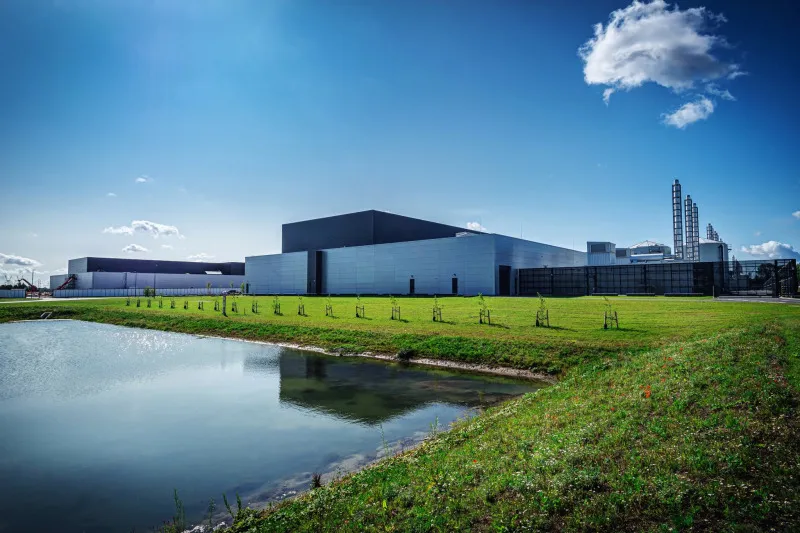
Now that the era of generative AI has opened, the ‘data center industry’ that processes and connects information is also growing rapidly. The Korea Data Center Association projects that the market size of KRW 6 trillion in 2024 will grow to KRW 10 trillion by 2028.Meanwhile, data centers — facilities that house all the infrastructure needed to provide IT services such as servers, networks, and storage — consume enormous amounts of electricity and generate heat. Movements and research toward utilizing ‘waste heat,’ the thermal energy that goes unused in that process, have been gradually gaining momentum since the early 2020s. Let us examine the principles of data center waste heat utilization and the current state of waste heat utilization at domestic and international data centers.How Can Waste Heat Be Utilized?To understand methods of utilizing data center waste heat, we must first examine data center cooling methods. First, ‘air cooling’ is a method that introduces cool air inside the server to dissipate heat. While it has the advantage of low installation costs, there is criticism that it faces technical limitations given the increasing scale of data centers today. ‘Liquid cooling’ uses liquids with high specific heat capacity to cool, attaching pipes through which water flows to the circuit to dissipate heat. It is expensive but excels in heat control capability. Finally, ‘immersion cooling’ involves submerging the entire server in a special cooling liquid, showing the highest efficiency but costing more than double the initial expense of air cooling.The heat generated by data centers is low-temperature heat at the 30–45°C level, which cannot produce electricity. However, research continues because if the temperature is raised by combining heat pump technology with liquid cooling methods, it can be utilized as residential hot water or heating water. In particular, AI data centers operate under 24-hour overload conditions, so their heat density is over ten times higher than conventional data centers. Analyses suggest that if large volumes of hot water can be secured by introducing the above methods, this could become a high-efficiency energy source.[Meta’s Odense data center in Denmark, providing district heating to approximately 100,000 nearby households through waste heat © META]For District Heating and Swimming Pools — Current Data Center Waste Heat UtilizationOverseas, data center waste heat has long been utilized for district heating, with Finland being a representative example. Finland had well-established infrastructure for sending heating to districts from early on and had advanced heat recovery technology, making the introduction of waste heat technology relatively straightforward. Against this backdrop, the data center of telecommunications company Telia, located near the capital Helsinki, supplied thermal energy to approximately 7,000 homes and offices within one year of beginning waste heat utilization in 2024. Additionally, Google announced plans to invest €1 billion to expand its data center in Hamina, Finland. With thermal energy utilizing waste heat expected to meet 80% of the local heating network’s demand, Google stated that it plans to provide heating free of charge to local homes, schools, and public service buildings. The UK startup ‘Deep Green’ has drawn attention as a case utilizing the immersion cooling method described above. By submerging data centers in oil with high heat absorption rates and installing them beneath swimming pools, the company maintained a constant water temperature, allowing the pool to save £20,000 (approximately KRW 39 million) in annual gas costs.[Google’s data center in Hamina, Finland © blog.google]Overseas, this is accompanied not only by such cases but also by policy regulation and support. In 2023, the EU specified the obligation to evaluate and review the utilization and recycling of waste heat in its Energy Efficiency Directive. Germany initiated an Energy Efficiency Act containing energy consumption reduction targets, requiring new data centers to establish criteria for utilizing at least 10–20% of waste heat, and setting phased waste heat reuse standards with fines for non-compliance. France, Denmark, and others have also made the establishment of systems for securing waste heat a mandatory condition for building permits and introduced related preferential tax treatment. Domestic Data Center Waste Heat Utilization: Still Seeking MethodsAccording to the Korea Energy Economics Institute, the potential amount of waste heat from domestic private data centers is estimated to reach 1,539 thousand Gcal per year in 2023 (roughly equivalent to the heating energy needed by one 32-pyeong apartment unit for one month). This is a significant figure corresponding to 5.8% of the 2019 district heating and cooling supply. Yet domestically, data center waste heat goes unused and is discarded. A key reason cited is that waste heat utilization energy is not classified as new and renewable energy, excluding it from various support systems and slowing the development of related industries. Another limitation is that domestic data centers predominantly use air cooling instead of liquid cooling or immersion cooling, which are more conducive to waste heat utilization. Additionally, utilizing data center waste heat for district heating requires data centers to be located near residential areas, but building data centers in residential zones is challenging due to concerns over electromagnetic waves, noise, and heat island effects. Statistics showing that roughly one out of every two data centers that have received construction permits are delayed can easily be found.However, signs of change are emerging. In 2024, the Korea District Heating Corporation, IGIS Asset Management, and the Ministry of Trade, Industry and Energy signed a business agreement on ‘Data Center Energy Utilization Efficiency and Collective Energy Low-Carbon Supply System Establishment.’ Through this, the plan is to expand the unused heat utilization rate from 13% to 20% by 2030. Chuncheon City in Gangwon-do and the Korea Water Resources Corporation are creating a Gangwon hydrothermal energy convergence cluster that cools data centers using 7°C deep water from Soyang Dam. Through this approach, not only is 75% energy savings expected, but the waste heat is also planned to be used as heating energy for nearby smart farms and housing.[Naver Data Center ‘Gak Chuncheon’ © NAVER]Corporate-level efforts are also continuing. Naver has long been operating an eco-friendly data center called ‘Gak Chuncheon.’ The data center is cooled by the natural wind of Chuncheon, which is 2–3°C cooler than the capital region year-round, and waste heat is separately collected in a waste heat recovery unit within the server room. This warms antifreeze through special pipes installed beneath the road, melting snow on the road so that large cargo vehicles do not slip. It even uses waste heat to cultivate greenhouses. In 2025, SK Innovation and LG Electronics signed an MOU to jointly develop an AI data center energy-cooling integrated solution. SK Innovation will handle power supply and operational optimization, while LG Electronics will advance air and liquid cooling solution technologies to lower AI data center temperatures, jointly promoting a business of recovering and utilizing waste heat.In South Korea, movements to utilize data center waste heat are gradually appearing as described, and now is the time when various institutional support, research, and active development are needed. As the location of AI data centers and the environmental issues of data centers are being actively discussed, let us imagine an even more eco-friendly future for data centers. by Editor L

Zebras, always appearing as extras in African savanna documentaries, are now rapidly disappearing for certain species — yet they remain familiar to us as the symbol of sub-Saharan Africa thanks to their black-and-white stripes. January 31, ‘International Zebra Day,’ was established in 2014 to raise awareness of the importance of protecting zebras and their habitats and to encourage action for ecosystem conservation. Let us learn about International Zebra Day, which opens the first of the nearly 100 international commemorative days for the protection of endangered flora and fauna throughout the year. Three Species of Zebras Facing Different Survival RealitiesZebras are broadly divided into three species according to their coat pattern, stripe arrangement, and habitat: the Plains Zebra found across eastern and southern Africa, the Mountain Zebra inhabiting only the arid highlands of Namibia and South Africa, and the Grevy’s Zebra seen in the forests of Kenya and Ethiopia. Among these, the Plains Zebra is known to have the largest population at over 250,000, yet it has declined by 25% since 1992 and is currently classified as ‘Near Threatened’ on the IUCN Red List. The Grevy’s Zebra, which inhabits only Kenya and Ethiopia, numbers fewer than 3,100 individuals, and its extinction has already been declared in Somalia and Sudan — a staggering 80% decline since the 1970s.[Grevy’s Zebra Ⓟ Wikipedia]What is at least hopeful is the news that the Mountain Zebra, especially the Cape Mountain Zebra, which had nearly gone extinct in the 1930s, increased to approximately 5,693 individuals as of 2023 thanks to the devoted efforts of conservation organizations. The Mountain Zebra National Park, established in 1937, played a key role in saving the Cape Mountain Zebra from the threat of extinction.[Cape Mountain Zebra Ⓟ AfricanBudgetSafaris]Why Ecosystem Keystone Zebras Are DisappearingThe causes of the zebra’s decline are similar to those of other wild animals: extreme drought due to climate change, habitat loss from the expansion of agriculture and grazing lands, and poaching for meat and hides. Particularly as agriculture has spread and irrigation facilities have increased, the water volume of Kenya’s Ewaso Ng’iro River has sharply decreased by over 90%, causing chronic water shortages for the animals of the African savanna.The zebra’s trademark stripes are not simply for looks. They are the product of evolution for survival. When zebras gather in herds, their stripes create dizzying light reflections under intense sunlight, causing visual confusion for predators and ultimately making it difficult for them to pinpoint their prey precisely. The stripes are also known to have the effect of repelling insects that cling to their backs. Yet to humans, those stripes were considered a requirement for fine leather, and became one of the causes placing zebras at risk of extinction. The reason zebras must not disappear is not simply because they are ‘cute.’ Zebras are a keystone species that maintains the balance of the ecosystem. By primarily consuming tall, tough grasses, they make it easier for smaller animals to access short, nutrient-rich grasses. While plant diversity is promoted in this way, the seeds spread through zebra droppings further enrich the plant species of the habitat. Moreover, as a primary food source for predators, zebras play an important role in the food chain, so if they disappear, the entire grassland ecosystem could collapse.[Zebras of the savanna Ⓟ getty images]There are nearly 100 international commemorative days for the protection of endangered flora and fauna throughout the year, yet the environment around us is becoming an increasingly unstable refuge for life, including humans. There are countless ways we can contribute to animal and plant protection, from efforts to conserve habitats to supporting conservation organizations. On January 31, International Zebra Day, why not broaden our interest? Small actions such as sharing posts about zebra protection on social media or donating to wildlife conservation organizations can together protect the zebra. by Editor L

A scene in which cup prices are separately charged when ordering a drink at a café and straws are provided only upon request may not be far from becoming everyday life. Last December, the Ministry of Climate, Energy and Environment officially reported its 2026 key work plan and presented ten major tasks for implementing the 2035 NDC (Nationally Determined Contribution). Among these, the Plastic-Free Comprehensive Plan directly targets our everyday consumption patterns, including a system reform that separately charges for disposable cups and restrictions on straw use.Why has the government introduced the plastic-free policy now?A Necessity, Not a Choice: The Plastic-Free PolicyThe backdrop to the government’s strong push for the plastic-free policy is the global environment. The European Union (EU) is already implementing a directive that completely bans single-use plastics, and the United Nations (UN) is also discussing global-level regulatory measures through the ‘International Plastics Treaty.’ As plastic use is directly tied to climate and environmental issues, our government is likewise pursuing the plastic-free policy in step with the situation in which individual countries and international organizations are taking action.[Plastic-Free Comprehensive Plan Public Debate © Ministry of Climate, Energy and Environment]The problem identified by the Korean government is the ‘excessive use’ of plastics. Domestic waste plastic emissions were approximately 7.71 million tons in 2023, and if the current trend continues, they are projected to exceed 10 million tons by 2030. It is the government’s judgment that, even if plastic is an essential material in our lives, the consumption of disposables and packaging materials has exacerbated the problems of waste increase and environmental persistence.Accordingly, the government has presented ‘source reduction,’ which reduces plastic from the usage stage, as the core of its policy. Alongside this, it plans to lower waste plastic generation to the 7 million ton level by 2030 by concurrently expanding the use of recycled raw materials. In this way, the plastic-free policy has arrived at cafés — spaces closely connected to daily life. The ‘separate cup billing system,’ which separately charges for disposable cups, and the restriction on providing straws in stores have already become topics of discussion. The government’s calculation is that by making consumers feel the cost and inconvenience at the consumption stage, it will reduce the unconsciously repeated use of disposables.Between Environment and Reality: The Challenges of the Plastic-Free PolicyThese policies go beyond simple regulation to herald a change in café culture as a whole. The ordering method in which disposable cups were the default gradually shifts to a structure premised on the use of reusable cups or personal cups, and straws likewise become an option rather than an ‘item provided as a matter of course.’ For example, when purchasing a drink priced at KRW 5,000, an additional KRW 100–200 for the use of a disposable cup would be separately added and indicated together on the receipt.In this process, consumers become directly aware of the cost of cup use, and the responsibility for the choice regarding the use of disposables also returns to the individual. At the same time, as fines may be imposed for providing disposable cups free of charge under the revised law, cafés also face a situation in which they must contemplate changes to their operating methods premised on compliance with the system.[Disposable Cup © Unsplash]Meanwhile, voices of concern are also emerging from the field. Alongside the naturally ensuing complaints of everyday inconvenience, it is also pointed out that for small business owners with small-scale establishments, the process of implementing the system itself could act as an operational burden. In particular, the issue is also raised that confusion is unavoidable in actual practice, as there is no clear standard on how beverage prices and disposable cup prices should be separately determined and communicated.The plastic-free policy has been put to the test between the unavoidable choice for the environment and the changes that daily life and business sites must bear. To reduce confusion, phased application and clear standards must be established together so that consumers and the industry can adapt to the change.Moreover, there is a need to actively utilize incentives such as discounts when bringing a tumbler, so that the transition for the environment is perceived as a choice rather than a burden. When citizens naturally join in for the environment and feel that responsibility, the plastic-free policy will become a substantive opportunity to move toward a sustainable future. by Editor L