Loading Data
Please wait a moment...
Update Cal.
2026.08
03
Mon
04
Tue
05
Wed
06
Thu
07
Fri
08
Sat
09
Sun
Update Calendar
2026.08
01
Sat
02
Sun
03
Mon
04
Tue
05
Wed
06
Thu
07
Fri
08
Sat
09
Sun
10
Mon
11
Tue
12
Wed
13
Thu
14
Fri

Loading Data
Please wait a moment...
Morning features and interviews. A morning story over a cup.

Launch of "Pulmuone Gigusikdan," a sustainable-food specialty brand, to foster a future growth engineIntroduction of a professional-management system for management transparencyPulmuone's Sustainable Management 1. GigusikdanPulmuone first began at "Pulmuone Farm," established in 1955 by the late director Won Kyung-sun. At the time, Pulmuone Farm played the role of a community living together with those who had nowhere to go, including war orphans, and in 1976 it established "Jeongnonghoe," Korea's first organic-farmer organization, working to spread organic agriculture. Later, in 1981, "Pulmuone Farm Pollution-Free Produce Direct Store," Korea's first organic-produce shop selling the organic crops produced by Jeongnonghoe, opened its doors, and this small vegetable shop is the beginning of "Pulmuone," now a beloved and respected company in Korea that also strives for the globalization of right food.[An image of Gigusikdan products launched in 2022 © Pulmuone]Pulmuone practices ESG management based on realizing LOHAS (Lifestyles of Health and Sustainability — activities for the sustainability of oneself and the Earth) values through plant-forward orientation, animal welfare, healthy experience, eco-friendly care, and more. In 2021, Pulmuone made the vegan-food business a new growth engine, declared itself a plant-forward leading company in 2021, and, under the keynote "We make right food for the healthy tomorrow of people and the Earth," launched its first sustainable-food brand, "Gigusikdan." It consists of two sub-brands — "Plant-Based Gigusikdan," which uses only plant-based ingredients, and "Animal-Welfare Gigusikdan," which uses animal-welfare ingredients as the main ingredients — and Plant-Based Gigusikdan unveiled a variety of products divided into the categories of animal-substitute foods made only with plant-based ingredients, plant-based protein-enriched foods, and plant-based convenience foods.To target a broad consumer base — from full vegans who eat a vegan diet, to flexitarians who try partial vegetarianism, to the MZ generation that pursues a meaningful diet — Pulmuone focused on implementing not only nutrition but also taste and texture, and it expanded its meat-substitute lineup centered on menus reflecting Korean food culture and eating habits, so that Koreans can enjoy plant-based meat substitutes in a familiar and delicious way. Gigusikdan is also backed by economic effects, posting cumulative sales of 43 billion won just one year after launch, and as Pulmuone reorganizes along with its strategy of fostering vegan food as a food of the future, it is also seeing an effect of improving profitability across the group.Along with plant-forward, Pulmuone selected "Eco-Caring" as one of its four core strategies, firming up its will and resolve to reduce greenhouse gases. To realize this, it set a plan to reduce company-wide greenhouse-gas emissions by 4% each year through 2025, for a total reduction of more than 12%. It plans to establish and implement greenhouse-gas-reduction measures on various fronts — actively pushing plant-based product development, raising the share of new and renewable energy, managing manufacturing-process energy on a unit basis, and promoting the resource circulation of plant residues.Pulmuone's Sustainable Management 2. Professional ManagementPulmuone is one of the companies that, across Korea's industry as a whole, stepped into ESG management activities early. Since 2017, it has responded to ESG risks by forming an "ESG Committee" and inspecting sustainable management strategy. Currently it operates an ESG Committee system composed of one internal director and four external directors within the board, and Pulmuone attempted a major shift in its management style from 2018 for management transparency. Ending the owner management that had continued for 33 years since its founding in 1984 and introducing a professional-management system, current CEO Lee Hyo-yul, "Pulmuone's employee No. 1," has taken charge of management.The following year, in 2019, it completed the purchase of subsidiary stakes and more, completing its governance structure as it is now, and Pulmuone became the only listed company in the group. Pulmuone now entrusts all business to subsidiaries and operates in an "operating holding company" manner in which the holding company makes all important decisions — a structure in which Pulmuone, as a pure holding company, oversees management, brand, R&D, and more, and the subsidiaries carry out the business. A governance structure in which the holding company holds 100% of the subsidiaries' stakes, as at Pulmuone, is a governance structure commonly seen at global companies; by establishing a holding-company system meeting global standards, it laid the groundwork for advancing its governance.[Pulmuone's Open Shareholders' Meeting held in 2019 © Pulmuone]Since 2008, Pulmuone has held its shareholders' meeting under the name "Open Shareholders' Meeting" for 14 years running. Held once a year, it is a venue for reporting the year's performance to shareholders, and unlike an ordinary company's, Pulmuone's is conducted based on shareholders' participation and communication. This is possible because Pulmuone, seeking to break away from the existing uniform shareholders'-meeting culture, holds an "Open Shareholders' Meeting" in a discussion-forum format, benchmarking Warren Buffett's Berkshire Hathaway shareholders' meeting; through the shareholders' meeting, Pulmuone sought to create a venue for communication in which shareholders become the owners.Pulmuone is also working on employee education for digital innovation, building the digital learning platform "Digital Academy" this past March for its executives and staff. In addition, by establishing "Pulmuone Together," a subsidiary-type standard workplace for people with disabilities that helps them become self-reliant, within the Yangji Logistics Center, it provides opportunities for individuals with disabilities to demonstrate their abilities and helps them achieve economic self-reliance. We hope that the sincere ESG management of Pulmuone — which leads the front of Korea's food industry and has established itself as the No. 1 most respected company in Korea — will continue.by Editor N
In Korea, the "G" (Governance) in ESG is translated and used as jibae gujo, meaning "control structure." But if you translate jibae gujo back into English, it is not "governance." Jibae gujo literally refers to a company's "decision-making and profit-distribution structure" itself. The internationally accepted meaning of governance is closer to the conduct and processes of the people who lead a company. ESG.ONL's "In Search of Governance" series introduces cases of companies at home and abroad with good governance, in the interest of a more accurate understanding and use of the term.Patagonia, Whose Shareholder Changed on Its 50th AnniversaryThe outdoor brand Patagonia is unquestionably a frontrunner in the philosophy of sustainable management. "Don't buy this jacket" was an advertising line that ran in The New York Times in 2011, long before the MZ-generation consumer culture known as "meaning out" caught fire. There is one more line that makes you think Patagonia has an excellent copywriter: "Earth is now our only shareholder," announced in September 2022, the company's 50th anniversary. At that time Patagonia's founder and chairman, Yvon Chouinard, donated all of the Patagonia shares held by himself and his family for the sake of the Earth. This amounted to 100% of Patagonia's stock.[Yvon Chouinard, founder of 'Patagonia' ©Patagonia]Who Speaks for the EarthOf the shares Chouinard donated, the 2% consisting of voting stock was transferred to the "Patagonia Purpose Trust," a newly established trust created to carry on Patagonia's values and public-interest activities, while the 98% consisting of non-voting stock was transferred to the nonprofit "Holdfast Collective." The Holdfast Collective was established to support local environmental organizations, protect biodiversity and nature, and back political candidates and political activities; those activities continue on roughly 100 million dollars (133 billion won) in annual dividends, though the figure will vary with Patagonia's financial performance. Chouinard, who transferred 100% of the company's shares for the Earth through these arrangements, still works at Patagonia. Having given up owning the company, he did not give up working for it.Was Chairman Chouinard's Decision Good Governance?There were largely two reasons Chouinard arrived at this decision: preserving the values the company had pursued, and securing continued employment for Patagonia's employees working all over the world. If you sell a company to someone else, its values are bound to be corrupted, and its staff are likely to be replaced. Taking the company public was another option, but a public company inevitably faces the pressure of generating short-term profits. So Chouinard designed a new approach unique to Patagonia and transferred the entire stake, explaining it as "not going public, but going purpose." He minimized risk so that Patagonia's greatest asset—its management values—could be carried on, and protected the company by making the Earth, which does not press for profit, its shareholder.Patagonia vs. CapitalismConsidering the background of Chouinard's decision, one cannot rule out the possibility that it owes something to Patagonia's headquarters being in the United States. In the U.S., the prevailing view is that ESG investing violates the "fiduciary duty of a trustee to consider only the interests of the client." In other words, within the current American capitalist system, there is a surrounding climate one must be mindful of before doing good freely. Of course, Patagonia is not a listed company subject to disclosure, nor did a financial institution take an equity stake in it. But Chouinard sought to change corporate practice, and through it he appears to be dreaming of a change in the capitalist system as well. One could view his choice as extreme and experimental governance. Yet, with an owner's foresight, Chouinard's choice made it possible for decision-making centered on the company's values and the interests of shareholders to stand on the same line.It goes without saying that good copy comes from good substance. The line "Earth is now our only shareholder" is the very value that Chouinard and Patagonia are putting into practice.by Editor L
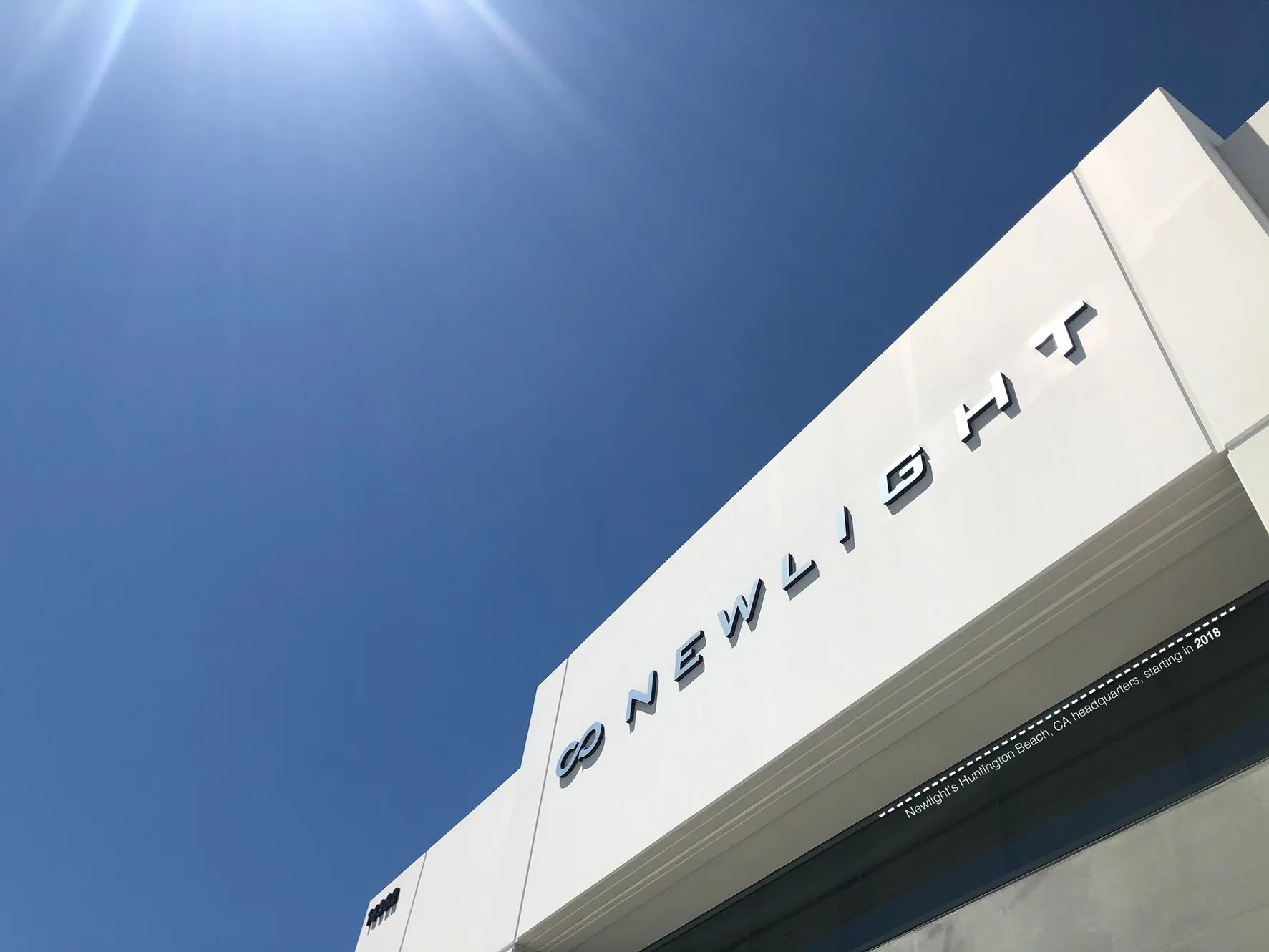
A Frontrunner in Climate Tech: Newlight Technologies[Newlight's headquarters in California ©Newlight Technologies]Newlight Technologies is a company headquartered in Huntington Beach, California, co-founded in 2003 by Mark Herrema (CEO) and Kenton Kimmel (CTO). Actively responding to the greenhouse-gas problem and driving change in industry, Newlight Technologies holds unrivaled technology for breaking away from conventional industrial methods and turning greenhouse gases into renewable materials. Its signature technology has natural microorganisms absorb greenhouse gases to produce a solid biomaterial called "AirCarbon." AirCarbon is a substitute for plastic. Lightweight, highly durable, and usable across a wider temperature range than industrial plastics, it can be applied in many industries such as packaging, automotive parts, furniture, and electronics. Produced by eco-friendly methods, AirCarbon is notable for being not merely low-carbon but a biologically carbon-negative material. A carbon-negative material means one whose production process not only generates no carbon but also has the effect of removing carbon."AirCarbon," a Technology Inspired by Nature[PHB made with AirCarbon technology ©Newlight Technologies]The AirCarbon technology is said to have drawn its idea from the "natural cycle mechanism," a natural process in ecosystems that circulates between living and non-living environments. Newlight Technologies discovered an important characteristic of a particular microorganism found in the ocean. This microorganism uses carbon in the atmosphere to make its own bioenergy, and in that process it had the ability to produce bioplastic as a byproduct. Based on this principle, Newlight Technologies cultivated these microorganisms in a controlled environment; when greenhouse gases—the energy source the microorganisms need—were supplied during cultivation, the microorganisms consumed them and, as living organisms, produced both their own growth and the eco-friendly plastic material "polyhydroxybutyrate (PHB)." Because PHB has properties similar to conventional plastic yet biodegrades when returned to nature, it produces a dual effect of contributing to the circular economy while strengthening sustainability.[Biodegradable tableware made through the food brand Restore, 2020 ©Newlight Technologies]A New Light: The Social Impact Newlight Technologies Has CreatedNewlight Technologies has earned high corporate value through remarkable investment, various awards, and strategic partnerships. In 2014 the AirCarbon technology was named an Innovation of the Year by the American science magazine Popular Science, and in 2016 it received the Presidential Green Chemistry Challenge Award from the United States Environmental Protection Agency (US EPA). CEO and co-founder Mark Herrema was also named one of Time magazine's 100 most influential climate leaders of 2023. As its reputation grew, Newlight Technologies had attracted about 366.4 million dollars (about 495.4 billion won) in investment by August 2023 and was designated a unicorn—a private company valued at over one billion dollars. This is the result of AirCarbon technology offering the market a way to reduce carbon emissions while enabling sustainable product manufacturing.[A handbag made by the fashion brand 'Covalent' using AirCarbon technology, 2020 ©Newlight Technologies]The Value of Climate Tech That Newlight Technologies PresentsNewlight Technologies presents a new approach to corporate environmental responsibility. Their approach demonstrates a balance between environmental protection and industrial value creation. Facing the climate crisis, they do not merely call for restraint in plastic consumption but hold a concrete and definite corporate alternative. AirCarbon technology presents a way of responding to the climate crisis that goes one step beyond carbon neutrality to carbon reduction. Setting an exemplary case of climate tech, their trajectory offers ESG stakeholders several insights.1. Technological innovation that considers a sustainable future can drive innovation rather than corporate sacrifice.2. Reducing greenhouse gases can be a strategy for gaining competitive advantage, beyond corporate social responsibility.3. Developing renewable materials, beyond merely responding to environmental problems, can be a good catalyst for driving changes in consumer demand and industry trends.[Climate-Tech Brands and ESG] When we talk about the future of the Earth, we cannot pass over "climate change." Until a few years ago we used the term "climate change," but amid concerns that it conveyed too little urgency we now use the term "climate crisis." Since the 2015 Paris Climate Agreement, more actionable concepts and goals such as 1.5°C and carbon-footprint management have been emphasized, and diverse stakeholders—governments, companies, non-governmental organizations, and academia in each country—are seeking measures to respond to climate change. Climate tech is playing an important role in this process. Climate tech is a concept encompassing strategic approaches to fostering a sustainable environment through technological innovation and to confronting climate change and its aftermath. Climate-tech companies provide products and services by developing technologies that can help address the climate crisis—renewable energy, improved energy efficiency, carbon capture and storage, eco-friendly building materials, sustainable agriculture, carbon-footprint-reduction solutions, and more. ESG.ONL, today's magazine for tomorrow, seeks to introduce leading climate-tech brands through its "Climate Companion" series.by Editor L
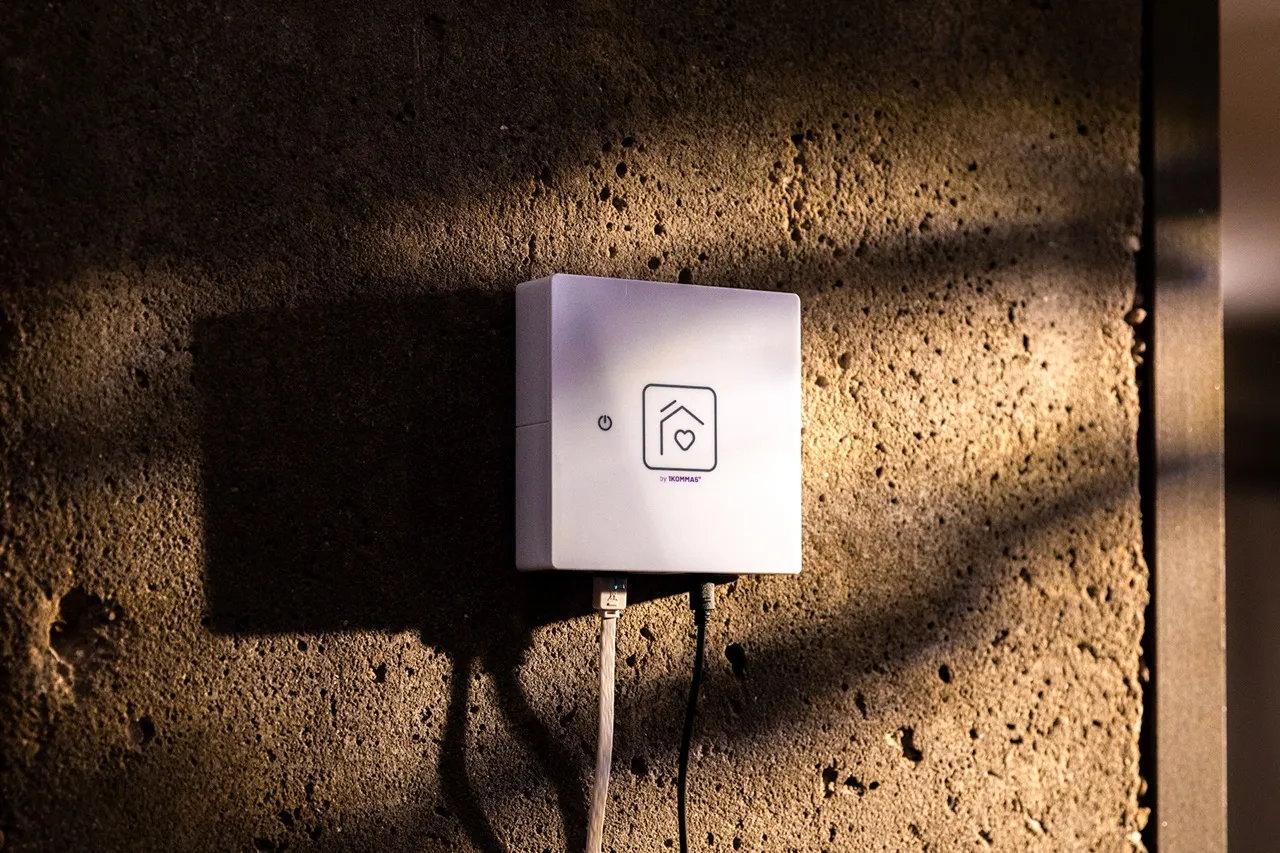
When we talk about the future of the Earth, we cannot pass over "climate change." Until a few years ago we used the term "climate change," but amid concerns that it conveyed too little urgency we now use the term "climate crisis." Since the 2015 Paris Climate Agreement, more actionable concepts and goals such as 1.5°C and carbon-footprint management have been emphasized, and diverse stakeholders—governments, companies, non-governmental organizations, and academia in each country—are seeking measures to respond to climate change. Climate tech is playing an important role in this process. Climate tech is a concept encompassing strategic approaches to fostering a sustainable environment through technological innovation and to confronting climate change and its aftermath. Climate-tech companies provide products and services by developing technologies that can help address the climate crisis—renewable energy, improved energy efficiency, carbon capture and storage, eco-friendly building materials, sustainable agriculture, carbon-footprint-reduction solutions, and more. ESG.ONL, today's magazine for tomorrow, seeks to introduce leading climate-tech brands through its "Climate Companion" series.The 1.5°C That Shows Up Whenever Climate Comes UpAs awareness of climate change has risen over the past few years, the number "the 1.5°C threshold" has functioned as more than a mere figure—it has become a goal shared worldwide. This threshold is a core target set at the 2015 Paris Climate Agreement, and the effort to limit the rise in the Earth's average temperature to within 1.5°C above pre-industrial levels became a symbol. The reason for setting this temperature ceiling is that once the rise in the Earth's average temperature exceeds 1.5°C, the shock to the Earth's ecosystem and human society becomes far more severe. Put simply, all the activities we have carried out to predict the climate could collapse, and the very concept of climate by season or latitude could change entirely. On May 17, 2023, the UN's World Meteorological Organization (WMO) announced that there is a 66% probability the Earth's average temperature will cross the 1.5°C threshold within 2027. It explained that this likelihood is growing even greater because of carbon emissions from human activity and the El Niño (an abnormal high-temperature phenomenon) predicted to occur in 2023. To prevent this, the international community is taking various measures such as reducing carbon emissions and increasing renewable-energy consumption, and as part of these efforts early climate-tech brands showed a tendency to concentrate on the energy and materials sectors. Among these brands, the one we introduce today is an energy-solutions company that has staked its entire vision on its name.The Problem Definition and Solution 1KOMMA5° Discovered1KOMMA5° (hereafter 1Komma5°) is an energy-software platform company headquartered in Hamburg, Germany, founded in 2021 by Jannik Schall, Micha Grueber, Michael Hinderer, Philip Liesenfeld, and Philipp Schröder. With its technology related to solar power plants and heat pumps, 1Komma5° raised 430 million euros (about 617.5 billion won) in a Series B round in June 2023, growing into a unicorn just 23 months after its founding.[1Komma5°, which attained unicorn status in just 23 months ©1KOMMA5°]Under the shared understanding that responding to the climate crisis is urgent, 1Komma5° has made reducing each household's carbon emissions its mission; through smart energy solutions, it helps homes—and more broadly workplaces—cover the electricity they use with renewable energy, so that everyone can realize a carbon-neutral lifestyle while living much as they do now.1Komma5° has now grown into a company of more than 1,900 climate experts, with employees active at 72 locations across Germany as well as Sweden, Finland, Denmark, Italy, Spain, Australia, and more. Each team, drawing on its expertise and experience, carries out a variety of projects—solar panels, energy storage systems, EV charging stations, heat pumps, and more—and provides tailored advice to local communities. Their vision is to build systems in 1.5 million European households by 2030 and, going forward, to create an environment based on the IoT (Internet of Things) in which consumers are protected from and can benefit from the volatility of the electricity market. The reason 1Komma5° is drawing attention is that it approaches carbon emissions arising not from the public sector but from homes and small- and medium-sized buildings. Household energy—heating, cooling, electricity use, and so on—accounts for a large share of total greenhouse-gas emissions. Taking the lack of a proper solution in this sector as the problem, they provide smart energy solutions that play an important role in reducing household emissions.[Heartbeat, the IoT device that helps homeowners manage their energy ©1KOMMA5°]At the center of the services 1Komma5° provides is a proprietary IoT system called "Heartbeat." Through this device they connect a solar system's electricity storage, wallbox, and heat pump, helping homeowners reduce their electricity costs. The core of this idea is to let the system optimize power consumption and thereby help consumers save energy.[1Komma5° showroom ©1KOMMA5°]The Achievements 1KOMMA5°'s Three Years ProducedOn January 17, 2024, 1Komma5° announced its 2023 financial results. Its 2023 revenue more than doubled compared with 2022 to about 460 million euros, and profit also increased significantly, reaching about 50 million euros (about 71.8 billion won). It achieved these results in just over three years since launching its service, despite investing tens of millions of euros in developing its own products and software. Just as Tesla's electric vehicles forced the introduction of chargers into residential and public facilities, this is a remarkable achievement produced by a new perspective—household energy-control solutions—at a time when everyone was focused on factories and large-scale facilities. In addition, 1Komma5° announced a plan to grow 2024 revenue to 700–750 million euros and operating profit to more than 70 million euros.by Editor L
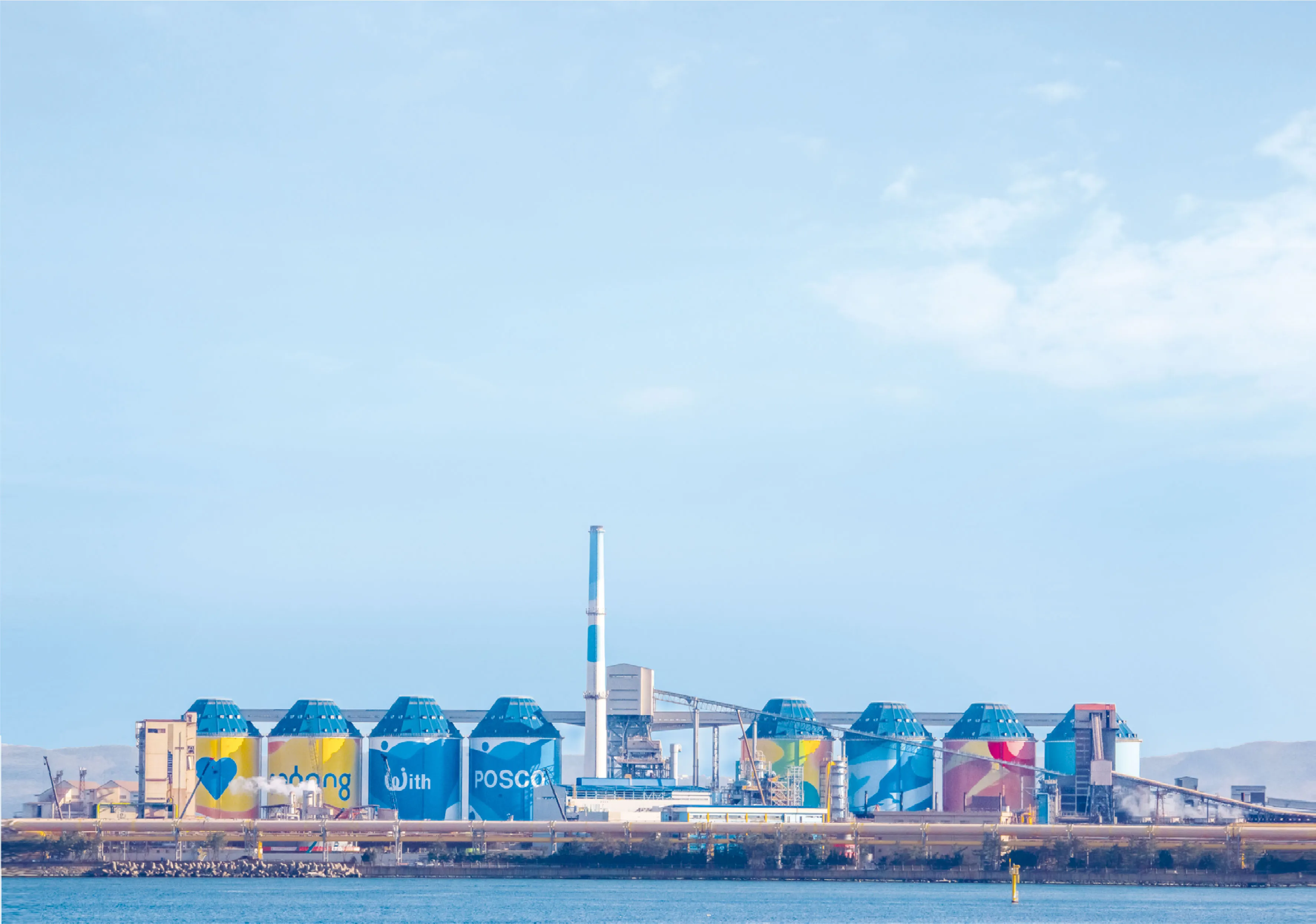
The meaning of a corporation redefined as a member of the social communityEfforts for biodiversity conservation and environmental problem-solving, such as marine forest (seaweed forest) restoration and the Clean Ocean Volunteer CorpsStarting with the "Environmental Report" it published in 1995, the first in Korea, POSCO issues an annual corporate performance report on sustainability under the name "Corporate Citizenship Report." In 2022, it not only overhauled its management system by launching as the steel-business company POSCO but also published "The Corporate Citizen POSCO Story, Together with the Citizens of Pohang," sharing 55 years of a history of coexistence with the Pohang community. POSCO has contributed to Gyeongbuk's Pohang growing into an industrial city of 500,000 people and is a company responsible for about 18% of Pohang's fiscal revenue. It provides local-community education, support for venture companies utilizing the POSCO Group network, and industry-academia-research collaboration infrastructure.Reading Sustainability Reports, "POSCO Edition," is divided into Parts 1 and 2: Part 1 covers POSCO's management philosophy and environmental-conservation activities, and Part 2 covers its community-based social-contribution activities.The Corporate Citizenship Management PhilosophyThe year 2023 marked "the 5th anniversary of POSCO's proclamation of its corporate-citizenship management philosophy," and it simultaneously commemorated the 10th anniversary of the "POSCO 1% Foundation" and the 20th anniversary of the founding of the "POSCO Talent Volunteer Corps." In March 2018, POSCO proclaimed "a corporate citizen that develops together with others" as its management philosophy, in order to "join in solving social problems and to build the prosperity of humanity and a better world."Centered on this management philosophy, it built five corporate-citizenship brands:• Green with POSCO (a company that protects the environment together)• Together with POSCO (a company you want to do business with)• Challenge with POSCO (a company you want to grow with)• Life with POSCO (a company that builds the future together)• Community with POSCO (a company that stands with the region)[Nine ESG focus areas linked to the Green Framework]Through a "double-materiality assessment," POSCO derived 13 material issues and manages the risks of the steel business. Taking "GREEN"—which carries the meaning of eco-friendly future materials—as the keyword of its ESG management, it established five ESG strategies, set a Green Framework, and derived focus areas to pursue a variety of activities.Environmental Conservation for Future GenerationsIn its double-materiality assessment, POSCO selected responding to climate change as its most important issue and established a "2050 Carbon Neutrality Roadmap." To reduce greenhouse gases, it is pursuing the development of coking-coal-reduction technology and low-HMR (Hot Metal Ratio) technology. By 2022, POSCO's emissions recorded 70.2 million tons, a 10.9% reduction from the base-year emissions of 78.8 million tons, and it improved its greenhouse-gas intensity to 2.05 tCO2e/ton, a 2.1% reduction from the base-year figure of 2.09 tCO2e/ton.['Triton,' an artificial reef installed in the sea south of Ulleungdo]POSCO has continued its marine-forest creation project over the past decade or so. In 2000, together with the Research Institute of Industrial Science & Technology, it developed "Triton," an artificial-reef material that recycles a steel-production byproduct (slag). Triton reefs are being installed along coasts where "whitening events" (barren-ground / gaetnokeum) occur; to date, about 7,000 of them have been installed along roughly 30 coastlines.[Changes in seaweed biomass after the creation of the Ulleungdo marine forest]In 2020, it created a Triton marine forest of about 0.4 hectares in the southern part of Ulleungdo. Three years of follow-up management showed that "the seaweed biomass and biodiversity of the coast increased." Through the use of Triton, eco-friendly marine fertilizer, and the development of new-type artificial reefs, POSCO plans to contribute to restoring marine ecosystems and increasing fishers' income.*Triton: POSCO's artificial reef brand. Triton artificial reefs have been verified as safe through the Ministry of Oceans and Fisheries' assessments of marine environmental stability and marine biological food safety.**Triton Reef: Due to its high content of minerals beneficial to the marine ecosystem, such as calcium and iron, it promotes the growth of seaweed and has effects such as boosting marine plankton proliferation and facilitating seaweed spore attachment, thereby contributing to increased biodiversity and the restoration of marine ecosystems.by Editor N
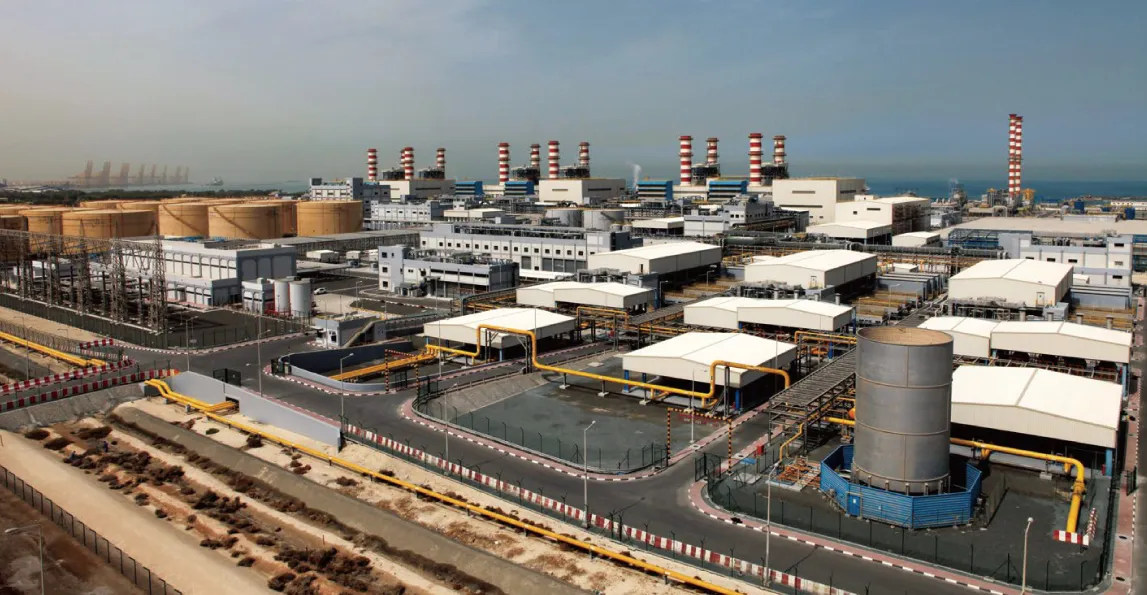
A fundamental transformation into an eco-friendly energy company that considers the future of the company and the future of the EarthAn eco-friendly, future-oriented vision drawn through investment in renewable energyDoosan Enerbility is the new name of Doosan Heavy Industries & Construction, a company familiar to us. Doosan Heavy Industries—which, with power-generation-equipment businesses such as coal-fired and nuclear power as its mainstay, had even been designated a company at high risk of becoming a stranded asset—began drawing attention as a key company positioned to contribute to carbon neutrality as it increased investment in the eco-friendly energy field. In 2020, keeping pace with government policy, it greatly strengthened investment in eco-friendly fields and received A+, the highest grade, in ESG evaluation. It was decisive that the Doosan Group pursued an active ESG management strategy centered on what is now Doosan Enerbility. Having published an integrated report—equivalent to a sustainability report—every July for more than 10 years since 2013 is also a reason Doosan Heavy Industries came to hold the title of ESG honor student.Doosan Enerbility's Sustainable Management 1. An Environmental Management System and Investment in an Eco-Friendly EcosystemDoosan Enerbility established the vision "Endeavoring toward a Sustainable & Green Future 2050"—sustainable growth through ceaseless effort and a transition to eco-friendly business—and set three management strategies to realize it. The gist is to place the value of environmental safety first in all business activities, to comply with environmental laws related to business activities, and to develop eco-friendly technologies and products for environmental conservation. In 2010, it obtained ISO 14001 certification, which evaluates environmental management systems, and it has since systematically managed the environmental performance of all business sites and all processes.[Doosan Enerbility's 2050 carbon-neutrality roadmap ©2023 Doosan Enerbility Integrated Report]In July 2023, Doosan Enerbility completed demand forecasting in Asia, Europe, and elsewhere and confirmed the issuance of a green bond(*) in the form of a three-year, 300-million-dollar Eurobond (Reg S). Beyond transforming its business portfolio toward eco-friendly business, it decided to lead full-fledged investment in eco-friendly business. Doosan Enerbility established a management framework for this green-bond issuance and also obtained certification from the global ESG certification body "S&P Global." It plans to use the funds secured through the green-bond issuance entirely in the eco-friendly energy field, such as renewable energy including wind power, and wind-turbine blade and waste-battery recycling. That Doosan Enerbility issued a green bond as an eco-friendly energy company is also the will of Chairman Park Gee-won. Chairman Park, starting as head of Doosan Heavy Industries' planning and coordination office in 2001, has been through the entire process from Doosan Heavy Industries to becoming Doosan Enerbility. Since taking office as chairman in 2016, he has emphasized the importance of the eco-friendly energy business and has led Doosan Enerbility's fundamental transformation by carrying out organizational restructuring and new-business initiatives to move away from the existing plant business toward a new energy-solutions business.*Green bond: also called a green bond (noksaek chaegwon), a bond issued to raise funds to invest in eco-friendly projects and related social infrastructure that contribute to environmental improvement.Doosan Enerbility's Sustainable Management 2. Transition to a Low-Carbon EconomyThe title of Doosan Enerbility's integrated report is "Energy Toward Sustainability." A particularly notable point in the 2023 report is that the disclosure scope for greenhouse-gas emissions information was expanded. Doosan Corporation has declared a 20% reduction in greenhouse gases by 2023 compared with 2018, and Net Zero (net greenhouse-gas emissions of 0) in 2050. Accordingly, it completed third-party verification not only of greenhouse gases generated directly and indirectly at business sites but also of other indirect emissions generated outside business sites, and disclosed the figures for the first time this year. As a result, direct and indirect emissions were found to be 79,733 tons, down 9,942 tons (12.5%) from the previous year.[Doosan Enerbility's R&D process ©2023 Doosan Enerbility Integrated Report]As a company engaged in the energy business, Doosan Enerbility recognizes that a "transition to a low-carbon economy" is important for securing sustainability. To this end, it has established and is carrying out a core strategy to accelerate its eco-friendly-portfolio transformation centered on four areas—renewable energy, gas turbines, hydrogen, next-generation nuclear power. Beyond responding to environment-related laws and regulations such as carbon border taxes and taxonomy, it is also striving to effectively reduce carbon emissions through improvements in business energy efficiency for actual low-carbon product manufacturing. Through GEMS (Green Energy Management System), it also carries out company-wide management, setting greenhouse-gas reduction targets for each business division in connection with the national greenhouse-gas emission-allowance quota and the company's carbon-neutrality goals, and monitoring greenhouse-gas emissions from energy use in real time each month.The Future of a Sustainable Energy IndustryRecently, Doosan Enerbility announced that it would establish a subsidiary specializing in battery recycling, "Doosan Recycle Solution," to build a commercial production facility, and it is also accelerating the expansion of renewable-energy businesses such as clean-hydrogen production through wind power. It has also developed battery-recycling technology. The technology Doosan Enerbility developed in-house to recover lithium from waste batteries holds great significance in that it is an eco-friendly processing technology that dramatically reduces greenhouse-gas generation and saves resources compared with the method of mining lithium from nature, such as mines.Doosan Enerbility expressed its will to secure sustainability by using the energy technology it holds to enrich human life and make the Earth cleaner. We look forward to the results that will appear in next year's integrated report, to be released in July.by Editor L

Bbegi, a bulky-waste disposal service accomplished with a single touchA resource-circulation journey that begins not with consumption but with throwing awayShopping, the Infinite Loop of Adding and SubtractingIn this world where the things to buy, the kinds of things to buy, and the ways to buy them are all diverse, shopping is a task that draws out desire to its extreme. Every day, through shopping, we confirm our own desires. The unrestrained maximalist runs into a limit at some point: storage space runs short. Now we even resolve that when we shop for one item, we will release one item at the same time.Bbegi, Solving the Trash Problem Through MobileNow let's begin the story of the startup "Gatda." Ko Jae-seong, the CEO who founded "Gatda," discovered—while handling new-business analysis and business planning at an IT company—that a surprisingly large number of people do not know how to throw away bulky waste. He also confirmed that, even among those who know how to dispose of waste, many people around him had had inconvenient experiences because the process differs by local government and the method is complicated. To solve this problem, CEO Ko fleshed out a service by grafting IT onto the process of throwing away bulky waste. And, on the hypothesis that if the process of buying a sticker at a community service center, setting the bulky waste down at a loading spot, and attaching the sticker could be made simple, the deficiency many people feel in the waste-disposal process would disappear, he founded the corporation "Gatda" in 2018. He then launched "Bbegi," a bulky-waste collection platform that produces a waste-disposal estimate with a single mobile touch and connects users with professional waste-collection companies.[Bbegi website main page ©Gatda]The Bulky-Waste Problem, Whose Disposal Process Differs by Local GovernmentAs of 2023, Korea's local governments nationwide number 226. According to a housing-conditions survey conducted by the Ministry of Land, Infrastructure and Transport in 2021, Koreans move an average of 3.6 times, meaning that over a lifetime Koreans must learn at least 3–4 ways of disposing of bulky waste. This is because the disposal process differs for every local government. Depending on the local government, the reporting method, the cost, and the cycle for bulky waste are all different. By handling on their behalf the complex application process and customer service managed by local governments, Bbegi created the effect of saving unnecessary time and reducing repetitive complaints. After starting service in Uijeongbu, Seongnam, and Goyang in May 2020, it now works with 71 local governments nationwide (as of November 2023), including Seoul and Gyeonggi. The number of users also approaches about 1 million."Connection" to Realize the Technology of Throwing Away WellThat is not the only difficulty in the bulky-waste disposal process. For various reasons, there are items that are too much to throw away alone. Capturing that deficiency, Bbegi launched the "Naeryeodeurim" (We'll Bring It Down) service, in which a verified Bbegi partner visits and throws the item away on the customer's behalf. If you enter the desired date and time through the Bbegi app, a Bbegi partner handles everything from disassembly to transport to disposal. At the initial service launch it was carried out through professional companies, but to create jobs for local youth and seniors, it recruited "Bbegi partners" within local governments. It later expanded to include participation by the general public, and Bbegi partners nationwide are continuously increasing. Safety is not neglected, either. For safe disposal, when signing up as a Bbegi partner, one undergoes three identity verifications (sex-crime record check, PASS, eKYC). Through the operation of Bbegi partners, users can throw away bulky waste more safely, conveniently, and at a reasonable cost, and a new kind of job—the Bbegi partner—was also created. Beyond this, through its app Bbegi is spreading better ways for people to throw things away, such as the "Bbegi Dictionary," an encyclopedia of correct sorting and disposal; "Free Secondhand Pickup," a novel free-sharing concept that turns into money; and "Secondhand Sale," which sells, by bid to Bbegi partners, appliances too good to throw away.[On the Bbegi app, you can select the items to throw away ©Gatda]The Loop of Circulation That Begins in the Process of Throwing AwayAs explained earlier, Korea's bulky-waste collection process is not standardized, and because it goes through local processing after disposal, data is said to hardly exist. When using the Bbegi service, at the time of a collection request in the app, you take a photo and generate the product's barcode to create a bulky-waste primary code. The code is then used to collect data by local government. Because of this, the exact number of disposals, the items, and the cost required for processing can be calculated. Local governments that work with Bbegi provide, on the basis of this data, a "carbon-emission reduction report" for their planning of waste-related policy. In addition, through agreements with maker brands—where consumption begins—that provide Bbegi points allowing users to throw away previously used products when purchasing a product, it is building a virtuous loop of consumption and release.[Bbegi taking part in an ESG conference ©Gatda]For a World Without TrashThis is the mission that Ko Jae-seong, the CEO of Gatda, which operates Bbegi, created when he founded the company. The roughly 20 people who agreed with that mission are processing the world's trash through the Bbegi service today as well. Not stopping at simply connecting waste, it is also preparing a carbon-trading platform that can measure, track, and sell an individual's carbon footprint through AI and object-recognition technology.Our Identity, Expressed Through Throwing AwayIn modern society, consumption is even said to represent an individual's identity itself. In addition to this, throwing away, too, will become a way of representing an individual's identity. "Gaining" and "releasing" are inevitably connected. That may be why Gatda is focusing on what is thrown away and the way it is thrown away. We hope more companies like "Gatda" will create ESG value in overlooked areas.by Editor L

Selected as one of TIME magazine's Best Inventions of 2021Outstanding results grounded in a NASA engineer and a powerful brand slogan (Fight Food Waste)Today we introduce an agri-tech* brand that has achieved enormous results over the past two years on the strength of its founder's story and idea and a powerful slogan. It is a company called "SAVRpak," selected by "TIME magazine" as one of the Best Inventions of 2021.*Agri-tech is a compound of Agriculture and Tech, referring to businesses bringing innovation to the agricultural field with the help of advanced technology."SAVRpak" was invented by Bill Birgen, an engineer at the U.S. National Aeronautics and Space Administration (NASA), to solve the problem of food going soggy because of moisture. In a 2021 interview with the agriculture magazine "agrigate global," Bill Birgen described SAVRpak as "rocket science for food."He said, "I wanted to find a way to keep the lunch I packed at home from going soggy," and revealed that while designing temperature, humidity, and anti-icing solutions for spacecraft, he began developing a solution to the condensation problem—an enemy of fresh food that he himself had discovered. In the end, he developed a small patch that solves this problem by drawing moisture from the air inside a container before that moisture condenses on the food's surface.[SAVRpak ©SAVRpak]The Origin Story of a Fresh-Food Hero Powered by Spacecraft TechnologySAVRpak determined that the enemy of fresh food is condensation. Greg Maselli, SAVRpak's co-founder and CEO, flatly stated that "nothing gets tastier the moment it touches water." He captured the point that the reason food goes soggy is the water vapor trapped in the container along with the hot food. Hot food keeps releasing moisture even after cooking, and water vapor builds up when the food is packaged, which is why we receive soggy delivered food. Eliminating condensation—that is the essence of the problem.[The difference after about 30 minutes between a product that used SAVRpak and one that did not ©SAVRpak]To eliminate condensation, SAVRpak was designed to absorb the moisture inside a food container. For example, when delivering french fries, if a SAVRpak is inside the container, it absorbs the moisture in the air so that the crispy surface of the fried food can be maintained. Through the research team's experiments, it was also found that SAVRpak can lower the humidity inside a food container by up to 45% and extend the shelf life of packaged food by up to two weeks. Extending by up to two weeks even the time it takes for food to turn into waste—it is truly nothing short of an innovative invention.The Oldest, Most Futuristic Industry: 'Agriculture'Kim Yu-ho, head of the Agriculture Division at the National Agriculture Museum, said that "the oldest industry, yet the most futuristic, is agriculture." The problems agriculture currently has—#food-security #food-shortage #climate-change #declining-farming-population #biodiversity #food-safety—are issues directly linked to human survival. Everyone would agree that it is an important industry, but it has also been an industry in which clear innovation has been difficult, bound up as it is with countless interests and value chains ever since humanity first began cultivation. According to the U.S. market-research firm MarketsandMarkets, the market size of the agri-tech industry reached 7.5 billion dollars in 2018 and is projected to reach 13.5 billion dollars in 2023. An industry of great scale and attention also becomes the growth backdrop for companies and brands with new ideas.[A banner for SAVRpak's food-waste solution campaign ©SAVRpak]The Results Brought by an Innovative Shelf-Life ExtensionBill Birgen stated, "The food waste the whole world produces is an enormous problem amounting to 2.6 trillion dollars in scale. SAVRpak solves this problem by using compostable bags to extend the shelf life of produce by 50% to 100% without chemicals," expressing his hopes for the greenhouse-gas problem that would be reduced by cutting food waste and for the improvement in agricultural efficiency made possible by reducing waste.A product whose shelf life has been innovatively extended will stay tasty for a long time, but the flavor of the story—a NASA-alumnus founder crying out to fight food waste and innovating the agri-food industry—is fresh, too. Spacecraft technology and food: an unfamiliar connection, but this company, which presents a new way of looking at a problem and has created an answer that can be used quickly, cheaply, and simply, has a future worth anticipating. SAVRpak has not yet come to Korea. So, for tonight, how about holding off on delivery food just once? Let us, too, quietly join SAVRpak's campaign to solve food waste.by Editor L