Loading Data
Please wait a moment...
Update Cal.
2026.08
03
Mon
04
Tue
05
Wed
06
Thu
07
Fri
08
Sat
09
Sun
Update Calendar
2026.08
01
Sat
02
Sun
03
Mon
04
Tue
05
Wed
06
Thu
07
Fri
08
Sat
09
Sun
10
Mon
11
Tue
12
Wed
13
Thu
14
Fri

Loading Data
Please wait a moment...
Evening ESG news and briefings to wrap up your day.

With 100 days left before the Paris Olympics, the flame was lit on the 16th (local time) at the Temple of Hera in Olympia, Greece. This past March, the posters of the Paris Olympics and Paralympics were unveiled, announcing that the 2024 Summer Olympics had drawn near to us. The posters were handled by Ugo Gattoni, well known as a scarf designer for Hermès, who visualized the slogan "Games Wide Open," carrying the meaning that the entire city turns into a stadium. From the very size of the posters—containing Paris's landmarks and all sorts of symbols—they showed a look differentiated from past Olympics and drew the world's attention.[The interior of the Aquatics Centre, built with wood and recycled materials ©Salem Mostefaoui/Olympics.com]Before becoming a topic for its poster design, the Paris Olympics steadily emphasized "the sustainability of the Olympics." From the planning stage, it decided to minimize new construction for the Olympics and make maximum use of existing facilities. The newly built facilities are only the Olympic Village, the Aquatics Centre, the climbing facility, and the Adidas Arena, which correspond to about 5% of all facilities for hosting the Olympics. The Olympic Village is a facility where participating athletes will stay, and once the Olympics end, it is set to be used as ordinary residential facilities. Other facilities are likewise set to be converted into local infrastructure after the Olympics. It also took into account minimizing environmental impact from construction materials all the way to power supply.The Olympics in the Sustainability EraEntering the 2000s, the economic effectiveness of the Olympics was a subject of steady debate. Along the line of debate, the number of bidding cities that took up the challenge to host the Olympics also continued to decrease. At the time of the 2004 Athens Olympics there were eleven bidding cities, but they gradually decreased until, for the 2024 Paris Olympics, the final bidding cities were just two. Moreover, hard-prepared Olympics were often criticized by the international community for destroying the environment. Beijing, Sochi, and Rio—which hosted the 2008, 2014 Winter, and 2016 Olympics—were particularly so. Not only in persuading the international community but also local citizens, the justification and benefit of hosting the Olympics could no longer be explained without sustainability. Perhaps for that reason, the Paris Olympics has striven tirelessly, from immediately after its selection as host, to create and publicize a waste-free Olympics.Partnership in the Sustainability EraOlympic operation and promotion are aided not only by the host country but also by corporate partners. Partners that immediately come to mind at the words "Olympic partner" include Coca-Cola, Samsung, Visa, and Omega. They put their names on the partner list for this Olympics without fail. Besides such traditional partners, from the late 2010s, companies in the IT and digital categories, such as Intel and Airbnb, began to join as partners. But the most notable partner at this Paris Olympics is Deloitte. Deloitte participated in the 2012 London Olympics in a supporter role—a kind of advisory rather than a partner—but this Paris Olympics is the first time it has put its name up as a worldwide partner.It's the First ESG PartnerThe reason Deloitte became a worldwide partner is none other than ESG. Deloitte took on the role of supporting the Olympics' "2020+5" agenda by using its expertise in the ESG field. 2020+5 is an operational roadmap announced by the "International Olympic Committee (IOC)" in 2021, and includes the following content.[1. Sustainability] Focus on environmental protection, use of reusable and recyclable solutions][2. Digital Innovation] Make the games accessible to more people, enhance fan participation and experience][3. Financial Soundness] Maintain financial sustainability and strengthen the Olympic financial model][4. Strengthening International Cooperation] Strengthen cooperation with various sports organizations and improve global governance][5. Promoting Diversity and Inclusion] Pursue social integration and diversity, and all forms of discrimination and confrontation]Deloitte stated that, during the partnership period, it plans to carry out various activities related to climate neutrality, diversity, inclusion, and athlete support based on its ESG expertise. Exactly what help Deloitte is providing in this regard is not precisely known. Watching, from an ESG perspective, what role Deloitte—which has joined the Olympics—will play and how it performs is also one of the viewing points of this Olympics. by Editor N

Amid the International Energy Agency (IEA) stating that last year's carbon emissions recorded an all-time high, "Carbon Majors," a civic group that analyzes carbon-emitting-company data, announced on the 4th that energy companies' carbon emissions account for 80% of global emissions. The point is that, after the Paris Agreement, the carbon emissions of energy companies producing coal and cement actually increased.Literally translated, the name of the group that reported this fact, "Carbon Majors," means "the chief culprits of carbon." The group is known to have started on the occasion of a HuffPost article in 2013 that pointed out that a mere 90 companies accounted for two-thirds of global carbon emissions. Back in 2017, too, CDP (Carbon Disclosure Project)—a global civic group engaged in carbon-emission-reduction activities—revealed the fact that the carbon emissions of 100 energy companies accounted for 70% of global emissions. As Carbon Majors' data released this month revealed that energy companies' carbon emissions increased after the Paris Agreement—which targeted the reduction of greenhouse gases including carbon—voices continue that we must be vigilant about the climate crisis.[A graph of the increasing trend of global carbon emitted by major carbon-emitting companies ©Carbon Majors]Carbon Majors, which tracked the greenhouse-gas emissions of 122 energy companies, pointed out in its report that from after the Paris Agreement until 2022, a mere 57 energy companies were the chief culprits producing 80% of global carbon emissions. Over the same period, 117 companies produced 88% of global carbon emissions, and among these, state-owned enterprises directly operated by the state or belonging to the government amounted to 69%, while private companies amounted to 31%.[The top 10 companies with the highest carbon emissions after the Paris Agreement ©Carbon Majors]Among these, the energy companies with the highest shares are Saudi Aramco, Gazprom, Coal India, and others. According to Reuters, in reporting on these figures, Saudi Aramco refused to answer, and Gazprom and Coal India did not immediately respond. Carbon Majors' corporate carbon-emission data was also cited in a lawsuit filed this past March by a Belgian farmer against the French oil-and-gas company "TotalEnergies." That lawsuit is proceeding with the issue that TotalEnergies—one of the top 20 companies with the highest carbon emissions—bears some responsibility for causing the climate crisis and inflicting damage on agriculture.The Paris Agreement is a term referring to the 21st UN Framework Convention on Climate Change, held in Paris, France, in 2015, and has the significance that 195 countries worldwide participated in greenhouse-gas reduction. The Paris Agreement is meaningful in that, going beyond the 1997 Kyoto Protocol—which imposed greenhouse-gas-reduction obligations only on developed countries—it drew out an agreement in which the vast majority of countries worldwide would set greenhouse-gas-reduction targets and join in. The common goal adopted in the Paris Agreement is "preventing the Earth's average temperature from rising 2 degrees or more above pre-industrial levels." It is time to look back on the Paris Agreement's principle that each country's government has the obligation to slow global warming by demanding carbon-emission reductions from its own companies. by Editor N

The pandemic that swept across the world. During the pandemic, office workers grew accustomed to the work-from-home format of working somewhere other than the office. But as companies such as Amazon, Meta, and IBM—which brought all their employees back to the office the moment the pandemic ended—have increased, so too has the lively discussion over whether working from home helps a company's long-term ESG strategy.According to Forbes, in 2023, 12.7% of full-time employees worked from home and 28.2% worked in a hybrid form using both the office and home. There is also an analysis by the video-conferencing technology company "Owl Labs" that, worldwide, 16% of companies operate remotely without a physical office. The freelance brokerage company "Upwork" predicted that, if the current trend of actively encouraging work-from-home continues, by 2025 about 32.6 million people—22% of the entire U.S. labor force—will choose to work from home.[2020 Future Workforce Report. ©Upwork]Cutting Commutes Cut the Carbon Footprint TooDuring the pandemic, when working from home was actively encouraged, positive assessments continued that working from home helps a company's ESG strategy.On the environmental side, working from home is a way to reduce a company's carbon footprint by cutting the time spent riding cars or public transportation to commute and by shrinking the office space used on a fixed basis. According to the "Spanish Institute of Environmental Technology," working from home can reduce by about 10% the amount of nitrogen dioxide, a major air pollutant emitted by means of transportation. Between 2020 and 2022, numerous San Francisco–based IT companies are known to have switched their work format to work-from-home or to have relocated offices while downsizing. As a result, in the third quarter of last year the San Francisco office vacancy rate rose to as high as 34%.[San Francisco office vacancy rate graph. ©CBRE Research]There are advantages on the social and governance sides as well. 35% of work-from-home employees answered that their productivity improved, and 71% said it helps in maintaining work-life balance. Moreover, because people can work without physically gathering in one place, the breadth of hiring diversity widens, and an organization's inclusiveness and flexibility can grow. In addition, because employees can be hired across various regions, the talent pool widens and the possibility of providing more jobs increases.Tom Wilson, the CEO of the U.S. insurance company "Allstate," said that after Allstate adopted work-from-home, the company's hiring diversity increased by as much as 30%. The U.S. Department of Labor has stated that, because the need to commute disappeared, the number of workers with disabilities employed across the United States also increased by about 28% compared with February 2020, when the pandemic began, reaching about 1.8 million.Carbon Emissions That Occur Out of SightOn the other hand, there is also criticism that many ESG values have been lost with the adoption of work-from-home. This is because a company cannot manage its level of environmental pollution in an integrated way, since individual employees cannot account for their own impact on the environmental side. The "Harvard Business Review" raised the possibility that, whereas commuting to a set office allows the carbon emissions from a fixed travel distance to be measured and managed, when working from home it is difficult to manage the extent to which an individual moves to change their work location or generates waste, so the degree of environmental pollution may become higher than when working in a fixed office.There are also opinions pointing out the risks that work-from-home carries on the social and governance sides. Because people communicate remotely, cases have increased of isolated employees feeling no sense of belonging and complaining of loneliness. The point that people easily experience burnout by carrying out work only through video conferencing and messengers was also cited as a drawback of working from home. In addition, along with an analysis that the cyberattacks that increased by 238% during the pandemic are related to work-from-home, management has been shown to be worried about the security risks that arise when information is exchanged without using an internal network.Companies Setting Out to Cut Direct and Indirect Carbon Emissions Through Hybrid WorkIn its "2023 State of Hybrid Work Global Report," "Owl Labs" analyzed that companies working fully in the office reach 54%. As companies adopting hybrid work or mandating office attendance increase, discussion of how closely the work format a company adopts and its ESG strategy interact is also expected to become more active.The "Sustainable Finance Disclosure Regulation (SFDR)," whose mandatory scope the EU recently expanded, includes both a company's direct and indirect emission sources in the calculation of its carbon footprint. Going forward, EU-based companies and companies active in the EU market will calculate their direct and indirect carbon emissions according to work format and concentrate their goals on reducing total carbon emissions.The CEO and CTO of the British office-management software company "Kadence," together with a vice president of the real-estate company "CBRE," announced a "Hybrid Manifesto for Sustainability." Through this manifesto, they expressed the aspiration to find a way to achieve an ESG strategy without gathering to work in one fixed office, while combining working from home and commuting.As with the goals of the companies that joined the Hybrid Manifesto, companies going forward are expected to give more thought to the need to build work environments that can simultaneously improve work efficiency and pursue ESG values, rather than maintaining traditional work systems. by Editor N

On the 13th, the U.S. House of Representatives passed a bill banning "TikTok"—the Chinese short-form platform—citing national-security concerns based on personal-data leakage. It contained the requirement that TikTok's parent company, ByteDance, sell TikTok's U.S. business rights within 165 days, and that if the sale fails, the app must be pushed out so it cannot be downloaded from app stores. As this bill passed by agreement of the Democratic and Republican parties just 8 days after its introduction, along with the assessment that the U.S.-China conflict has spread online, it brought the personal-information-protection obligation from an ESG standpoint to the surface.The TikTok ban bill contained content that, citing national-security concerns, makes illegal the distribution, maintenance, and updating of the Chinese TikTok parent company ByteDance, as well as TikTok and its subsidiary apps. The U.S. government has continuously raised concerns that the data of U.S. TikTok users could be handed over to the Chinese government, and this past May, in the U.S. state of Montana, a bill that actually fully banned TikTok downloads and uploads passed. Former President Trump had announced an executive order banning TikTok use within the U.S., and President Biden banned TikTok downloads on official communication devices.[A TikTok banner celebrating reaching 150 million TikTok users in the U.S. ©TikTok]According to The Wall Street Journal (WSJ), the number of TikTok users in the U.S.—which was 150 million last year—recorded 170 million this year, so the scale of TikTok users in the U.S. has grown so large that more than half of the U.S. population can be seen as using it. The reason the U.S. government is trying to intervene so much in TikTok's method of handling personal information does not consist only of the U.S.-China conflict structure. Recently, as the personal-information-protection obligation among corporate social responsibilities has drawn attention, the fact that users' personal information must be managed safely and used only for its original purpose is being emphasized.Corporate personal-information protection—also called "data privacy"—is closely related to the ESG framework, and this TikTok bill issue is connected to the S (Society) sector among these—that is, to the content that a company, in obtaining personal information from users, must (1) seek explicit consent, (2) use it only for the specific purpose the user permitted, and (3) restrict who can access the information. The U.S. government is questioning TikTok's social responsibility, raising the suspicion that TikTok could share personal information with a third party, the Chinese government.Korea, too, is on a trend of emphasizing personal-information protection from an ESG standpoint. The Ministry of Science and ICT required the disclosure of information-protection status (hereafter the information-disclosure system) to be made mandatory for 603 companies in 2022. The information-disclosure system refers to a disclosure system that discloses companies' information-protection status for the purpose of service users' safe internet use and the activation of information-protection investment. Last year, the government also raised the fines it imposes on companies with poor disclosure. Foreign companies such as Google and Meta also have precedents of being fined for violating information-protection statutes in the past, so they are known to have actively taken part in the information-disclosure system, which was reorganized last year.With opinions that it violates the First Amendment, which stipulates freedom of expression, it is uncertain whether the TikTok ban bill will pass the Senate, but this measure by the U.S. House can be interpreted as a signal that TikTok is not sufficiently fulfilling corporate social responsibility. The TikTok ban bill is an opportunity to think once again about the corporate social responsibility of data privacy. by Editor N

On the 6th (local time), the U.S. Securities and Exchange Commission (SEC) voted to adopt a rule mandating corporate climate disclosure. A total of five commissioners took part in the vote, with three Democratic-leaning commissioners—including SEC Chair Gary Gensler—voting in favor, and two Republican-leaning commissioners voting against. The crux of the decision was determining the scope of corporate greenhouse gas emission disclosures, which are divided into Scope 1 through 3. The result landed in a middle ground that satisfied neither camp: companies will only be required to disclose Scope 1 and Scope 2 emissions, while Scope 3 emissions will not need to be disclosed. Scope 1 refers to greenhouse gases emitted directly by companies through the use of fuel to manufacture and sell products, while Scope 2 refers to greenhouse gases indirectly emitted through the use of electricity or thermal energy. Scope 3 refers to greenhouse gases emitted directly and indirectly across a company's supply chain. The mandate applies to large listed companies (market capitalization of $700 million or more) and medium-sized companies (market capitalization of $250 million or more), with disclosure required starting in 2026.[SEC Chair Gary Gensler explaining the climate disclosure proposal at a 2022 hearing ©Reuters]Environmental Groups Say "It's Not Enough"As soon as it was announced that Scope 3 would be excluded from the climate disclosure rule, U.S. environmental groups immediately launched criticism. They argue that the regulation has been excessively watered down and lacks any real effectiveness. In fact, Scope 3 accounts for approximately 70% of total greenhouse gas emissions for the majority of companies. However, the SEC accepted companies' arguments that identifying greenhouse gas emissions across their supply chains is too difficult. Companies appear to have made strong and persistent demands of the SEC. The SEC disclosed that since first announcing the climate disclosure regulation in March 2022, it received over 24,000 comment letters, which it took into consideration before finalizing the rule.Republicans Say "It's Overreach"Republicans argue that the climate disclosure rule itself is unjustified and that the SEC is overstepping its mandate and authority to engage in environmental activism. According to Reuters, ten states where Republicans hold the advantage—including Georgia, Alabama, and Alaska—have already filed lawsuits against the SEC. The U.S. Chamber of Commerce has also mentioned the possibility of pursuing legal action on the grounds that the rule imposes an excessive burden on companies. The Chamber of Commerce has previously filed a lawsuit challenging California's climate disclosure law, arguing that it exceeds the state government's authority.The SEC Says "Remember Roosevelt"In announcing the adoption of the climate disclosure rule, the SEC invoked the 32nd U.S. President, Franklin Roosevelt. The SEC was established under the Roosevelt administration. It was a measure to protect investors in response to the 1929 Wall Street crash, which triggered the Great Depression. The Wall Street crash was an event in which a bubble of indiscriminate investment—built on blind faith in the market—burst. During the process of establishing the SEC, President Roosevelt emphasized the "complete and truthful disclosure" of corporate information. By invoking Roosevelt's words as the climate disclosure rule was adopted, the SEC Chair was reminding everyone of the agency's founding principles.What Was the SEC's Role?The SEC's core intent in adopting this rule was not to protect the environment or corporations, but to protect investors. The SEC stated that the background for discussing the rule was investor demand for companies to disclose more transparent and reliable information regarding climate risks. Indeed, under this rule, companies must disclose not only their greenhouse gas emissions but also the costs they incur to mitigate climate risks and the financial impacts. The SEC is not an environmental authority. It determined purely from a market perspective that climate risks are already affecting corporate operations and finances, and that investors therefore need to know about them. The decision that satisfied neither camp may, in the end, have been a decision made for the majority—or in the majority's interest.by Editor N

It has been revealed that the global average temperature rose by 1.52°C in just one year—a shocking finding. Announced by the European Union's Copernicus Climate Change Service, this news has been met with the assessment that international efforts to prevent a 1.5°C rise in average temperature have been insufficient. The pace of global warming accelerated at an alarming rate last year, and we were able to feel the consequences through one extreme climate crisis after another. From massive wildfires in Canada and Australia to severe drought in Northeast Africa and catastrophic flooding in Pakistan, communities around the world spent their days scrambling to recover from natural disasters.[Massive wildfire in Chile in February, with an estimated death toll of approximately 100 ©BBC]There are various reasons why the 1.5°C average temperature threshold is critical. When climate change occurs, it can trigger extreme weather events such as heatwaves and heavy snowfall, cause sea levels to rise and inundate coastal areas, and threaten biodiversity—including the loss of 70% of the world's coral reefs. In an interview, Maya Singer Hobbs, a senior research fellow at the Institute for Public Policy Research (IPPR), stated: "It is important to keep the global average temperature rise below 1.5°C because the natural environment that produces the food we eat is known to be maintainable only when the temperature rises no more than 1.5°C." The target for limiting the average temperature rise was set based on the increase in the Earth's average temperature since the Industrial Revolution and is a medium- to long-term outlook established through the 2015 Paris Climate Agreement. However, recent research has shown that, on an individual daily basis, regions around the world are already exceeding the 1.5°C average temperature, raising growing concerns. The BBC reported that Arctic temperatures have been rising approximately four times faster than other parts of the world since 1979, and that Africa's rate of warming since the 1991-2000 period has been faster than that of other regions as well.The pace of warming is faster than previously studied forecasts. Early last year, the Intergovernmental Panel on Climate Change (IPCC) had projected that half of the Earth's surface would not exceed the 1.5°C threshold until the mid-2030s, but research published this year has raised the possibility that this could occur as early as 2029.[Record of days with average temperature rise above 1.5°C from 1971 to 2023 ©Global Footprint Network]When we enter an "overshoot"* state—in which the average temperature has risen more than 1.5°C above pre-industrial levels—the likelihood of reaching a "climate tipping point," where the environment deteriorates to a level uninhabitable for humans, increases significantly. For this reason, preventing a 1.5°C rise in average temperature before entering overshoot is critically important. To completely avoid overshoot, greenhouse gas emissions would need to be cut by 43% compared to 2019 levels, but there are now opinions emerging that overshoot is an unavoidable phenomenon and that minimizing the scale of damage is the best we can do. Reversing the situation after overshoot would require carbon capture technology on a massive scale, but such an approach faces not only enormous costs but also industrial and social limitations; therefore, there is a consensus that preventing overshoot in the first place is the top priority.*Overshoot: A situation in which greenhouse gas emissions exceed the amount that nature can absorb, causing the Earth's average temperature to rise beyond the 1.5°C threshold.A Positive Signal Amid CrisisDespite the grim outlook, there are positive developments underway. The cost of renewable energy continues to fall, and the scale of investment is growing. According to the International Energy Agency (IEA), investment in clean energy reached approximately 1.7 trillion USD in 2023, surpassing investment in fossil fuels for the first time. This can be seen as a positive signal of the transition to clean energy. Because the impacts of global warming are particularly harsh on the economically vulnerable extreme poor, we must join forces as quickly as possible to avert the climate crisis. This is a moment that calls for determination beyond the interests of individual nations, for the sake of our shared future. We must face reality for the sake of future generations, and it will be the path to defending the 1.5°C Maginot Line of global warming.by Editor N

On February 14, Valentine's Day, delivery and ride-share drivers in the United States and the United Kingdom staged a collective strike. In the UK, workers from Deliveroo and Uber Eats joined forces, while in the US, drivers from Uber, Lyft, and DoorDash united. Fortunately, the strike had been announced in advance and appears to have avoided major disruption and discord. The reason these workers pushed ahead with the strike ahead of the lucrative Valentine's Day period was the issue of low delivery fees.The UK newspaper The Guardian published two articles related to the strike. One was a journalist's report conveying the reality that delivery workers struggle to earn even a "living wage." The other was an anonymous contribution from a delivery worker stating that, after deducting fuel costs and insurance premiums from delivery fees, not even the "minimum wage" was left. Two different expressions—living wage and minimum wage—were used in reference to the same issue.[Uber Eats promotional message: 'Work when you want, earn as much as you need' ©Uber]How Do a Living Wage and Minimum Wage Differ?While the minimum wage is easy to understand, the concept of a living wage is still unfamiliar to many. Both expressions refer to wages that take into account a minimum cost of living. The minimum wage holds significance in guaranteeing the lower limit of food, clothing, and shelter costs to protect workers' basic right to survival. The living wage, on the other hand, is a concept that goes beyond compensation for labor, aiming to ensure that a person's earnings can maintain an adequate standard of living, covering housing, food, healthcare, and education.In the UK, the applicable group and amount are legally designated differently. Workers under 23 years of age are guaranteed the minimum wage, while workers aged 23 and over are guaranteed the living wage. For the 2023-2024 period, the UK minimum wage was set at £5.28 (approx. 8,895 KRW) for those under 18, £7.49 (approx. 12,618 KRW) for ages 18-20, and £10.18 (17,149 KRW) for ages 21-22. The living wage for those aged 23 and above was set at £10.42 (17,553 KRW). The minimum wage is determined through negotiation based on recommendations from companies and unions, while the living wage is set at 66% of median income. These amounts are updated every April.The living wage is not a concept entirely remote from us. In South Korea, it is being implemented selectively at the local government level rather than by the central government.Are Delivery Drivers Legal "Workers"?At least in the UK, they are not. The UK Supreme Court has issued a ruling restricting the right to collective bargaining for people providing labor through gig economy* platforms. Delivery drivers and ride-share drivers were interpreted as being self-employed contractors who have entered into agreements with the app service provider, rather than as workers. South Korea is in a similar position: delivery workers do not qualify as workers under the Labor Standards Act. However, they differ from the UK in that they are recognized as workers under the Trade Union and Labor Relations Adjustment Act, and are thus guaranteed the constitutionally based three labor rights (the right to organize, the right to collective bargaining, and the right to collective action). In fact, negotiations in South Korea are already taking place between delivery workers and platform operators such as Baedal Minjok (Baemin) and Kakao Mobility. In May of last year, approximately 200 Baemin drivers held a march in downtown Seoul demanding guarantees of a living wage, among other things. At the time, the drivers raised the issue that Baemin's base delivery fee of 3,000 KRW per delivery had been frozen for ten years.*Gig Economy: An economic form in which jobs are filled by short-term contract and temporary workers, rather than traditional regular and long-term employees. The terms "gig economy" and "gig economy platform" are frequently used to refer to on-demand labor and service-based sharing economies. The term originates from the 1920s American jazz club scene, where short-term contract musicians or performance groups (gigs) were brought in to sustain club performances.Forms of Labor ChangeThe gig economy, which gives the impression that anyone can easily earn money, is now settling in as an entrenched mode of employment. In this context, it ultimately falls on companies to set the appropriate price for the labor they purchase. The UN Global Compact (UNGC), the UN's corporate sustainability initiative, defines a living wage as compensation that goes beyond the minimum wage to ensure fair remuneration for employees. Of course, ride-share and delivery drivers are not employees of the platform companies. But as a workforce that is indispensable to business operations, they will require thoughtful consideration and decisions aimed at mutual prosperity. While the living wage may be difficult to serve as a legal basis for adjusting low delivery fees to realistic levels, it can at least serve as a minimum yardstick for responding to newly emerging forms of labor.by Editor N
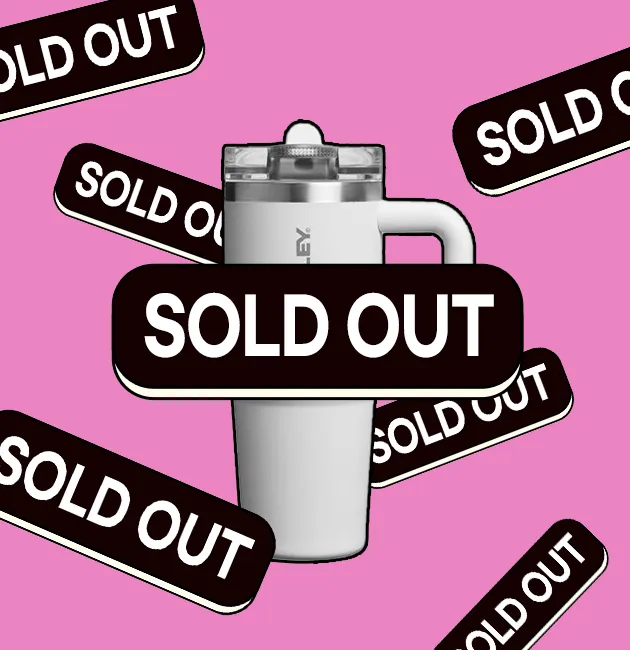
Among American teens and twentysomethings right now, the stainless steel tumbler "Stanley Quencher H2.0" from the popular insulated bottle brand Stanley is an enormous hit. America's Gen Z and Millennials spend their days collecting Stanley Quenchers in every color, decorating them, and showing them off with pride.[The Starbucks collaboration edition Stanley Quencher that sold out in 4 minutes ©TikTok]The Starbucks collaboration Stanley Quencher, sold exclusively at the U.S.-based retailer Target, sold out in just four minutes despite a purchase limit of two per person. With the collaboration tied to the upcoming Valentine's Day, the tumblers are being resold on eBay at five to six times the original price, reaching up to $300.[Resale price of the Starbucks collaboration edition ©Ebay]On the short-form platform TikTok, the Stanley Quencher—referred to as #StanleyCup—is classified as an "aesthetic" product, a term denoting fashion that expresses one's own distinct sensibility. American teenagers choose a Stanley Quencher in a color that matches their outfit when going out, adorn their tumblers with various accessories, and proudly showcase them on social media. Pop singer Olivia Rodrigo, who is hugely popular among American teens, revealed in an interview with GQ magazine that TikTok influenced her decision to purchase a Stanley. Having captured the attention of American teenagers in this way, the Stanley Quencher series has been releasing numerous limited editions and rapidly driving up sales.[Stanley's bestseller changed starting in 2020. ©CNBC]The Stanley Quencher series established itself as a massive trend when the new CEO Terence Reilly was appointed in 2020. Reilly is known as the figure who sparked a global Crocs boom by orchestrating collaborations with a wide range of brands while at Crocs. According to CNBC, Reilly discovered content in which a women's consumer group running a commerce blog called "The Buy Guide" had recommended the Quencher series, and proceeded to produce Quencher tumblers in the pastel tones the Buy Guide editors wanted. Since then, each time a new color was unveiled, the Quencher series enjoyed a steep upward sales curve, repeatedly racking up "sold out" signs for color after color. The vibrantly colored tumblers soon overtook the sales of the iconic "green Stanley cup," which had been Stanley's bestseller and brand identity up to the time of Reilly's appointment in 2020. In December of last year, the Stanley Quencher tumbler succeeded in selling 10 million units.Before the Quencher boom, Stanley was a brand that sold reasonably priced tumblers under $40 to male consumers such as construction workers and hikers, emphasizing powerful insulation performance. Today, however, Stanley has emerged as a flashy fashion item wrapped in an eco-friendly concept favored by women.The trend of consuming eco-friendly products is nothing new to us, and neither are the concerns surrounding them. Take eco-bags, for example. Once hailed as a quintessential eco-friendly product, eco-bags became a subject of worry because, despite being reusable items, they often failed to be reused enough times to genuinely benefit the environment, ultimately not delivering real environmental benefits. Stainless steel tumblers, too, face criticism that their production process uses energy inefficiently and that they require sufficient reuse to justify their environmental cost. The New York Times has reported that producing a stainless steel water bottle requires approximately seven times more fossil fuels, emits 14 times more greenhouse gases, and demands hundreds of times more metal resources compared to a plastic water bottle. The Canada-based International Reference Centre for Life Cycle Assessment and Sustainable Transition (CIRAIG) has published a report stating that "a stainless steel tumbler must be reused at least 220 times to have the effect of maintaining the global environment at a level that is not harmful to humans."Stanley is not ignoring these concerns and has pledged on its website that by 2025, at least 50% of its stainless steel products and 100% of its packaging will be made from recycled materials. The U.S. tech publication Wired noted that "the Stanley Quencher craze has demonstrated that eco-friendly products can become popular; the next milestone is to prove that a mass-consumption trend does not necessarily lead to increased waste and overconsumption." All eyes are now on where Stanley's eco-friendly mass-consumption trend will go from here.by Editor N