Loading Data
Please wait a moment...
Update Cal.
2026.08
03
Mon
04
Tue
05
Wed
06
Thu
07
Fri
08
Sat
09
Sun
Update Calendar
2026.08
01
Sat
02
Sun
03
Mon
04
Tue
05
Wed
06
Thu
07
Fri
08
Sat
09
Sun
10
Mon
11
Tue
12
Wed
13
Thu
14
Fri

Loading Data
Please wait a moment...
Evening ESG news and briefings to wrap up your day.

As rising gold prices dovetail with concerns over resource shortages, companies' movements are also becoming active. Let us take a look at the companies building attractive "urban mining"—which can aim for environmental sustainability and economic benefit at the same time.[Obtaining gold from waste resources ©Gettyimagesbank]With Rising Gold Prices, Interest in Urban Mining Also SurgesAs gold prices have recently soared, urban mining is drawing attention. Urban mining is the recycling of valuable resources hidden inside electronic products or waste discarded in cities by digging them out again. For example, old smartphones, computers, and other home appliances hide expensive metals such as gold, silver, and copper. If waste is thrown away, it becomes garbage and leads to resource waste and environmental pollution, but urban mining—extracting resources from waste as if mining ore from a mine—is also an important asset from the environmental side. The reason we must pay attention to urban mining now is the forecast that by 2100 the world's natural-resource reserves will also hit bottom.Famous Overseas Urban-Mining Companies... Umicore, Li-Cycle, Dowa HoldingsBelgium's "Umicore" is a world-leading company in the urban-mining field. This company recovers precious and rare metals such as gold, cobalt, and lithium from waste electronics and batteries. Based on its own refining technology, it disassembles mobile phones and batteries to extract even the rare metals that other companies miss. With the continued rise in gold prices, more than about 30% of Umicore's revenue has been generated from urban mining in 2025. In the European market, where environmental regulation is strong, Umicore is building its competitiveness with a recycling process that reduces carbon emissions, and it operates in 11 countries worldwide, including Korea.Let us also pay attention to Canada's "Li-Cycle." This company is especially specialized in waste-battery recycling and, along with rising gold prices, is leading the North American urban-mining market by focusing on recovering metals contained in batteries, such as gold, nickel, and cobalt. LG Chem signed a strategic partnership with this company, and LG Energy Solution even selected Li-Cycle as its battery-recycling partner for North America. As gold prices rise, gold recovery from battery recycling is also becoming a secondary revenue source, and Li-Cycle is broadening its market share by crushing waste batteries with eco-friendly technology and improving the process of extracting metals.Japan's "Dowa Holdings" cannot be left out either. Japan is where the concept of urban mining began, and Dowa Holdings—together with subsidiaries such as "Dowa Eco-System" and "Dowa Metals & Mining"—holds technology to recover 22 kinds of metals, such as gold, silver, and germanium, from waste electronics. As the economics of recycled gold grew with rising gold prices, Dowa Holdings is investing in raising process efficiency. In particular, it is working to secure raw materials by strengthening its waste-appliance collection network in the Asian market, and its operating profit has more than tripled since the 2020s, fully reaping the effects of rising gold prices.The Future of Urban Mining, a Sustainable IndustryThe European and North American companies leading the urban-mining industry, which is thus in the spotlight, are strengthening their recycled-gold supply chains in tandem with carbon-emission-reduction goals. Asian companies, meanwhile, are broadening the market by leading with their technological capabilities and networks. Experts forecast that the price of gold, a rare resource, will continue to rise for the time being. The things we use every day are, in fact, like small mines. Urban mining is a means of saving resources by making good use of this, and a smart method that also protects the environment instead of traditional mining. Such urban mining is expected to continue growing beyond a mere trend into an essential, sustainable industry. by Editor N
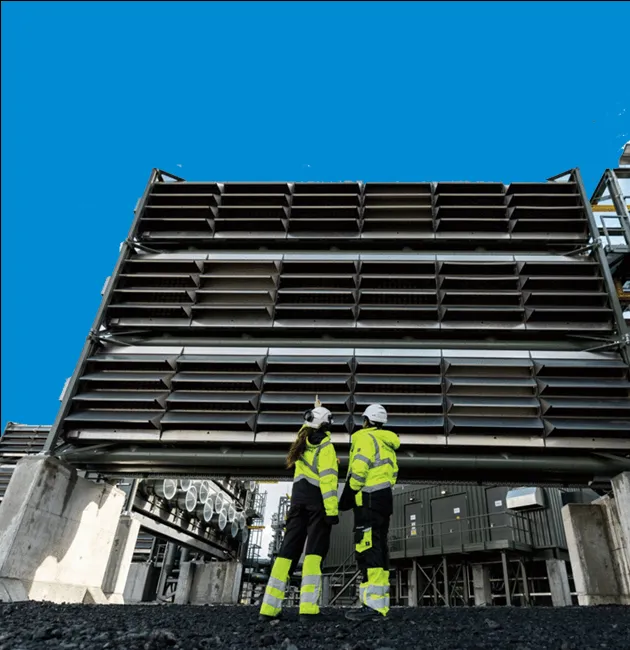
"Mammoth," which the Swiss climate-tech company "Climeworks" put into operation on the 9th, is the world's largest carbon-capture-and-storage (DAC+S) plant. Mammoth, which began operation in Hellisheiði, Iceland, can store 36,000 tons of carbon dioxide a year at a depth of 700 meters underground. For this reason, Mammoth will serve as an important milestone in Climeworks' roadmap of carbon-capture-and-storage facilities—megaton capacity by 2030 and gigaton capacity by 2050, which the company sets as its goal.[The carbon-capture-and-storage principle of a Climeworks DAC+S facility ©Climeworks]Mammoth boasts a scale 10 times larger than "Orca," Climeworks' carbon-capture-and-storage plant that Microsoft previously invested in. This facility implements DAC+S technology (Direct Air Capture and Storage)—one of the technologies for removing carbon from the air. DAC technology separates only carbon dioxide from air drawn in by huge fans and then stores it underground or reuses it. However, the cost is high, the energy consumed for carbon capture is also large, and the effect of removing carbon at a meaningful level has not been proven, so commercialization needs time.Through Mammoth, Climeworks aims to make the technology a reality by lowering the cost of carbon capture and storage per ton to 300–350 dollars by 2030 and to 100 dollars around 2050. It also explains that, when operating Mammoth, it strives to minimize unnecessary energy waste by using Iceland's renewable, clean geothermal energy.The carbon credits generated when Mammoth stores carbon underground are taken by companies that trade with Climeworks, such as Microsoft. The carbon-emissions-trading system is a policy created to limit greenhouse gases within an emissions range for companies allocated emission rights. A company that exceeds the standard must purchase carbon credits from outside, and a company that emits fewer greenhouse gases than the standard can sell its credits. by Editor N
"Exxon Mobil Corp.," the largest oil company in the U.S., recently filed a lawsuit against its own investors, "Arjuna Capital LLC" and "Follow This." For a company to sue its own shareholders is unusual even in the U.S., the land of lawsuits. Both of the investment firms Exxon Mobil accused are "activist investor groups" that demand a company's sustainable management as shareholders. This lawsuit shows, beyond the tension between fossil-fuel companies and activist investors, the "anti-ESG sentiment" arising in the U.S. in full.The lawsuit began with the shareholder proposals that Arjuna Capital and Follow This submitted to place items on the agenda of the shareholders' meeting. Exxon Mobil claims that the two investment groups deliberately acquired small amounts of stock to obstruct corporate governance. The proposals mainly contained content demanding a reduction of Scope 3 emissions, and the argument is that these proposals are unrealistic and, in the long term, run counter to shareholder value.[Exxon Mobil, which ranked No. 1 in market capitalization among the world's oil and gas companies as of 2023 ©Statista]How Is Governance Intervention Possible with Only a Small Investment?Even small investors can sufficiently intervene in corporate management under the U.S. "Securities and Exchange Commission (SEC)" Rule 14a-8. That rule allows shareholders to submit items for a company's annual meeting. The qualification can be met if a shareholder holds at least $2,000 worth of stock, or 1% of the company's securities, for at least one year. In other words, Arjuna Capital and Follow This's agenda proposals are lawful. But Exxon Mobil argues that it is improper for investors to repeatedly submit proposals that do not consider the company's long-term value while holding only a minimal amount of stock.The Two Investment Firms That Withdrew Their Agenda RequestsWhen Exxon Mobil filed the lawsuit, the two investment firms withdrew their agenda requests. It is highly likely they feared that the cost and duration of the lawsuit would grow astronomically. But Exxon Mobil stated that it would continue the lawsuit. This is because the lawsuit had the purpose not only of preventing the two firms' proposals from being placed on the shareholders' meeting agenda, but also of fundamentally blocking activist investors from influencing corporate governance with small investments. There is a view that Exxon Mobil is trying to use this opportunity to also influence the SEC's rules.Exxon Mobil, Which Moved the Playing FieldThe conflict moved from inside the company to the court. The court will review the intent and legality of the agenda the two firms attempted to place, and—more broadly—investors' rights regarding corporate governance, the interpretation of the SEC's rules, and so on. The investment firms have argued that their proposals lower the company's environmental impact and align with broad social values and sustainability goals, while Exxon Mobil sees such small investors' actions as not only running counter to shareholder value but also as a kind of abuse of rights. Whether it is Exxon Mobil or the investors that truly values the company's long-term interests will now be decided in court. And that outcome will cause a great reverberation in the changing role of shareholders regarding corporate governance. by Editor N
[An image of Ulsan City's hydrogen-electric tram ©Ulsan City]Last week, 17 cities and provinces nationwide, including Seoul, each announced climate-crisis-response policies. Seoul stated that it would disclose the greenhouse-gas emissions of private buildings in 2026, and local governments submitted their First City/Provincial Basic Plan for Carbon Neutrality and Green Growth to the Ministry of Environment. They are drawing attention for having taken up the climate-crisis response through policy, but opinions continue that these policies are nothing more than a guideline role and have no policy effectiveness.Seoul is implementing a "low-carbon building certification" policy by introducing LEED (Leadership in Energy & Environmental Design), an eco-friendly, low-carbon evaluation and certification system. On the grounds that 70% of Seoul's greenhouse-gas emissions occur in the building sector, it is pushing a project for 1 million low-carbon buildings and has also set out to introduce a total-cap system on building greenhouse gases. Representative LEED-certified buildings are Seoul's Gangnam Finance Center, Yeouido IFC, and Jamsil Lotte Tower. However, criticism follows that, without enforceability, it does not help actual greenhouse-gas-emission reduction. It has significance in being the first in Korea to set out to measure the total energy of private buildings, but the view is that it does not help actual reduction.The U.S., which is actively taking up the climate-crisis response, has run the "Energy Star" system, which evaluates buildings' energy use, since the 1990s. It is a system for voluntarily measuring energy use, but New York City and Seattle are moving quickly for actual greenhouse-gas-emission reduction.Under the Climate Mobilization Act enacted in 2019, New York City has been imposing fines from this year to reduce greenhouse gases emitted from mid- to large-sized buildings in New York by 2050. If a building's energy-efficiency grade is not submitted within the deadline, it is charged $1,250; if a report is not submitted within the deadline, $500; and depending on conditions, a fine of up to $2,000 per year is imposed. The fine system that Seattle will apply from 2031 carries a bit more enforceability. Buildings exceeding the greenhouse-gas-emissions standard are fined up to $10 per 0.1 square meter, depending on building type. Under alternative-payment rules, one may have to pay $190 per MTCO2e (million tons of carbon-dioxide equivalent).[Examples of region-specific projects in the First Basic Plan for Carbon Neutrality and Green Growth ©Ministry of Environment]The First Basic Plan for Carbon Neutrality that the 17 local governments submitted to the Ministry of Environment is likewise evaluated as a plan lacking in concreteness and sincerity. This is because it appeared to focus only on region-specific projects instead of connecting energy sectors—such as district heating and cooling, which are effective for actual energy-use reduction. Besides the Seoul case, the basic plan contains content such as Daegu planting 60 million trees by 2026 and Ulsan newly establishing two tram lines operated by hydrogen-electric power by 2032. A skeptical view follows that, unlike the reduction targets set, it presents plans that still remain at the level of specifics, so it will have no effect on actual reduction.This basic-plan submission was carried out according to nationwide local-government plans aligned with the national target of the Ministry of Environment reducing greenhouse-gas emissions by 40% compared with 2018 by 2030. Each local government, after considering on-site conditions and reflecting residents' opinions, prepared the basic-plan action guidelines through deliberation by the local Carbon Neutrality and Green Growth Committee. The Ministry of Environment is known to plan to report the analysis of the local governments' basic plans to the presidential "2050 Carbon Neutrality and Green Growth Commission" next month. by Editor N

Humanity's carbon footprint is relentless. Even by burning our own dead bodies, we leave carbon dioxide in the atmosphere as we depart. Cremation, one of the methods of handling the deceased, is on a rising trend worldwide. In particular, in the East Asian countries with small national territories—Korea, Japan, and Taiwan—the cremation rate is said to exceed 90%. Japan's is close to nearly 100%. It is true that cremation is an alternative to cramped territory and complicated burial procedures. The words "When I die, just cremate me" sound almost like a thoughtful gesture to do less harm to the world and to those around us.But in reality, that is not so for the Earth. Cremating a single body generates about 160 kg of carbon dioxide. The number of deaths in Korea in 2023 was 352,700. If we estimate that 90% of these were cremated, the carbon dioxide generated by cremation procedures in 2023 comes to about 50,000 tons (CO2eq). This is similar to the amount of carbon dioxide emitted in one year by about 10,000 internal-combustion vehicles. Cremation, which had seemed like the solution to a problem, has become a problem itself as the climate crisis arrives. Just like death with dignity, which has already settled in as an active social discussion, it is worth diligently pondering the environmental impact when choosing the process and method of one's own death.[The interment facility of "Recompose," a U.S.-based company that turns a body into soil in 30 days ©Recompose]A Way to Return to the SoilIn May 2019, in the U.S. state of Washington, a "Human Composting" bill passed. Literally, it made it possible to turn a body into compost. Until that bill passed, burying or cremating a body were the only legal methods of handling it. A company called "Recompose" made a great effort in getting the law passed. Recompose, taking a hint from turning livestock carcasses into compost, succeeded in research on turning bodies into soil, and afterward, through meetings and discussions with policymakers, brought about the bill's introduction. After the bill passed, companies providing funeral services similar to Recompose sprang up one by one. And Colorado, Oregon, Vermont, and New York passed bills in succession.A Way to Return to WaterThere is also the "Alkaline Hydrolysis" method, which treats a body in an alkaline solution at high temperature and high pressure. When the body's decomposition ends, bones and a sterile liquid containing sugars, salts, and the like remain. Because the liquid is harmless to the environment, sewage treatment is possible, and the remains can be made into bone ash and returned to the family, the same as after cremation. This method—also called "Water Cremation"—is evaluated as using far less energy than burial or cremation. The U.S. state of Minnesota first passed a bill in 2003, and now water cremation is legally possible in more than 20 states. Outside the U.S., some Anglophone countries, such as the UK and four Canadian provinces, carry out water cremation.Implementation Is Possible, but Practice Is Not YetAlthough the methods of handling bodies are thus gradually diversifying, worldwide the share of burial or cremation is still overwhelmingly high. The same is true even in regions where a bill has passed and implementation is possible. This is because it is still blocked by the walls of perception and custom. Burial is a time-honored method that humanity has practiced since 100,000 years ago. Cremation has a short history by comparison, but its share is gradually rising. Religious reasons are also large. Both Christianity and Islam have carried on the custom of burying bodies in the ground, and Buddhism has a cremation culture. When the human-composting bill passed in Washington State, the Catholic community even sent a letter to the Senate with the content that it was "a method lacking respect for the body." But whether confining a body in a hard-to-decompose coffin and burying it in the ground is a more respectful act toward the body than returning to a handful of soil and becoming nourishment for nature is a matter to think through and weigh. by Editor N

On April 30, Korea's exposure draft of sustainability-disclosure standards was announced. Going forward, as in the U.S., domestic listed companies will have to disclose sustainability- and climate-related risk information in line with the disclosure standards. For example, if a company purchased greenhouse-gas-emission-reduction facilities in line with the Scope 1 standard, it can disclose the facility-purchase cost and the greenhouse-gas emissions that the facilities will reduce.The timing of the disclosure's introduction has not been finalized. Scope 3* disclosure, which had been at the center of controversy, was classified as optional to ease the corporate burden. It appears that the mandating and timing of application will be decided through later discussion.*Scope 3: a supplier's greenhouse-gas emissionsThe exposure draft is broadly divided into three items: No. 1, general matters for the disclosure of sustainability-related financial information; No. 2, climate-related disclosure matters; and No. 101, additional disclosure matters considered for policy purposes. The purpose of this exposure draft is to provide sustainability information to help corporate investors' decision-making. According to the disclosure standards, a company must provide information on sustainability- and climate-related risks and opportunities that are expected to affect its management.[A summary of the sustainability-disclosure-standards exposure draft, No. 1 General Requirements ©KSSB]No. 1 includes content that must be complied with when preparing and reporting sustainability-related financial information. Going forward, companies must prepare prior-period comparative information, the fact of compliance with the sustainability-disclosure standards, key elements when disclosing non-climate matters, information on significant judgments in the process of preparing sustainability-related financial disclosures, measurement-uncertainty information, and information on previously reported errors. Besides the disclosure standards, it proposes referring to the standards of the "Sustainability Accounting Standards Board (SASB)" or the "Climate Disclosure Standards Board (CDSB)" for water and biodiversity.No. 2 requires climate-related risk information regarding a company's governance, strategy, risk management, and metrics. Companies must disclose both the negative physical risks and the transition risks that climate will pose to the company. In the governance item, they state the decision-making body that will oversee climate-related risks and the climate-related risks that management considers in the decision-making process. In the strategy item, they disclose information on the impact of climate-related risks on the company's business model and value chain, along with information on the company's capacity to respond to its climate risks. The risk-management item records the process of assessing and monitoring climate risks and opportunities. In the metrics item, information belonging to the following seven metric categories must be indicated.1. Greenhouse-gas emissions2. Information on assets or business activities vulnerable to transition risk3. Information on assets or business activities vulnerable to physical risk4. Information on assets or business activities aligned with opportunities5. Capital deployment6. Internal carbon price7. Executive compensationFinally, the No. 101 exposure draft—an additional disclosure matter considering policy purposes—requires the disclosure of information already being disclosed under law, as well as additional information such as childcare-friendly management and safety management. It is part of a policy that proposes that companies, too, help solve social problems in line with the intent of ESG policy.The Korea Sustainability Standards Board (KSSB) will hold an opinion-consultation period until August 31 and plans to seek stakeholders' opinions before announcing the final disclosure draft. The questionnaire for the disclosure-standards exposure-draft opinion consultation can be found on the Sustainability Standards Board's website. by Editor N

The emergency press conference by ADOR CEO Min Hee-jin on the 25th was hotter than the recent general election. The internal strife of a company representing Korea's entertainment industry is being laid bare day after day. HYBE (CEO Park Ji-won)—ADOR's parent company and standing at the opposite pole of the confrontation—is a KOSPI-listed company. Besides HYBE, it is true that SM, JYP, and YG, which also represent Korea, are listed companies, but all three are listed on KOSDAQ. KOSPI requires more demanding listing criteria than KOSDAQ in terms of scale and revenue. By that much, HYBE's revenue, market capitalization, and social influence are ahead of the other entertainment companies.Being a listed company also means being subject to mandatory ESG disclosure. In Korea, the exact standards and subjects have not yet been legislated, but HYBE—which met the large-business-group criteria last year—is highly likely to become subject to mandatory disclosure under the strictest standards. Just as many listed companies have voluntarily published sustainability-management reports as a kind of rehearsal for mandatory disclosure, all of the three companies—SM, JYP, and YG—and HYBE published sustainability-management reports last year. Things such as "transparent and professional board operation," "eco-friendly performance and employment diversity," "enhancing shareholder value," and "risk prevention such as financial management" were mentioned in their sustainability-management reports.[The cover of HYBE's 2022 sustainability-management report ©HYBE]The ADOR Situation Is Directly Linked to Corporate GovernanceCEO Min Hee-jin began the press conference with the story that HYBE had blocked NewJeans's promotion. Within HYBE, various labels and artists exist. Mutual competition is naturally inevitable, and competition itself is not the problem. Not only in the entertainment industry but companies in any industry hold various product lines and gain market competitiveness through competition and collaboration. However, CEO Min Hee-jin claims that, in the process of competition, the decision-making process of HYBE's board was not fair. Conversely, HYBE claimed that CEO Min Hee-jin tried to lower ADOR's value and illegally increase her stake; if true, CEO Min Hee-jin would have betrayed not only shareholder value but also the expectations and trust of ADOR's executives and staff.HYBE, Which Had Pondered the Sustainability of the Entertainment IndustryOn the cover of HYBE's 2022 sustainability-management report, the phrase "For Sustainable Entertainment" is written. And three pages later, HYBE Chairman Bang Si-hyuk opens the report, saying, "We will ponder the sustainability of the entertainment industry ahead of others and become a company that contributes to society and grows through its core business." He also promises to make HYBE a long-loved company, a company that brings about positive change in the industry. If it goes as promised, the conflict between HYBE and ADOR should, as a result, also be able to remain a positive influence on the industry. It could be an opportunity for the entertainment industry to break away from long-standing practices and transform into an industry based on good governance—that is, a fair system.The Homework of an Entertainment Industry of Growing InfluenceThe word "fandom" long ago changed to "fandustry." As the concerts of Taylor Swift, a pop singer representing the U.S., moved entire regional economies, terms such as "Swiftonomics" and "Touronomics" came into being. HYBE, too, has a plan to provide artist-linked attractions, food, and lodging products through "The City" project, which turns entire cities where concerts are held into theme parks. It appears it will contribute considerably not only to local governments but also to the national economy.As performance and influence have grown, the scale of shareholders in the entertainment industry is also increasing together. That means interest in companies' operations is rising by that much. This is all the more so because it is an industry on which people's attention is concentrated. This situation reminds us that organizational satisfaction stemming from governance can be important from a risk-management standpoint. by Editor N
ThEre is an opinion that the Korean government's climate policy is insufficient for crisis response. Amid this, the release date of the domestic climate-disclosure draft was announced as the 30th of this month. Unlike the industry's expectation that it would be released this week, the full text of the draft will be viewable on the 30th, delayed by a week. In the draft, among the ESG areas, climate (E; Environment) disclosure—for which international consensus has formed—is set to be introduced first, and since it is estimated highly likely to include "Scope 3 disclosure," which was even omitted from the U.S. climate-disclosure final draft, voices of concern are growing in some quarters.[The basic structure of the climate-disclosure draft ©Financial Services Commission]At the fourth meeting of the ESG Finance Promotion Group, held on the 23rd, the basic structure and key content of the draft—allowing an advance look at the draft to be released next week—were shared. The structure is basically divided into mandatory-disclosure standards and selectable additional-disclosure standards, with the gist being "governance for climate-risk management" and that "a company must disclose its response strategy and management process related to climate risk." Among these, the phrase "a company must disclose the impact of climate-risk factors affecting corporate value on the value chain" is specified, giving rise to the opinion that the draft will include Scope 3.Scope 3, beyond a company's direct and indirect greenhouse-gas emissions, designates even the value chain as a target for emission reduction. In the U.S., which announced its climate-disclosure adoption draft this past March, the intent to actively respond to the climate crisis was good, but the opinion that it realistically burdens corporate management clashed, and a tense controversy arose. In the end, Scope 3—which had been included in the 2022 draft—was excluded from the final draft. Domestically as well, one could approach the greenhouse-gas-reduction target quickly, but because companies' cost burden grows, attention is focused on whether Scope 3 will be included in the draft to be released.[The fourth meeting of the ESG Finance Promotion Group, where heated debate was exchanged ©Financial Services Commission]Another point of contention is expected to be the "timing of mandating." The earlier the introduction timing, the more effectively one could mitigate the climate crisis and respond to international standards, but there is also an opposing opinion that the burden on companies unprepared for climate disclosure grows. Such a clash can also be confirmed in the case of domestic ESG disclosure, which was originally to be mandated from 2025 but was delayed to 2026 for the reason of easing corporate burden. It was expected that the mandating timing would be released simultaneously with the announcement of the disclosure-standards draft, but the mandating timing was reportedly not included in the agenda of the fourth ESG Finance Promotion Group meeting, which discussed the climate-disclosure draft.The Korean climate-disclosure draft will be prepared by the "Korea Sustainability Standards Board (KSSB)" within the Korea Accounting Institute, which belongs to the Financial Services Commission. Because the Accounting Institute establishes accounting standards for companies' financial reporting, it takes on the role of presenting the government's sustainability guidelines. The Sustainability Standards Board has been reviewing appropriate climate-disclosure guidelines to apply to domestic companies ever since it was newly established in 2022 to effectively respond to the mandating of climate disclosure in advanced countries such as the EU and the U.S.[The Korea Accounting Institute reviewing points of contention with the Hong Kong Institute of Certified Public Accountants ©Korea Accounting Institute]In particular, as this draft is the first domestic climate disclosure to be released, bilateral talks were held with major sustainability-disclosure-standard-setting bodies on the 17th and 18th to review international compatibility. With the Australian Accounting Standards Board (AASB), the Sustainability Standards Board of Japan (SSBJ), the Hong Kong Institute of Certified Public Accountants (HKICPA), and the International Public Sector Accounting Standards Board (IPSASB), they checked and discussed recent exposure-draft trends and the points that became contentious in each country.In early April, the U.S. Securities and Exchange Commission (SEC)—which had put forward climate-disclosure-mandating regulation—decided to temporarily suspend the mandating regulation for listed companies as various lawsuits contesting the system's legality continued. Following this, according to Bloomberg, Europe's private banks are also reportedly appealing to the European Central Bank (ECB) to "not take the lead in responding to the climate crisis," worried that the competitiveness gap between U.S. Wall Street and European banks will widen. As lukewarm moves regarding the mandating of climate-crisis disclosure and the inclusion of financial elements continue in Europe and the U.S.—which released climate disclosures ahead of others—the direction of Korea's draft announcement is also hard to conclude. by Editor N