Loading Data
Please wait a moment...
Update Cal.
2026.08
02
Sun
03
Mon
04
Tue
05
Wed
06
Thu
07
Fri
08
Sat
Update Calendar
2026.08
31
Fri
01
Sat
02
Sun
03
Mon
04
Tue
05
Wed
06
Thu
07
Fri
08
Sat
09
Sun
10
Mon
11
Tue
12
Wed
13
Thu

Loading Data
Please wait a moment...
Morning features and interviews. A morning story over a cup.
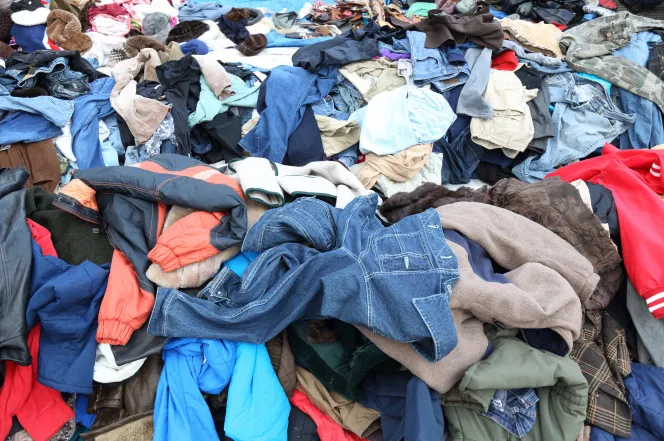
Each year, the market value of unsold inventory that the domestic fashion industry sends to incinerators is estimated at approximately ₩1 trillion. Under the pretext of preserving brand exclusivity, the choice to burn rather than dump at bargain prices had become entrenched as a standard practice. However, such logic is becoming difficult to sustain. Under the EU’s Ecodesign for Sustainable Products Regulation (ESPR), the disposal of unsold clothing, clothing accessories, and footwear by large enterprises within the EU is, in principle, prohibited. The EU is signaling that overproduction and inventory destruction can no longer be treated as merely an internal cost issue for companies. The ESPR itself is a regulation that took effect in July 2024, and beginning July 19 of this year, the regulation will start applying to products from large enterprises. While the regulation’s direct scope is the EU market, Korean companies that sell products in Europe or are connected to the supply chains of European brands are not exempt from its influence.The Fashion Industry Will Feel the Regulatory Shift Through ESPRESPR is the EU’s core product regulation established for the transition to a circular economy. Its fundamental direction is to impose sustainability requirements across the entire life cycle of products — from the design stage before a product enters the market, through use, repair, reuse, recycling, to disposal. Before ESPR took effect, there was the Ecodesign Directive enacted in 2009. While that directive primarily dealt with energy efficiency standards for energy-related products, ESPR significantly broadens the scope of application. With the exception of certain categories such as food, feed, and pharmaceuticals, nearly all physical products placed on the EU market may become subject to product-specific delegated regulations in the future. [Key contents of the Ecodesign Regulation © Korea Energy Agency]While ESPR sets a comprehensive regulatory framework that applies across industries, the specific prohibition on the disposal of unsold textile and footwear products by fashion large enterprises has begun to take effect, making the fashion industry the first to directly experience the regulatory signal.Three Changes Beginning July 19The first change that will apply most directly to large fashion enterprises within the EU starting July 19 is the ‘prohibition on the disposal of unsold inventory.’ Of course, there are limited exceptions. Exceptions may be recognized in cases such as safety reasons, products that are severely damaged and unusable, or counterfeit goods that should not be circulated in the market. To apply an exception, companies must retain documentation proving the grounds for the exception for five years. It would be difficult to effectively maintain existing incineration practices through the exception clause.Second, the disclosure burden regarding the treatment of unsold products is increasing. ESPR requires companies to disclose the quantity, weight, reason for disposal, and treatment method of unsold consumer goods that are discarded. Large enterprises are already within the scope of this disclosure obligation, and from 2027, reporting must be conducted in a more standardized format.Third, preparations surrounding the Digital Product Passport (DPP) are gaining momentum. DPP is a system that digitally exposes sustainability-related information such as raw materials, composition, repairability, and recycling information of products. Its purpose is to enable consumers, repair shops, recyclers, and regulatory authorities to more easily access product information. Companies are now at the stage where they must begin organizing their supply chain data collection systems to prepare for the phased implementation of DPP requirements. [ESPR Implementation Timeline and Key Phases © TÜV Rheinland Official Website]Challenges for Korean Fashion Companies in EuropeESPR targets products sold within the EU. Domestic companies that directly export clothing or footwear to the EU, as well as suppliers that provide fabrics, subsidiary materials, or finished products to European brands, may fall under its direct or indirect influence. The key is not ‘whether you are a Korean company’ but ‘whether your product is placed on the EU market.’According to Ministry of Climate, Energy and Environment statistics, domestic clothing waste generation exceeds 110,000 tons annually. Clothing incineration or disposal occurring within Korea is not directly subject to ESPR regulation. However, for companies supplying products to the EU market, domestic production, distribution, and inventory handling practices are highly likely to become subject to gradual scrutiny. This is because once DPP is fully implemented, product data will connect the entire life cycle — from raw material sourcing, manufacturing, and distribution to use, repair, and recycling. [Poster for LF HAZZYS’s first upcycling project, the ‘Rework Collection’ © LF]In response, the government and industry are also beginning to prepare. The Ministry of Trade, Industry and Energy and related agencies are operating pilot projects and consultative bodies for DPP preparedness, while discussions on inventory management, recycling, and data standardization continue within the textile and fashion industries. Examples linking inventory and circularity are emerging — such as the Rework Collection, an upcycling project launched by LF HAZZYS in 2023, and Kolon FnC’s expansion of its secondhand fashion platform. However, responding to the unsold clothing disposal regulation may be an even more challenging task than DPP preparedness. While DPP is a matter of organizing data, the prohibition on inventory destruction requires transforming production volumes, sales strategies, discount policies, resale channels, and recycling infrastructure — this is closer to an adjustment of the fashion business model itself.ESPR: An Export Industry Issue Beyond FashionThe scope of ESPR does not stop at fashion. The European Commission is progressively presenting a timeline for adopting product-specific delegated acts through the ‘2025–2030 Working Plan.’ The adoption of the delegated act for steel is scheduled for 2026, followed by textiles and clothing, aluminum, and tires in 2027, furniture in 2028, and mattresses in 2029. This is why the ESPR response is not merely about whether unsold clothing can be burned. As delegated acts accumulate, how transparently Korean export companies manage their product data and how they collect and verify environmental information across their supply chains will become a prerequisite for accessing the EU market. The regulatory clock is already ticking. by Editor L

By 2050, forests aged 50 years or older are expected to account for 72% of South Korea’s total forest area. As a result, the greenhouse gas absorption rate of forests is projected to decline significantly. While the spread of renewable energy and electric vehicles is accelerating reductions in carbon emissions, the absorption sinks that must support those reductions are actually weakening. This is one reason why calls have persistently continued for new carbon sinks beyond existing ones such as forests and vegetation in South Korea’s carbon neutrality reduction strategy. In this context, the ground beneath our feet is now garnering attention as a new carbon sink. Carbon Sinks: Now It’s Soil, Beyond ForestsOn May 21, the Ministry of Climate, Energy and Environment held a kick-off meeting at Sangyeonjae Seoul Station for the ‘Soil-Based Environmental Technology Development Project to Contribute to Achieving the Nationally Determined Contribution (NDC)’ and announced plans to pursue related research in earnest. This project aims to develop soil carbon absorption and removal technologies suited to the domestic environment. It is also expected to be utilized as a substantive carbon reduction tool, linked to the ‘National Greenhouse Gas Inventory’ — the administrative process for calculating national greenhouse gas emissions and absorption. With this project, the carbon absorption policy that was previously forest-centered is expected to expand to the soil domain. According to the Intergovernmental Panel on Climate Change (IPCC), soil is considered a larger carbon reservoir than the atmosphere and vegetation, with soil carbon storage at approximately 1,700 PgC (petagrams of carbon), far exceeding the atmospheric carbon storage of 870 PgC and vegetation carbon storage of 450 PgC. The IPCC’s Working Group III Sixth Assessment Report, published in April 2022, emphasized the importance of carbon absorption by introducing the ‘Top 10 Carbon Removal Technologies,’ which included four soil-based carbon absorption and removal technologies.[Top 10 Carbon Removal Technologies © IPCC Working Group III Sixth Assessment Report]Soil Carbon Absorption and Removal Project: What Is Being Researched?In the first year of the project, the Ministry of Climate, Energy and Environment is pursuing research on five technologies, including ▲Biochar Utilization Technology ▲Enhanced Rock Weathering Technology ▲Integrated Impact Assessment Model for Soil Carbon Absorption and Removal. Among these, the most noteworthy technology is ‘biochar.’ Biochar is a compound word of ‘biomass’ and ‘charcoal,’ and is a material produced by pyrolyzing wood, agricultural crop residues, organic waste, etc. at high temperatures in the absence of oxygen. During the production process, carbon is converted into a stable structure, and when applied to soil, it can store carbon semi-permanently for over 100 years. [Effects of Biochar © Korea Biochar Association Official Website]Second, ‘enhanced rock weathering technology’ involves crushing rocks with high calcium and magnesium content and spreading them on soil, where they absorb atmospheric carbon dioxide in the form of carbonates. The resulting carbonates remain in the soil and oceans, sequestering carbon. Third, in the ‘integrated impact assessment model’ development stage, the effectiveness of soil carbon absorption and removal technologies is scientifically verified, and the environmental positive and negative impacts of the technologies on ecosystems are comprehensively analyzed. The integrated impact assessment model is a key evaluation tool for scientifically verifying greenhouse gas reduction effects. This project is a public-sector technology development initiative, and in the future, institutions or operators designated by the Ministry of Climate, Energy and Environment will be able to use the developed technologies free of charge.Measurement Standards as Important as Carbon Absorption TechnologyAdvancing soil carbon absorption technology affects not only national greenhouse gas reduction targets but also corporate ESG strategies. As domestic companies prepare for ESG disclosures based on the status of NDC implementation, securing carbon sinks can contribute to enhancing the credibility of carbon neutrality roadmaps. If a company’s soil carbon absorption performance is officially recognized as a greenhouse gas reduction amount, companies could use farmland or idle land to secure greenhouse gas emission credits. However, for this to happen, an MRV system (Measurement, Reporting, and Verification) that can incorporate soil-based carbon absorption performance into the national greenhouse gas statistical report must first be established. As soil carbon absorption and emission rates vary significantly depending on regional characteristics and climate conditions, establishing reliable measurement standards is just as important as technology development. [MRV Strengthening Plan © Ministry of Economy and Finance]Until now, carbon reduction strategies have primarily been discussed in terms of reducing emissions. However, this project is significant in that it develops the opposite side — carbon absorption technology. Now, as corporate ESG disclosure obligations are being expanded in stages, securing sink-based carbon performance could serve as a means to fill the gaps in NDC achievement that could not be met through emissions reduction alone. For soil to become a genuine strategic resource for carbon neutrality, technology and institutional frameworks must accelerate together. by Editor L

In November 2025, the U.S. startup Starcloud, backed by NVIDIA, became the first in the world to successfully train and run a large language model (LLM) in space. It ran Google’s small language model ‘Gemma’ on a satellite equipped with the NVIDIA H100 high-performance GPU to generate responses. And half a year later, on June 12, 2026, SpaceX, the space infrastructure company run by Elon Musk, listed on NASDAQ and broke through a corporate valuation of USD 2 trillion (approximately KRW 3,040 trillion). Starcloud’s experiment proved that the most power-hungry chip on Earth can also operate in the vacuum of space. SpaceX has also revealed a vision of converting its currently operating Starlink satellite network into a space-based data center network for processing AI workloads. The possibility of harnessing unlimited solar energy for AI data — currently burdening terrestrial power grids — has now opened up.[SpaceX NASDAQ listing event © Nasdaq Newsroom]Space: The Next Frontier for Data CentersIn the AI era, data centers require high-efficiency cooling systems because they consume massive amounts of electricity, and they must be able to scale rapidly to keep pace with growing demand. However, meeting these conditions on Earth is becoming increasingly difficult. Global data center electricity consumption is projected to double to 945 TWh (terawatt-hours) by 2030, and the share of power consumed by AI-optimized servers is expected to surge from 21% in 2025 to 44% in 2030. Global data center power consumption already exceeds the total electricity use of some smaller nations, and competition to secure suitable sites is intensifying. Google, which once declared it would use only clean energy, officially acknowledged in its 2025 environmental impact report that achieving its goal of net-zero carbon emissions by 2030 has become extremely difficult due to the massive power demand from generative AI. The breakthrough that Big Tech has chosen between energy pledges and AI growth is space. Space meets all three conditions that Earth struggles to fulfill: power, cooling, and scalability. In space, solar power generation is possible continuously without the influence of weather or time zones, and the sun emits approximately 400 trillion watts of energy. For cooling, the cryogenic environment of space holds the potential to replace the complex cooling systems on Earth. Unlike Earth, constrained by site regulations and grid saturation, there are no physical limitations in orbital space. Big Tech Heading to Space, from SpaceX to GoogleAs space emerges as a solution to the AI power problem, the person most aggressively pursuing this vision is undoubtedly Elon Musk. Musk, who founded SpaceX in 2002, expressed his ambition to build AI data centers in space at the World Davos Forum in January of this year, stating, “Thanks to solar energy and the cryogenic environment, operating AI data centers in space would be very low cost.” To realize this, SpaceX merged with the AI startup xAI in February of this year — xAI also being a company run by Elon Musk. At an investor briefing ahead of SpaceX’s listing, Musk outlined plans to combine xAI’s large language model (LLM) and real-time data processing technology with Starlink’s satellite internet network to build a massive AI data center in orbital space outside Earth.[Starlink satellites built by SpaceX © SpaceX Official Website]That said, space data centers are not Elon Musk’s stage alone. In November 2025, Google announced ‘Project Suncatcher,’ a plan to build data centers that directly use solar energy in space. The basic concept is to launch solar-powered satellites into low Earth orbit, equipped with Google’s AI-specific Tensor Processing Units (TPUs) and optical communication links. To this end, Google plans to launch two test satellites with partner Planet Labs by early 2027. Google CEO Sundar Pichai said, “Within ten years, space data centers will become routine.” Thermal Management, Communication Latency, Space Debris… Mountains to ClimbWhile the vision for space data centers is rapidly taking shape, the technical hurdles to overcome are formidable. Space data centers must address four key challenges before they can become a reality: thermal management, radiation resistance, orbital safety, and launch/assembly. While space is cold, cooling electronic equipment is not as straightforward as it seems. Heat can only be dissipated through radiation in the form of infrared, not convection, requiring large, efficient radiators. Starcloud was unable to run its GPU continuously for 24 hours in its first satellite experiment due to overheating issues. Communication latency also needs consideration. Even in low Earth orbit, data round-trip delays can occur. For this reason, space data centers are more likely to be initially used for training large AI models rather than real-time services. The risk of space debris collisions and the impossibility of immediate repairs in case of failure are also challenges that must be resolved.[Starcloud satellite within the space data center © Starcloud Official Website]Space data centers are not merely a technological innovation — they are directly connected to the ESG E (Environmental) agenda. The surge in Big Tech’s carbon emissions is already a major concern for global investors. If space data centers become commercially viable, they could serve as a structural turning point that reduces the fossil fuel dependence of terrestrial data centers and increases the feasibility of meeting climate pledges. On the other hand, new environmental risks are also emerging, such as the space debris problem from mass satellite launches and interference with astronomical observation. In the era when the address of data centers is shifting to orbital space, it is time to pay attention not only to the direction of the technology but also to its pace and manner. by Editor L

As the June 3 local elections concluded, thousands of tons of waste were left in their wake. According to the National Election Commission, approximately 1,500 tons of banners were collected nationwide during the 2022 local elections, and a similar volume of banner waste is estimated to have been generated in this June 3 local election. When paper campaign materials are added to the banners, the scale of election-generated waste is far larger than one might imagine. The banners used in elections are not mere pieces of fabric. They are made from polyester fiber derived from naphtha extracted during petroleum refining, coated with synthetic resins such as polyvinyl chloride. Moreover, the mixed structure of ink and coating makes them difficult to recycle.Plastic That Occupied the Streets During the Election PeriodDuring the 2022 local elections, 75% of banners collected nationwide could not be recycled and were incinerated or landfilled. The incineration process also releases hazardous substances. In particular, polyvinyl chloride components produce harmful substances such as dioxins when burned. Carbon emissions from the incineration process are also substantial. Climate Change Action Research Institute Fellow Lee Yoon-hee estimated the carbon footprint of a single banner at 9.38 kg. The analysis found that the raw material usage stage accounts for approximately 70% of total carbon emissions, with the disposal stage accounting for about 30%. In other words, the process of producing and disposing of a single banner emits greenhouse gases equivalent to the amount of carbon a single pine tree absorbs in a year. The cost and administrative burden of banner disposal is also a recurring issue. Under the Public Official Election Act, candidates are required to remove banners after the election, yet in practice, removal is frequently delayed or neglected, leading to a recurring pattern where district and city offices end up carrying out collection and disposal work. Incineration costs reach approximately ₩290,000 per ton. [Waste Banner Collection Point Guide ©Seoul Metropolitan Government Climate and Environment Bureau Instagram ]The Seoul Metropolitan Government established a dedicated waste banner collection point in Seongdong-gu, building a system that collects waste banners from 25 autonomous districts into one location for processing. This raised the recycling rate from the previous 42% to 94%. However, this remains an effort at the Seoul city level and has not led to nationwide adoption. Paper Campaign Materials Discarded Without Being ReadA problem even larger in scale than banners is paper campaign materials. For the 2022 local elections, 580 million copies of campaign materials were mailed, and the paper used for printing materials, ballots, and posters alone amounted to 12,853 tons. Considering that producing one ton of paper requires 17 thirty-year-old trees, this equates to the consumption of over 210,000 trees. Figures for campaign materials used in this June 3 local election have not yet been officially released, but given the more granular candidate and constituency breakdown, the figures are estimated to be similar or larger. The problem is that these materials are discarded without being properly read. In some apartment complex mailboxes across Gyeonggi Province, unopened campaign materials had piled up even after early voting had ended. They were papers that had become waste without ever being read. With smartphone penetration nearing 99%, producing and distributing massive quantities of paper campaign materials is increasingly criticized as inefficient. [June 3 Local Election Paper Campaign Materials © ESG.ONL]The paper used for campaign materials is also difficult to process. Campaign materials often use coated paper that is hard to recycle, and are therefore mostly treated as general waste. This pattern — in which campaign materials produced at enormous expense are incinerated as general waste without ever being properly read — repeats with every election.Discussions on transitioning to electronic campaign materials have been raised multiple times in the National Assembly. In the 22nd National Assembly, three amendments to the Public Official Election Act were proposed, including introducing electronic campaign materials or producing them on recycled paper, but all remain pending in committee. While counterarguments regarding accessibility for the elderly exist, voices calling for a reexamination of the current structure — which insists on full-scale paper distribution in an era of high smartphone penetration — are growing louder.Environmental Responsibility Exempt from ElectionsIn corporate ESG management assessments, waste reduction and resource circulation are key environmental indicators. Companies are required to disclose the recycling rates and treatment methods for their waste and to set reduction targets. Yet the election system itself — which repeatedly produces thousands of tons of plastic banners and hundreds of millions of paper sheets — has no corresponding environmental responsibility standards.[Wonmi-gu Mayor Kim Won-kyung collecting banners after the June 3 local election © Bucheon City Official Integrated Public Relations Portal ‘Saengsaeng Bucheon’]The terms of the 17 metropolitan government heads and 226 local government heads elected in this June 3 local election extend to 2030 — a period that also marks a critical checkpoint for evaluating national greenhouse gas reduction target performance. The paradox of elected leaders who campaigned on climate action pledges having to deal with thousands of tons of waste from day one of their terms was repeated in this election as well. Environmental groups point out that institutional reform is needed so that the National Election Commission, as the authority overseeing elections, also takes responsibility for waste disposal. Amendments to curb the proliferation of banners have failed to pass the National Assembly and remain pending. Unless the system governing election waste changes, the same scene will repeat itself in the election four years from now. by Editor L

If I had a time machine, I would not go to the far future of 2050 but back to 1968. Returning to 1968, I would stand in front of a newsstand somewhere that year and read the articles debating the construction of the Gyeongbu Expressway. During holidays, we worry about traffic jams on the expressway, talk about rest stop food, and check the arrival time shown on our navigation apps. For us today, the Gyeongbu Expressway connecting Seoul and Busan is not the future — it is everyday life.Future Value That Cannot Be Explained by Numbers AloneBut for the people of 1968, the Gyeongbu Expressway was not routine — it was an adventure. Before its construction, questions arose: why build an expressway in a country with so few cars? The national budget was tight, and road pavement rates were low. Opponents of the construction at the time argued that considering Korea’s economic situation and automobile penetration rate, building the Gyeongbu Expressway was neither urgent nor a financially wise decision. With approximately 60,000 vehicles in Korea in 1967 and a road pavement rate of just 8% by 1969, theirs was a reasonable argument. In the January 1968 issue of the monthly magazine Sedae (Generation), then-National Assembly member Park Young-rok of the New Democratic Party expressed the view that “while it is a matter to be resolved in the future, it should not be pursued too hastily.” His argument was that, considering the burden on the people, more urgent problems should be addressed first. Kim Dae-hwan, a sociology professor at Kookmin University at the time, also pointed out that pushing forward a new expressway project not included in the Second Five-Year Economic Development Plan would increase the burden on the national economy and could disrupt the development plan. [Gyeongbu Expressway construction site, 1968 © National Archives of Korea ]It is hard to scoff at the opinions opposing the road construction. Indeed, building a highway costing hundreds of billions of won in a poor country was not an easy decision. It would therefore be unfair to say that all opponents of the Gyeongbu Expressway were short-sighted people who failed to see the future. However, their concerns did not account for a reality that had yet to arrive. The value of the Gyeongbu Expressway cannot be explained at the time of groundbreaking solely by the number of cars traveling on it. It was a road built because there were cars, but it was also a road that summoned the era of automobiles and logistics. No one can refute the fact that the Gyeongbu Expressway, while avoiding overlap with existing railways and national roads, served as the arterial route connecting the capital region, the Yeongnam industrial belt, and the ports of Incheon and Busan, functioning as the backbone of economic development.The Questions Left by a Reckless ChallengeLet us move the time machine a little further, to Pohang in 1970. Similar words were exchanged there. A country lacking iron ore, capital, and technology had declared it would build a large-scale steel mill. Today, we regard POSCO as the foundational strength of Korean manufacturing. But at the time, POSCO’s success was anything but a given. The criticism directed at the steel mill construction back then was even more explicit.Looking back at past debates, prominent economists denounced the steel mill as “uneconomical, a waste of resources, and merely for wartime purposes.” The press argued that it would be better to simply import steel. In the National Assembly, lawmakers questioned why a steel mill with neither raw materials nor a use case should be built, and even criticisms along the lines of “let’s solve the food shortage from the lack of rice first” emerged. [Pohang Steelworks No. 3 Blast Furnace Main Construction © Pohang Museum of History] By the calculations of the time, both the Gyeongbu Expressway and the Pohang Steelworks looked uncertain. The costs were clear, but the benefits were hazy. Everyone could see that investment was needed now, but no one could precisely calculate what industrial landscape that money would create in the future. Perhaps this is the shared fate of ‘things we now take for granted.’ Almost nothing was obvious from the beginning. The Gyeongbu Expressway at first looked like waste, and the Pohang Steelworks at first looked like a reckless gamble. But as time passed, the question itself changed. No longer “Why was it built?” but “What would things have been like without it?”The Cost of Transition vs. the Cost of Delay: Which Is More Expensive?Of course, we must not view this story merely as a tale of success from a bygone developing country. The history of the Gyeongbu Expressway and the Pohang Steelworks also carries shadows: regional inequality, insufficient democratic debate, and the sacrifice of labor. Therefore, when addressing the topic of ‘energy transition’ that Korean society faces today, we need not follow that era’s methods wholesale. Nevertheless, the past cases still pose questions toward the present. Can the infrastructure of the future be sufficiently explained by today’s economic viability alone? Should we expand renewable energy further? How fast must we build transmission grids? How should we reform the electricity market and rate system? The questions are many, and the answers are far from simple. Familiar opposition arguments also emerge: “It is uneconomical,” “It only increases the burden on the public,” “Electricity prices will rise,” “Industrial competitiveness will weaken.” But one cannot say these counterarguments are entirely wrong. [Nicholas Stern’s report ‘The Economics of Climate Change’ © Cambridge University]Energy transition genuinely entails costs. It is not something that ends with merely expanding solar and wind power. Transmission grid construction, electricity market reform, local acceptance, and industrial structural transformation must all move in tandem. Someone must bear the costs, and someone must accept changes to the existing order.If we consider the future, several more questions arise. How much does energy transition cost, and what do we lose by delaying it? This very point was the crux of the argument made by British economist Nicholas Stern in the 2006 Stern Report, ‘The Economics of Climate Change.’ In the report, Nicholas Stern argued that the benefits of strong, early action on climate change far outweigh the economic costs of inaction.Let us imagine someone living in 2050 unfolding today’s newspaper. That person would read the debates surrounding the expansion of renewable energy, the conflicts over power infrastructure, and the various disputes over electricity rates and industrial competitiveness centered on carbon emissions. And perhaps, like us today reading about the 1968 Gyeongbu Expressway debate, they might tilt their head and wonder: “Why was that so controversial?” Of course, we cannot be certain. Energy transition is more complex, and far more stakeholders are entangled in these issues. Still, there is a scene I hope for. When the people of 2050 look back at the past, they will accept the energy transition not as a once-unnecessary fad, but as the ‘obvious choice.’ Just as we now look at the Gyeongbu Expressway and the Pohang Steelworks and think, “Why were they so doubted back then?” — that future generations, looking at today’s debates, might say, “If only they had started sooner.” by Kim Won-sang (Climate Solutions, Media Communications)
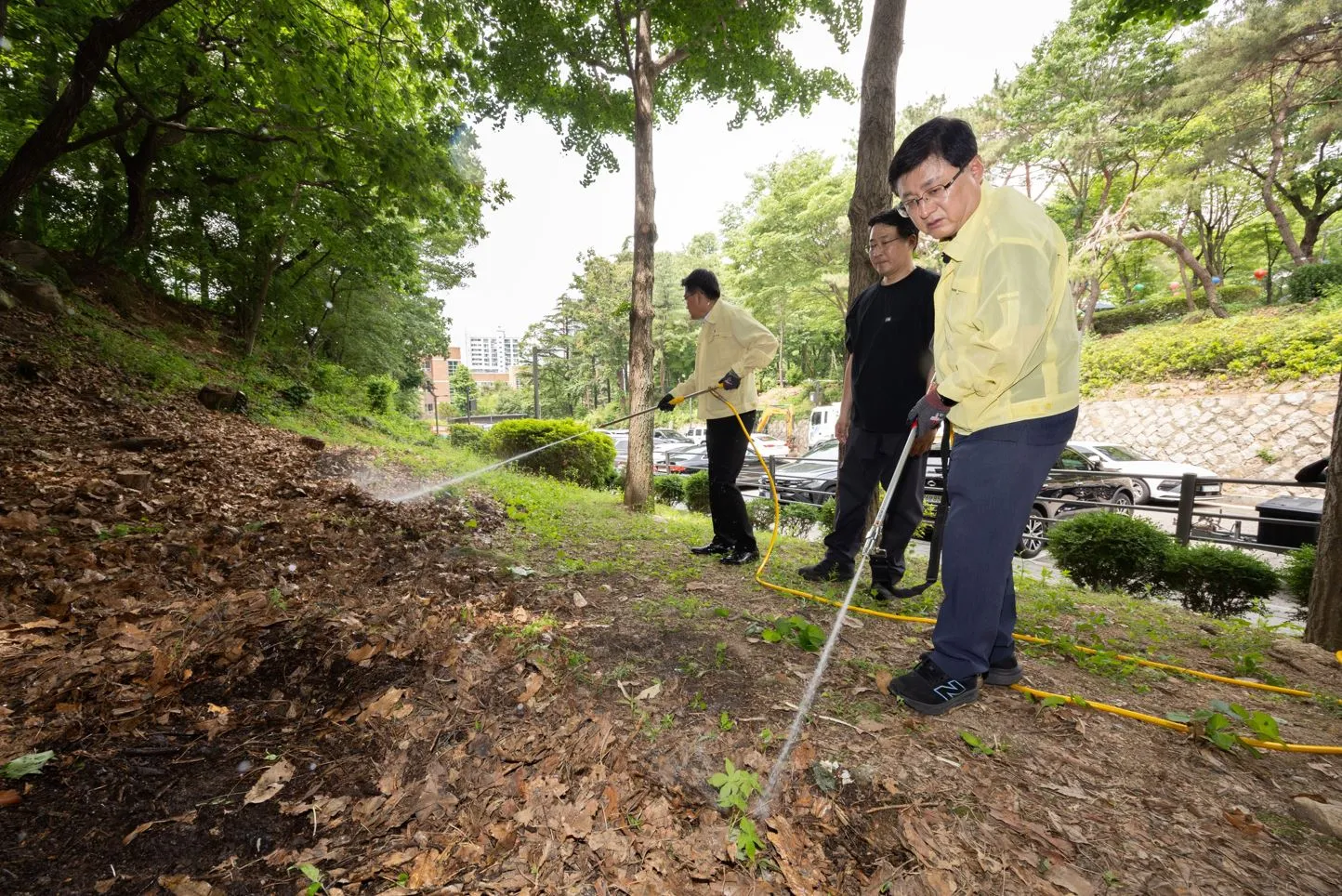
Along with mosquitoes, there is one insect that will soon visit us and has appeared more frequently in the media in recent years than perhaps any other: the red-backed hairy fly, better known as the lovebug. This insect, which flies with male and female joined tail-to-tail in mating pairs, was first discovered in Korea in 2015, but it has been at the center of full-scale controversy only since 2022. That year, lovebugs densely blanketed the streets of western Seoul districts such as Eunpyeong-gu and Mapo-gu as well as Goyang in Gyeonggi Province, startling residents. And now, larvae are being discovered as far north as Dongducheon and Yeoncheon at the northernmost edge of Gyeonggi. Public opinion largely regards lovebugs as repulsive due to their distinctive appearance and overwhelming numbers, yet at the same time, they are a part of our ecosystem and are in fact beneficial insects. How can we coexist with lovebugs this summer and in the summers ahead? Let us examine the causes of their mass outbreak uncovered over the past five years of controversy, the debates surrounding them, and approaches for living alongside them. [Lovebug (Plecia nearctica) © National Institute of Biological Resources]Why Have Lovebugs Become So Numerous?Lovebugs are originally insects found abundantly in warm regions such as southeastern China and Okinawa, Japan. Climate change is cited as the main reason for the surge in their population in South Korea, especially in Seoul and Gyeonggi Province, since 2022. As our winters have grown warmer, the survival rate of overwintering larvae has soared, and abnormally high temperatures have accelerated larval growth, triggering mass emergence of adults. At the same time, the habitats of their natural predators — birds, frogs, and spiders — have been destroyed. In these circumstances, Korean cities have become an ideal environment for lovebugs. Urban heat island effects have made city centers even hotter, and artificial lighting attracts them. The lovebug’s own characteristics have also played a part. They mistake the smell of automobile exhaust for the smell of decaying leaf litter that their larvae feed on, and their preference for bright colors leads them to cling to urban buildings and walls. Moreover, according to recent research by a Seoul National University team, lovebugs even possess genes for pesticide resistance and heat stress adaptation, making them well-suited to urban life. There is also a paradoxical hypothesis that human pest control itself triggered the lovebug outbreak. Professor Shin Seung-kwan of Seoul National University’s School of Biological Sciences pointed out that the pest control measures implemented during a mass outbreak of stick insects in Eunpyeong-gu from 2020 to 2021 may have been the cause. In the process of controlling the stick insects, other predatory insects were killed alongside them, and as a result, lovebugs — despite being relatively slow insects — were able to survive in large numbers without being eaten.Beneficial Insect vs. Pest: The Controversy Surrounding LovebugsLooking at lovebugs themselves, they are clearly beneficial insects. They decompose organic matter such as fallen leaves and decaying wood to enrich the soil, and as adults, they feed on dew and flower nectar, aiding plant pollination like honeybees. They do not carry pathogens or bite. Regardless of these facts, people’s perception of lovebugs remains negative because they swarm in the thousands, cling to clothing and window screens, and give off an unpleasant odor when their carcasses decompose. Dead lovebugs splattered on cars can turn acidic and corrode vehicle paint, and they cling to storefronts and entrances, disrupting business. According to a survey by the Seoul Institute, 86% of respondents considered lovebugs to be pests, and related complaint calls were said to be paralyzing administrative work. In response, the Seoul Metropolitan Government classified lovebugs not as traditional pests but as ‘epidemic discomfort-causing insects.’[Environmental groups opposing the Seoul City ordinance on mass insect management and control support © Seoul Federation for Environmental Movement]Environmental groups have pointed out that such classification could lead to the logic that ‘any insect that causes discomfort can be controlled, even if it does not harm people,’ potentially resulting in indiscriminate insect destruction. Since it is virtually impossible to control only lovebugs without affecting other species, some argue that enduring a week of summer with lovebugs is environmentally and economically preferable. As indiscriminate pesticide spraying disrupts ecosystems and even affects humans, population management rather than eradication is called for. 2026: The Year New Lovebug Control Methods BeginThe National Institute of Forest Science predicted that the main outbreak period for lovebugs in the Seoul metropolitan area in 2026 would be from June 15 to 29, with peak activity on June 24. In preparation, the National Assembly passed the ‘Partial Amendment to the Wildlife Protection and Management Act’ on May 7, and on May 21, the Ministry of Climate, Energy and Environment announced the implementation of the ‘2026 Lovebug Mass Outbreak Response Plan.’ While adult control measures such as spraying drones, portable insect vacuums, and expanded light-attractant traps are notable, the largest change lies elsewhere: moving beyond the existing approach of eradicating adults toward population control starting at the larval stage. The microbial agent used for larval removal (Bacillus thuringiensis israelensis, or BTI) had previously been widely used for mosquito larvae. The National Institute of Biological Resources reported that in indoor verification tests targeting larvae of a related species, 98% were killed within 48 hours, and that BTI acts only on fly-order larvae without affecting other plants or animals.[Minister of Climate, Energy and Environment Kim Sung-hwan visiting the microbial agent spraying site at Bulamsan Mountain © Ministry of Climate, Energy and Environment] Field experiments are already underway. At Gyeyangsan Mountain in Incheon, where complaints surged last year, 2 kg of control agent was mixed with 1 ton of water and sprayed primarily on moist soil where larvae thrive. At Baengnyeonsan in Eunpyeong-gu, 10 kg of a formulation made by coating corn kernels with BTI was mixed with 1 ton of water and sprayed, with additional kernels scattered. Related experiments are also in progress at Suraksan and Bulamsan in Nowon-gu. Meanwhile, the Korea Forest Service is testing entomopathogenic fungal control agents and plant extract control agents in forests, which showed 90% and 60% insecticidal efficacy respectively in indoor verification tests. However, environmental groups contend that the academic consensus on these control methods is not that they are ‘safe’ but that ‘condition-dependent effects have been observed, so monitoring is required,’ and argue for a more cautious approach. Many agree that indiscriminate chemical pesticide control destroys ecosystems. This is why considerable research and debate continue over whether truly eco-friendly control is possible and what efforts toward ecosystem coexistence should look like. According to a Seoul Institute report, if the climate crisis continues, lovebug habitats are projected to spread across the entire Korean Peninsula by 2070. With lovebugs that are sometimes seen as creepy and unpleasant, we may perhaps have no choice but to continue forming our ecosystem together and coexisting. Now is the time for deeper reflection and more experimentation. by Editor L

2026 marks the first year in which the carbon cost structure for Korean companies fundamentally changes. The 4th Planning Period (2026–2030) National Emission Allowance Allocation Plan, finalized by the government at a Cabinet meeting on November 11, 2025, includes provisions to phase up the paid allocation ratio for the power generation sector from the current 10.0% to 15.0% in 2026, 20.0% in 2027, 30.0% in 2028, 40.0% in 2029, and 50.0% in 2030. The EU’s Carbon Border Adjustment Mechanism (CBAM) also entered full-scale implementation this year. During the term of the 9th popularly elected local governments, when the dual pressures of escalating paid emission allowance phases and mandatory CBAM certificate purchases will operate simultaneously, the level of regional renewable energy infrastructure will directly determine the carbon costs of businesses in that region. Companies in regions with high renewable energy accessibility can lower their emission coefficients and reduce the cost burden under both regulations, while companies in regions with insufficient infrastructure may face higher carbon costs even when producing the same products. This is why the ESG competitiveness landscape of businesses in a given region shifts depending on which local government head is elected in the June 3 local election.[Nationally Determined Contribution Confirmation © Minister of Climate, Energy and Environment Kim Sung-hwan Instagram]CBAM Full-Scale Implementation: Challenges for Steel-Concentrated RegionsCBAM is a carbon tariff system formally enacted by the EU in May 2023. Following a transition period through December 2025, it entered full-scale implementation on January 1, 2026. Importers must report the total volume and carbon emissions of products imported in the previous year once annually by May 31 and purchase CBAM certificates equivalent to those emissions. Certificate prices are linked to EU Emissions Trading System (ETS) allowance prices, and failure to submit certificates incurs fines of up to €140 per ton of carbon emissions.South Korea’s cost burden for CBAM compliance is concentrated in steel. According to 2022 Korea International Trade Association statistics, steel accounts for approximately 90% of South Korea’s exports of CBAM-covered items to the EU. For regions such as Jeonnam, Gyeongbuk, and Chungnam, where major steelmakers including POSCO and Hyundai Steel and related parts and materials companies are densely located, CBAM is a regional economic issue directly tied to export competitiveness. To reduce the CBAM certificate costs applied to companies exporting to the EU, carbon emissions in the production process must be reduced, making renewable energy accessibility in the region a decisive variable.The Lee Jae-myung administration has designated the creation of RE100 industrial complexes as a national agenda item. The ‘2026 Economic Growth Strategy’ announced by the Ministry of Economy and Finance on January 9, 2026, includes tax support such as 100% income and corporate tax exemption for 10 years for startups in RE100 industrial complexes followed by an additional 50% reduction for 5 years, along with raised local investment promotion subsidy limits and national treasury subsidy ratios, streamlined permitting, and measures to lower renewable energy procurement costs. Emission Allowance Costs Rising One Step at a Time Throughout the TermThe core of the 4th Emission Allowance Allocation Plan is not a simple ratio adjustment. The partial amendment to the Emissions Trading Act promulgated on October 28, 2025, maintains free allocation for sectors at risk of carbon leakage and special-use sectors such as local governments, public transportation, schools, and medical institutions, but strengthens the Benchmark (BM) coefficient — the baseline value for allowable greenhouse gas emissions per unit of product — to the top 20.0% level by 2030. This means that the baseline for the emission efficiency-based allocation method itself rises each year, creating a structure in which companies bear higher costs even when emitting the same amount of carbon.[‘Shinan-Ui Offshore Wind Project,’ the first project of the National Growth Fund and related to RE100 Industrial Complex development © Jeollanam-do Provincial Government]There are two practical ways for companies to reduce carbon costs: reduce emissions themselves, or switch to renewable energy to lower their emission coefficient. Both methods are difficult to accelerate without infrastructure support from local governments. This is the context for the Ministry of Trade, Industry and Energy’s allocation of ₩1.2703 trillion for renewable energy-related budgets in 2026 — a 42.0% increase from the previous year — including a record ₩648 billion for financial support projects for RE100 industrial complexes, agrivoltaics, and offshore wind expansion. The execution of this budget takes place in the regions, and the speed of execution depends on the administrative capacity of local governments.The Renewable Energy Infrastructure Gap Determines Regional Corporate CompetitivenessIn the competition for RE100 industrial complex site selection, Jeonnam currently leads the pack. It boasts abundant renewable energy potential and relatively advanced solar and offshore wind infrastructure. An October 2025 issue report by the Jeonnam Research Institute, ‘Chronicling the Asset Report of the Energy Transition: Proposals for Building Jeonnam-Style RE100 Industrial Complexes,’ presented a full-cycle support framework encompassing energy supply–grid stabilization–corporate implementation–institutional/incentive support–performance management as the core conditions for RE100 industrial complexes, arguing that “Jeonnam’s renewable energy production capacity must be linked to job creation, improved living conditions, and the attraction of high-tech enterprises to build a virtuous economic cycle.” This is the context in which Democratic Party candidate Kim Young-rok’s core pledge for the integrated Jeonnam-Gwangju Special City includes the designation and creation of 2 million pyeong of RE100 industrial complexes in the Yeongam Samho and Sampo districts.In contrast, companies in regions with insufficient renewable energy infrastructure have limited means of achieving RE100. As of 2024, South Korea’s renewable energy generation share stands at approximately 9.0%, just one-third of the OECD average (31.0%). While the government is targeting 100 GW of installed capacity by 2030, the actual pace of expansion varies significantly by region. The solar potential of industrial complexes managed by the Korea Industrial Complex Corporation reaches 4.7 GW, but actual installed capacity stands at only 0.8 GW (17.0%). Companies in regions with low renewable energy accessibility face a structure in which they bear higher CBAM costs when exporting to the EU and also pay higher costs in the domestic emission allowance market.[Sample June 3 Local Election Ballot © National Election Commission]Issues and Limitations: Legal Gaps and By-Election VariablesThe challenge lies in the gap between pledge intent and actual execution. With the RE100 Industrial Complex Special Act yet to pass the National Assembly, it is difficult for local government heads to independently finalize RE100 industrial complex locations and establish power supply systems. Democratic Party lawmaker Kim Jung-ho pointed out during a National Assembly audit that “if the institutional and technological foundations are not in place before 2026, when RE100 industrial complexes are slated to begin full-scale development, achieving the targets will be difficult.”The results of the 14 National Assembly by-elections held on the same day are also important in this context. With all five RE100 Industrial Complex Special Act bills having been introduced solely by Democratic Party lawmakers, the by-election results directly affect the legislative timeline and momentum for these bills. The establishment of a Measurement, Reporting, and Verification (MRV) system for CBAM certification also falls on companies to handle independently, but the response speed of SMEs and mid-sized enterprises varies depending on how much intermediary support local governments provide. This is the significance of June 3, when the selection of local government heads and the composition of the National Assembly are simultaneously decided.The four-year term of the 9th popularly elected local governments is a period in which the paid allocation ratio in the power generation sector rises from 10.0% to 50.0%, CBAM certificate obligations become fully operational, and the statutory transition for ESG disclosure converges. Over these four years, during which all three systems are simultaneously strengthened, the ESG competitiveness of regional businesses becomes even more directly linked to the renewable energy infrastructure of the region and the carbon neutrality administrative capacity of the local government head. Companies in regions capable of sufficiently supplying renewable energy can remain in global supply chains by implementing RE100, while companies in regions that cannot will fall behind in competition as carbon costs accumulate. The local government head we choose on June 3 determines not only four years of regional carbon policy but also the ESG cost structure of businesses operating in that region. The direction of the transition is clear, but the pace and center of gravity are still pointing elsewhere. by Editor L

‘Critical Minerals’ are minerals so important to the economy that if their supply were cut off, entire related industries would be shaken. Smartphone batteries, electric vehicle motors, and semiconductor chips all require specific critical minerals in their manufacturing processes. The problem is that the distribution of these critical minerals is concentrated in only a few countries. The International Energy Agency (IEA)’s ‘Global Critical Minerals Outlook 2025’ report projects that by 2035, China will supply over 60% of the world’s refined lithium and cobalt, and over 80% of battery-grade graphite and rare earth elements. The fact that the critical mineral supply chain is concentrated in a single country means that if that country regulates supply, other nations’ industries could grind to a halt. [Critical Minerals and Diplomacy © ESG.ONL]From Raw Material to Diplomatic WeaponWhen the United States blocked China’s exports of advanced semiconductor equipment, China responded by progressively expanding export controls on critical minerals to the U.S. Starting with gallium and germanium in 2023, China introduced an export licensing system for seven rare earth elements in 2025. In January 2026, citing the Japanese Prime Minister’s remarks ‘hinting at intervention in the event of a Taiwan contingency,’ it abruptly banned exports of dual-use items — goods usable for both civilian and military purposes — to Japan. Critical minerals have become not merely raw materials but diplomatic bargaining chips. To reduce dependence on China, the United States chose a strategy of increasing domestic production of critical minerals while simultaneously joining hands with allies. In February 2026, it launched the Forum on Resource Geostrategic Engagement (FORGE), a trade consultative body ensuring stable mineral supply, with 56 participating countries including South Korea, Japan, and Australia. [View of the Malaysian refining and processing plant of Australian mining company Lynas © Lynas]Japan has the most advanced experience in stabilizing the critical mineral supply chain. It all started during the 2010 China-Japan territorial dispute, when China blocked rare earth exports to Japan. Since then, Japan has quietly spent 15 years building a critical mineral supply chain that bypasses China, joining hands with Australian mining company Lynas to create a route in which rare earths mined in Australia are refined in Malaysia. A Japanese Ministry of Economy, Trade and Industry official once noted, “The United States and Europe are only now realizing the urgency of the rare earth issue. Japan learned its lesson from the relevant problem 15 years ago.”Challenges for Domestic Critical Mineral Supply Chain Independence[Critical Mineral Re-Resource Recovery Activation Vision and Promotion Strategy © Government of the Republic of Korea]Compared to the countries mentioned above, South Korea’s critical mineral supply chain structure is somewhat more complex. For a long time, the model has been to import raw materials from China, import processed materials from Japan, and then manufacture finished products such as semiconductors, batteries, and displays in South Korea. It is a structure where if China imposes export controls on Japan, the ripple effects could be transmitted like a domino to South Korea as well. In response, in 2023, the South Korean government set a target of reducing the import dependence on specific countries for critical minerals from the current level of around 80% to the 50% range by 2030. In January 2026, it officially recognized ‘re-resource recovery’ — recovering metals from waste batteries and other sources to reuse as industrial raw materials — as a critical mineral manufacturing industry and began fostering it. A 250 billion won Critical Mineral Supply Chain Stabilization Fund is also being established. South Korea holds the FORGE chairmanship until June 2026, positioning it to lead international cooperation on critical minerals.That said, compared to Japan’s 15 years of preparation for stabilizing its critical mineral supply chain, South Korea still has a long way to go. It simultaneously needs to secure supply sources for various critical minerals, establish domestic facilities capable of directly refining and processing critical minerals, and systematically foster re-resource recovery companies, which are predominantly SMEs. Even a single smartphone we use every day contains dozens of types of critical minerals. We are living in an era where where those minerals come from and who controls them determines national competitiveness. by Editor L