Loading Data
Please wait a moment...
Update Cal.
2026.08
03
Mon
04
Tue
05
Wed
06
Thu
07
Fri
08
Sat
09
Sun
Update Calendar
2026.08
01
Sat
02
Sun
03
Mon
04
Tue
05
Wed
06
Thu
07
Fri
08
Sat
09
Sun
10
Mon
11
Tue
12
Wed
13
Thu
14
Fri

Loading Data
Please wait a moment...
Morning features and interviews. A morning story over a cup.
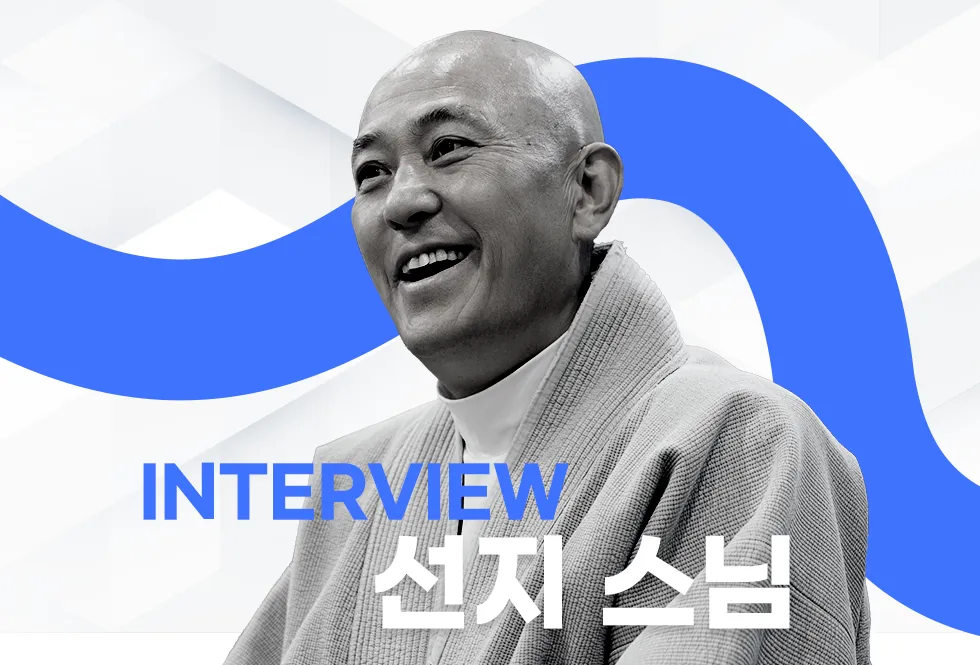
How can ESG management be interpreted from a religious perspective? Buddhism has long valued the concept of "symbiosis (coexistence)." To learn what the future of a sustainable world looks like through the eyes of the Buddhist community, we met Ven. Seonji, author of "Buddha Management," which conveys "symbiotic ESG management," and heard the wisdom of ESG management needed in this era.At the threshold of spring, I headed to Mapo to meet Ven. Seonji, author of "Buddha Management" and abbot of Jungnimsa Temple in Yeongcheon. Much interest has concentrated on this book, which views ESG through the eyes of religion. We arranged to meet the Venerable — who had come up to Seoul for a broadcast appearance — at a coffee shop near the broadcasting station. The editor, arriving an hour earlier than the interview time, spotted from afar the Venerable absorbed with a pen in hand in one corner of the café. Worried that an early visit might disturb him, I carefully slipped away.At the café I visited again at the appointed time, the Venerable welcomed ESG.ONL with a bright, childlike smile. From the Venerable's appearance, the spirit of a pure and frugal ascetic could be felt. His clean but frayed-fronted quilted jacket seemed to represent the Venerable's simple life, stirring in the heart of this worldly person, worn out living in the city, a ripple as clear as the sound of a dawn temple bell. How did the Venerable meet ESG and weave that thought into a book?["Buddha Management," which explains "sustainable symbiotic ESG" © ESG.ONL]The Meeting of Buddhism and ESG ManagementVen. Seonji began to think he should view ESG from a Buddhist perspective while preparing for his doctoral degree at Dongguk University. Existing works of Buddhist studies include various books by scholarly monks in academia. Ven. Seonji thought, "Do I really need to major in that field too?" There was another point of concern. The Venerable pondered whether there might be a way to apply the Buddha's teachings to modern society and convey them easily. Thus the Venerable met ESG. At first, he sought to shed light on the changing state of temple environments and surrounding ecosystems.The global trend emphasizing the themes of ESG management — environment, society, transparent governance — is spreading into the political, social, and cultural spheres. Thinking, "Can Buddhism alone be free within this social current?", Ven. Seonji put into this book the wish that the Buddhist community should at least know what ESG is and take an interest in why it should be practiced. He wrote it feeling the awareness that today's sangha, having inherited a brilliant culture, must preserve the ground we must live on together with future generations.The Modern Practice of the "Bodhisattva Way": Symbiotic ESG ManagementWhen it comes to Buddhism, many people will first think of Ven. Beopjeong's "Non-Possession." Starting one's thinking this way, the link between ESG and Buddhism does not readily come to mind. In fact, non-possession applies to ascetics; it was not saying that ordinary sentient beings too should practice non-possession. There were many merchants and industrialists near the Buddha. They came seeking the Buddha's teachings. Ven. Seonji said that what the Buddha told them at that time was "do not possess more than what you have."Viewing the world according to the principle of the law of dependent origination that the Buddha preached, one can see that "all beings do not exist alone but depend on and form relationships with one another." At this point, one can find a hint of symbiotic ESG management. Symbiotic ESG management means that, based on this simple yet certain truth, we should pursue the coexistence and prosperity of humanity and sustainable development. One more thing: Buddhism has "Bodhisattva thought." Bodhisattva thought is the thought of the salvation of all beings. The core of that bodhisattva way — that is, the path for a bodhisattva to attain enlightenment — is "giving back to society." Buddhism is based on the practice of Bodhisattva thought in that it pursues transparency in temple operation through temples' environmental movements, the formation of relationships with society at large, and the principles of galma-beop (the sangha's decision-making method) and daejung gongsa (all-attending decision-making based on reason and fairness). This also touches on symbiotic ESG management. Ven. Seonji emphasized, "Symbiotic ESG management is about overcoming our society's contradictions, excluding egoism, and sharing one's own with others to realize an equal society."[Ven. Seonji, who emphasized the value of symbiotic ESG © ESG.ONL]The "Karma Community" That Inherits Traditional Buddhist GovernanceIn Ven. Seonji's view, what does our Buddhist community's ESG look like? Ven. Seonji says that, considering the Buddhist community's environmental and internal factors, top-down change is inevitable. The same goes for ESG. Change begins only when the head of the administrative headquarters and the heads of central monastic institutions open discussion of symbiotic ESG management as an agenda.If a "Symbiotic ESG Management Declaration" is announced at the level of the Jogye Order, which has public credibility, its ripple effect could spread as the administrative headquarters and central monastic institutions hold declaration ceremonies at the 24 diocesan head temples and their subordinate temples. In particular, in the governance field, one could create a good case by supplementing the "karma community," which can be called a traditional Buddhist-style governance. The karma community is the Buddhist community's method of discussion, passed down for thousands of years. Sangha members all attend and discuss a topic, and the discussion is completed when there is unanimous agreement. As a democratic and peaceful discussion method that the Buddhist community can inherit, it can also discover follow-up ESG-related agendas.The Symbiotic ESG Management Value Only Buddhism Can CreateBuddhism has an especially solid foundation in the fields of the natural environment and social responsibility. There is also the earlier case in which the Buddhist community took the lead in resolving the crisis when the World Scout Jamboree went awry. As he also emphasized in his book, Ven. Seonji says that for Korean Buddhism to cooperate with companies and public institutions to pursue projects of domestic and international scale, it is first important to declare symbiotic ESG management at the order level. If Buddhism creates long-term symbiotic ESG-management exchanges with companies for responsible social activity, it will be of great help in realizing environmental and social value.Buddhism has a heaven-blessed natural environment and beautiful temples all over the country. Projects that can utilize these places are also continuing. "Hwaeomsa," widely known as a Temple Stay destination, is a good case fitting the ESG environmental-management trend. Collaborating with an eco-friendly lifestyle brand, it made "Hwaeomsa goods," which are very popular among young people too. A particularly popular Hwaeomsa item is a bag on which, through a handcrafted process, the red plum blossom symbolizing Hwaeomsa is drawn onto a "coffee sack" that could have been discarded as industrial waste. Ven. Seonji added, "It is a shame that such novel eco-friendly planning and product development do not spread and are limited to that region," saying he hopes such young ideas blowing through the Buddhist community will be shared more widely.[The "Hwaeomsa red-plum-blossom bag," which gained popularity as an eco-friendly item © Hwaeomsa]Realizing new ideas is good, but Ven. Seonji said there is an ESG practice measure our Buddhist community can most easily start with first: saving unnecessarily used energy and achieving zero waste. On the smallest scale, it is necessary to first turn off lights used unnecessarily at temples in the evening, save electricity, and remove visitors' trash cans and guide people to take their trash back. "Because temples are, after all, in nature, Buddhism especially emphasizes environmental aspects such as climate change, preserving the temple practice environment, and protecting the ecological environment," he said, also revealing the expectation that if even small actions start with the monks at temples, they will gradually spread to society.Beyond the Boundaries of Buddhism, for the Sustainable Development of the Global VillageThe easiest yet most important thing Ven. Seonji proposed is "repenting of one's faults and stopping." We are now using too many things. Consumption to follow short-lived fads and trends only increases. As the Venerable proposes, let us once bring forth the mind to reduce, starting with oneself. And if there are volunteer activities organized in the local community, let us actively take part. The spirit of volunteering and participation that I start will surely spread to those around me. If such activity affects neighbors and organizations and can spread and become known to a wider world, it will create great change. To emphasize again: "Let us start with ourselves first!"By Editor L

There is a company that will plant 100 million trees around the world by 2050 — "Tree Planet," which makes "the world's most valuable product," a forest. We heard the vision of sustainable growth built together with forests from Jeong Min-cheol, co-founder of Tree Planet, a social enterprise that goes anywhere in the world where a forest is needed.Along with various natural disasters, wildfire damage is becoming serious on a global scale. In particular, Korea recently experienced its largest-ever wildfire damage. Can a forest be the solution to such climate-crisis problems, which can also be seen as an extension of the climate crisis? It is a good time to hear Tree Planet's forest-making story — creating "collective impact," a way in which various stakeholders cooperate to solve social problems as a common goal. This weekend, when many things are happening nationally, is also Arbor Day.Tree Planet, which is "creating a way for everyone in the world to plant trees." From the early days of the business, Director Jeong Min-cheol wanted to make an environment-participation platform. And he developed a tree-planting game named Tree Planet. It drew much domestic and international attention with the ingenious item that when users plant trees in a virtual space, trees are actually planted in reality. But afterward, he closed the game business and decided to move closer to the essential business of making forests. While leading the business, Director Jeong Min-cheol built up understanding and expertise about trees.[Tree Planet Director Jeong Min-cheol @ESG.ONL]New and Fun: The Beginning of Tree Planet, Connecting Environmental Awareness to ActionTree Planet was known in its early days for a tree-planting game. Through the game, it sought to improve people's awareness of donation and environmental issues. And it led people to the action of donating trees while playing the game. But various questions arose in the minds of Tree Planet's members, who were still in their twenties. Does a tree-planting game have to be fun? If so, are we a game-making team? After pondering the fun of the game and the organization's identity, the conclusion Tree Planet reached was that "Tree Planet cannot become mainstream in the game industry." The world knew Tree Planet as a social-contribution game company.The "Sewol Ferry Memorial Forest," where ginkgo trees symbolizing peace and hope were planted © Tree PlanetIn 2017, Tree Planet ended its game service and decided to pour more attention into the essential activity of tree-planting. New and fun methods were still needed. After deliberation, the Tree Planet team enabled donors to have an emotional communion with trees. A tree sends a letter to a user. The tree speaks to the user, saying, "Mom, Dad, it's cold here these days." One donor actually traveled to a remote area of Nepal, taking dozens of hours by plane and car, to meet their tree. A single tree I planted somewhere on Earth holds affection no less than sponsoring a child overseas. The "star forest," which contributed to raising Tree Planet's public recognition, is also a form of emotional communion between forests and people. After pursuing the first project together with fans of the group 2NE1, the forests created together with the Seoul city government alone reach some 100. Director Jeong Min-cheol said, "The star forest is rather a case we learned through fandom culture." Fans wanted to present their stars with the eternal gift of a forest. As such feelings gathered, star forests of K-pop idols like BTS are now created not only in Seoul but also in China, Indonesia, Brazil, and elsewhere. Tree Planet is a company that carries out communication connecting forests and people, and it learned that if there is sincerity in communication, it can become a "sufficiently deep heart."Sincere Communication Connected to Tree-Planting, a Forest That Shares Our Society's Memory[The "Sewol Ferry Memorial Forest," where ginkgo trees symbolizing peace and hope were planted © Tree Planet]Tree Planet's communication connects even to the memory of our whole society. In 2017, Tree Planet created the Sewol Ferry Memorial Forest. It began with a proposal from "Sean Hepburn," son of the actress "Audrey Hepburn." Director Jeong Min-cheol said that when he first received contact, he doubted, "Is this for real?" "But because I felt sincerity in his words, I went to San Francisco in person." The Sean Hepburn that Director Jeong met was a film producer who understood Korean sentiment well, having filmed movies in Korea. Worried that when a big incident occurs in Korea, Koreans seem to forget it easily, he proposed creating a space that would not be forgotten, like New York's 9/11 memorial museum. At this point, Tree Planet had a shift in thinking: "the purpose of making a forest might not be solely the purpose of preserving the natural environment." In the end, this project was completed with the creation of the "Sewol Ferry Memorial Forest" located in Jindo, Jeollanam-do.[The "Forest Remembering the Girls" © Tree Planet]After that, Tree Planet created the "Forest Remembering the Girls" for the "Japanese-military 'comfort women' victims" at the Peace Park inside Seoul World Cup Stadium. Many young people and social enterprises who wanted to plant trees themselves in a park frequented by citizens took part. Director Jeong Min-cheol shared the impression that he felt the "value of healing" that a space called a forest holds, and conveyed the words of the guides at the forest-interpretation education space. Those who have long done forest interpretation say, "A forest education program is fine to have, but it's okay without one too." This is because when we enter a forest, we can naturally feel something on our own. Anyone who has experienced making a forest, or experienced nature's healing power, will absolutely empathize with these words.The Key to Sustainable Business and Collaboration Is the "Company's Core Assets"Tree Planet, which is continuing our society's sustainability together with various social organizations, does not explain the value of its work solely by the meaning of a social-contribution business. Tree Planet has collaborated with many government agencies and companies, and Director Jeong Min-cheol emphasized that projects connected to the technological assets a company or agency originally has were effective. This is because they can produce results that have a long-term good impact on the environment, rather than a one-off business. Among these, the "China Desertification-Prevention Forest" created together with the Hanwha Group is a representative case that maintains a continuous positive impact on the environment even now. With Hanwha, with which it formed a bond through advertising within the Tree Planet game, it collaborated through the eco-friendly technology of solar panels. In 2013, Tree Planet used Hanwha's solar panels as the energy source for a water pump to grow trees in the desertification area of the Ningxia Hui Autonomous Region, and 200,000 trees in that desert area came to receive water. Even to Director Jeong Min-cheol, who has experience creating many forests, the result of the collaboration with Hanwha was like a miracle. Creating a forest is a project whose results are hard to confirm in a short time. Because of this characteristic, companies too participate with patience over a long time, and they evaluate confirming the success of the project as all the more meaningful.[A forest created together with Hanwha's solar panels © Tree Planet]Tree Planet's initial vision of "planting 100 million trees" gradually changed with the passage of time. From the goal of once hitting the number 100 million, it sought to change it to having 100 million people plant trees. But in the end, it reached the conclusion that a change in our awareness toward trees, forests, and environmental change is important. What Tree Planet currently focuses on is high-tech innovation industries such as agriculture and forestry. Conveying the message about the value of the environment is of course important, but to carry out a sustainable business, one must do "what is needed now but no one is doing." Director Jeong Min-cheol conveyed, "ESG-related companies too, in the end, would do well to establish ESG policies in a direction that actively utilizes their own core assets, such as technology or assets, in order to make a sustainable business possible."From Planting Trees to Providing Saplings: The Transformation of Tree Planet's Business"Due to the climate crisis, wildfires cannot help but continue."Director Jeong, who has accumulated countless experiences related to forests, expressed a heavy heart about the recent wildfire situation. Once a wildfire occurs, one is said to have to wait two to three years to enter that mountain and stream again to restore it. This is because the soil is acidified and has little organic nutrient. So the soil is turned over with an excavator, and the ash-turned dead trees are cut down. Sprouts sometimes grow from the cut trees. But Korea is fundamentally short on saplings. There is great difficulty in forest restoration. With the problem awareness that the production of quality saplings is insufficient, Tree Planet established an agricultural-company corporation called "Forest Ventures" in Icheon and is preparing sapling research and production. Forest Ventures, made up of people who majored in tree-related studies, plans to research good and new varieties broadly, produce more saplings, and develop a value chain that can supply them where they are needed.["Forest Ventures," which converts natural capital into a climate-change solution © CREVISSE]Tree Planet has so far focused on carbon-neutral forests for greenhouse-gas reduction and on disaster-recovery forests for restoring wildfire-damaged areas and biodiversity. Now Tree Planet has entered a "version 3.0" period, deeply pondering what tree should be planted where, and what variety can pass on what value to future generations. "In foreign countries such as Sweden, much research has been done from tree seeds to downstream industries," Director Jeong Min-cheol pointed out. Tree Planet says that going forward it will also do a business of developing and supplying saplings of trees that will create high added value, such as raw materials for pharmaceuticals or cosmetics.The place the flames clawed through still seems full of an acrid smell. At this time, when everyone's feelings toward Arbor Day are special, we look forward to the swift recovery of the damaged areas. Tree Planet, broadening the scope of thought from the individual to society and narrowing it from the forest to the tree, is creating the awareness and action our society and environment need. We look forward to the future to which Tree Planet will contribute over the long term — sustainable forest restoration, the development and planting of good-quality saplings, and more.By Editor L
Even amid the flow of global ESG change in the US, Europe, and elsewhere, domestic ESG policy has, entering this year, trended toward becoming more full-fledged than before. This is because, in the global market, ESG is already accepted as an institutionally settled flow. ESG.ONL has summarized the direction of major Korean companies' ESG responses amid a rapidly changing environment.In 2025, there was worldwide turmoil due to the US Trump administration's declaration of withdrawal from the Paris Climate Agreement and its ESG-policy reversal. But Korea, undeterred by this, is trending toward further strengthening climate-change response and ESG policy. Our government decided to make a large-scale investment of more than 2.7 trillion won in "climate-change response technology development." It has also stated that it will join international cooperation to solve the global climate crisis, and domestic companies too are maintaining a keynote of strengthening ESG management.From 2025 to 2050... Efforts to Strengthen Global CooperationSince the 1990s, Korea has actively participated in the international response to climate change, joining the "UN Framework Convention on Climate Change (UNFCCC)" and the "Kyoto Protocol." After the Paris Agreement in 2016, it set a national greenhouse-gas reduction target of 40% compared with 2018 by 2030, and continues to push concrete policies to realize this. In particular, it reflected in domestic policy the goals of tripling renewable energy and doubling energy efficiency, agreed at the "28th Conference of the Parties to the UN Framework Convention on Climate Change (COP28)," and received positive evaluation in the international community. That said, there are realistic adjustments — for instance, the representative ESG-related policy of "mandatory ESG disclosure," originally scheduled for sequential introduction in 2025, was decided to be applied from after 2026, considering industry's difficult current situation. "Mandatory ESG disclosure," which raises companies' transparency and accountability while providing investors with more accurate information, is planned to expand in stages from 2025 to 2030. Let us look at the ESG-management status of the domestic large corporations that will be included among the mandatory-disclosure targets — how far along they are.[Realizing carbon-neutrality goals © Samsung, © Hyundai Motor][1] Samsung Electronics and Hyundai Motor's Realization of Carbon-Neutrality GoalsTo achieve carbon neutrality by 2050, "Samsung Electronics" is currently pushing to convert to 100% renewable-energy use at its global sites. It is also focusing on reducing water use and expanding wastewater recycling in the semiconductor process. "Hyundai Motor," which decided to produce 670,000 electric and hydrogen cars to replace fossil-fuel-based cars by 2025, currently plans to lead the eco-friendly mobility market and is carrying out carbon-reduction projects linked to electric vehicles. It is also practicing ESG management through methods such as introducing solar-power generation systems into the production process.[Building circular-economy systems © LG Chem, © SK Innovation][2] LG Chem and SK Innovation's Circular-Economy Activity Models"LG Chem," which developed bio-raw-material-based recycled plastic and achieved a 95% waste-recycling rate, is building a resource-circulation economy by commercializing waste-battery recycling technology. LG Chem plans to invest 10 trillion won in eco-friendly-material development and mobility- and battery-related businesses, with the goal of carbon-neutral growth by 2025. "SK Innovation" also focuses on circular-economy activities. It is practicing a "net-zero-waste" goal through a circular-raw-material-based production process that recycles waste plastic. "SK geo centric" aims to build a waste-plastic recycling cluster in Ulsan by 2025, producing 150,000 tons of pyrolysis oil annually and achieving a carbon-reduction effect of 400,000–500,000 tons per year.[Establishing and applying ESG standards © CJ Group, © NCSOFT][3] The "CJ Group," Striving for ESG InternalizationThe "CJ Group" places emphasis on internalizing ESG throughout the entire organization. Therefore, it operates a sustainability-management committee and consultative bodies so that organization members make decisions from an ESG perspective. It strives to create a virtuous-cycle structure by putting forward the values of environment, safety, and health, from raw-material purchasing to production, consumption, and disposal. Also, on the social-responsibility front, along with promoting diversity, equity, and inclusion (DEI), it made efforts for human-rights protection through human-rights due diligence, achieving results such as raising the ratio of female executives and managers and lowering the employee industrial-accident rate.[4] The IT Industry, Setting AI Ethics StandardsDomestic IT companies are creating codes and programs to respond to concerns about ethical problems emerging along with the advance of AI technology. "NCSOFT" operates an ethics-and-security system for AI services through an "AI Red Team," managing data protection and transparency. Also, "NAVER" continues to update its AI ethics code in cooperation with the "Seoul National University AI Policy Initiative (SAPI)." "Kakao" operates an AI-algorithm ethics-education program for all employees, providing an environment where AI ethics can be practically applied to general work. Companies are establishing AI ethics to secure reliability along with corporate competitiveness and to prepare for internal and external risks.Continuous Domestic ESG Policy Keeps the ESG Investment Flow GoingIn this way, despite changes in the international ESG-policy environment, Korea is continuing the ESG-related policies it had been pursuing. It will be hard to avoid the effects of changes in the economic environment, but the principles and technological environment established at the government and corporate level for net-zero goals aim at a long-lasting effect and will continue to create sustainable models in 2025 too.By Editor LESG.ONL's Three-Line Summary 💡- In 2025, despite the Trump administration's ESG-policy reversal, Korea is strengthening climate-change response and ESG policy.- Korea's mandatory ESG disclosure has been postponed to after 2026 but is set to expand in stages by 2030.- Domestic large corporations are striving to achieve carbon-neutrality goals and build circular-economy models, and the IT industry is setting AI ethics standards.
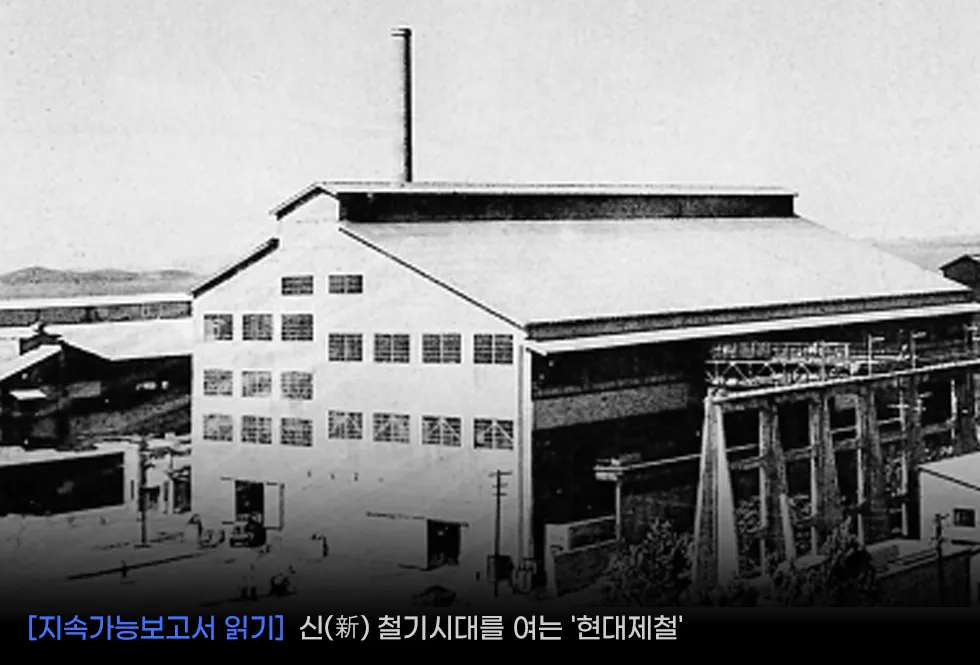
On June 10, 1953, even before the Korean War was concluded, "Hyundai Steel" began as "Daehan Heavy Industries Corporation." Hyundai Steel, which raised up the steel industry for the first time in Korea with the will to rebuild the nation over the ruins of war, is now counted among the world's top 10 steel companies. Let us look at the sustainability report of Hyundai Steel, driven by continuous innovation and a spirit of challenge.[A view of the brightly lit steelworks exterior © Hyundai Steel]WE Do in Sustainable H-waysHyundai Steel says that for a company's success, social responsibility for the "environment" is important. Under the slogan "We Do in Sustainable H-ways," meaning acting in a sustainable way, it set an ESG strategy framework of three practice directions: "eco-friendly management (Heritage)," "shared-growth management (Humanity)," and "right management (Harmony)."It also set six ESG promotion fields, establishing and practicing mid-to-long-term goals by field. Through this, it carries out activities that minimize environmental impact and also unfolds activities to protect natural capital, such as biodiversity conservation. Here, we will look at a few ESG areas that Hyundai Steel highlighted as major.[Byproducts from the metal-melting process are also recycled © Hyundai Steel]Hyundai Steel's Environmental ManagementTo improve the environment and reduce greenhouse gases, Hyundai Steel is actively working on environmental improvement, investing 680 billion won over five years starting in 2021. It also strives to develop recycling technology utilizing the byproducts that come out of the process of making molten iron. Hyundai Steel strives to create a clean environment with a thorough pollutant-management system and hazardous-chemical monitoring. Based on this direction, it is responding to the climate crisis by practicing the bold goal of carbon neutrality by 2050 and a phased reduction plan.It has also rolled up its sleeves to raise energy efficiency. With the goal of reducing energy use by 5% by 2027, it is working on company-wide energy saving. Executives directly preside over energy-saving meetings and oversee energy diagnostics by plant. It operates measures to prevent energy waste, such as developing a system that uses artificial intelligence to predict the temperature of coke ovens. In particular, it plans to reduce greenhouse-gas emissions by building "Coke Dry Quenching" equipment that recycles thermal energy. It is also practicing energy saving by introducing technology that raises the combustion efficiency of heating furnaces.[Ecosystem-protection program © Hyundai Steel]Implementing Ecosystem-Protection ProgramsHyundai Steel carried out endangered-species conservation projects near its sites such as Dangjin and Suncheon, together with partner organizations such as World Vision, the Korea Ecotourism Association, and the Citizens' Institute for Environmental Studies. In particular, by installing an "ecological ladder" for "improving the habitat environment of the gold-spotted pond frog" and carrying out environmental-cleanup activities, it provided an occasion for local residents and employees to pool their strength for environmental restoration together. It also ran the "I'm a Citizen Scientist Too" program, which provides ecosystem education and field experience for young people in the Dangjin area. This program, for the purpose of biodiversity education, has participants observe and record endangered species while learning the importance of biodiversity.It also conducted an "ecotoxicity assessment" to minimize the impact of wastewater discharge on marine ecosystems. As part of its efforts to minimize Hyundai Steel's impact on the environment, this also led to an eco-park project creating green space near its sites. Through such programs, Hyundai Steel continues to cooperate with local communities and join in sustainable development and the conservation of the natural environment. [Coffee-ground recycling and the "Anyone Bench" project © Hyundai Steel]Activities for a Society That Lives TogetherHyundai Steel is also carrying out various activities for social responsibility in the areas of the environment, safety and protection, and future generations. In the environmental field, it carried out a "coffee-ground (coffee waste) re-resourcing project" and an urban-forest creation project, "Making a Green Dong-gu." In particular, through coffee-ground re-resourcing, it also contributed to reducing local-community waste and creating jobs for vulnerable groups. In the safety-and-protection area, it expanded facilities for people with disabilities through the "Anyone Bench" project. The Anyone Bench, a convenience facility that both people with and without disabilities can use, drew attention with its user-friendly bench model design along with improving awareness of disability. On the sustainability front, Hyundai Steel continues efforts to enhance the welfare of the local community and stakeholders, providing investment of 17.1 billion won in social contribution and 88.5 billion won in shared-growth support.The "Korea Institute of Corporate Governance and Sustainability (KCGS)" evaluated Hyundai Steel with a "comprehensive A grade in ESG management evaluation." In addition, Hyundai Steel, also selected as a "Sustainability Champion" by the "World Steel Association (WSA)," established itself as an ESG-leading company in the global steel industry. We look forward to Hyundai Steel creating a future of sustainable growth through continuous strengthening of ESG management befitting its evaluations so far.By Editor L

Director Bong Joon-ho's new film "Mickey 17" opened on February 28 amid much interest. This work, combining space-set SF with the director's characteristic black comedy, also drew attention for injecting blockbuster-scale capital of 118 million dollars (about 127.7 billion won), with Director Bong Joon-ho joining hands with America's Warner Bros.Films with Human Clones as MaterialHuman clones are one of the major materials of SF films. Representative examples include "Blade Runner" (1982), about tracking "replicants," clones who have infiltrated Earth; "The Island" (2005), about clones made for the purpose of organ provision who attempt an escape; and "Moon" (2009), a story about an astronaut working at a lunar base and a clone."Mickey 17," another clone film, borrowed as its motif Edward Ashton's original novel "Mickey7," but it is a work that went through much adaptation. The protagonist Mickey, to avoid a loan shark demanding repayment of a debt incurred through business failure, volunteers to become a clone called an "Expendable." He is repeatedly deployed on dangerous missions to achieve the goals of "Kenneth Marshall," a politician seeking to colonize the ice planet "Niflheim," dying and coming back to life over and over. In the process, an accident occurs in which he falls into a crevasse where the "Creepers" — the natives of Niflheim, and from our standpoint alien life forms — lived. Due to this accident, an error occurs even though Mickey 17 is alive, and a new Mickey, Mickey 18, is created; the conflict that ensues is the gist of the film.What story did Director Bong Joon-ho want to tell with the long-standing material of the human clone? The films preceding Mickey 17 explored clones in various ways within their respective eras' contexts. They mainly delved into ethical dilemmas, social class conflict, and the problem of human identity to sharpen their thematic consciousness. This context is contained in Mickey 17 too. Now let us look at this from an ESG perspective.[Radical politician "Kenneth Marshall," revered like a religious cult leader © Warner Bros.]Earth's Devastation and the Problem of SustainabilityWhy did Mickey, who had to die and be revived as many as 17 times, have to leave Earth in the first place? The film is set in an era when interplanetary migration is possible. Humanity, saying it can no longer live having caused environmental problems on Earth, begins a journey of more than four years to find a new territory to conquer. Before Mickey boarded the spaceship, an overwhelming sandstorm raged outside the airport. Inside the airport, a photo of a radical politician revered at the level of a religious leader hung like a banner. The image of a reality facing a serious climate crisis and an extreme politician stimulating the anxious public psyche is not unfamiliar to us in the 2025 reality (which has not yet secured life beyond Earth) either.Politician Kenneth Marshall's vision approaches the Expendable clones from the standpoint of a recyclable resource. Saying that "people" can be remade and used by extracting organic matter from trash to make human bodies, he self-praises its usefulness highly while entirely ignoring ethical problems such as the disregard for humans. Behavior in the same vein continues at the new settlement "Niflheim." As soon as the spaceship carrying the settlers lands on the alien planet, it seeks to encroach on and exploit the existing ecosystem, just as on Earth. The reality the director seeks to criticize is clear through the greedy villain who lightly ignores sustainable resource management and environmental problems including the ecosystem, even in a situation where, leaving an extreme crisis behind, they set out to build a new home.Technological Advancement and Ethics, the Tragedy of Human AlienationSo then, was humanity itself — which aimed at survival and prosperity without concern for resources and the environment — happy? Mickey 17 depicts humans who, even if a world achieved through scientific attainment high enough to enable clone creation and interplanetary travel arrives, cannot help but think and act according to their innate humanity.The setting in which Mickey is cloned retaining his memory each time he dies, and the look in Mickey's eyes and his expression reflected on screen each time, are the human ethical dilemma itself. Even to Mickey, who knows he will be revived, death was terror. But the Mickeys, trapped in an irrational structure, willingly submit to a reality where economic and technological logic comes first. If they do not follow the extremely controlled living and working environment for efficiency, they are cruelly excluded. In fact, even on Earth, Mickey — who dropped out for failing to produce results under the capitalist system — had no other choice. He merely lived day after day reaching death without any safety device, until the somewhat rebellious 18th Mickey found courage. Even so, Mickey 18 too is a being treated as a printout tumbling on the floor, printed from a machine as one of a scientist's routine tasks, a mere resource for a goal. The characters in the film ask the Mickeys what "death" feels like — as if asking the audience whether a situation where human dignity is annihilated is all right, whether there is no room to reflect.Of course, it is not that the scientists, politicians, and philosophers in the film all failed to ponder the disregard for life. It is just that, before the economic and scientific gains to be obtained through technology, it took a lot of time to reach complete disposal. In such a situation, it is all too natural to view the intelligent life form "Creeper," which lived on the planet "Niflheim," with a focus on use value.Still, there is hope. It is also a facet of humanity that the settlers — reminiscent of the cultural clashes of imperial colonies humanity has experienced on Earth — quickly shift their perception toward beings with the possibility of coexistence and set out to seek the common good. The scene that kindly shows the process of driving out corrupt forces and re-establishing the goals human society should pursue, in order to keep a minimum of humanity, makes us reflect on what our goals are.[Spaceship passengers living under control and surveillance © Warner Bros.]"Mickey 17," which depicts a fable in which, even amid the most painful and tragic moments, those who love and unite ultimately win. This film, true to a Bong Joon-ho film, throws out things to think about regarding the environment, society, and governance we face, not too heavily. Mickey 17 is a film like a good reference for exploring how we will prepare for the coming future, and what kind of future the present us are making a today for each day.By Editor L
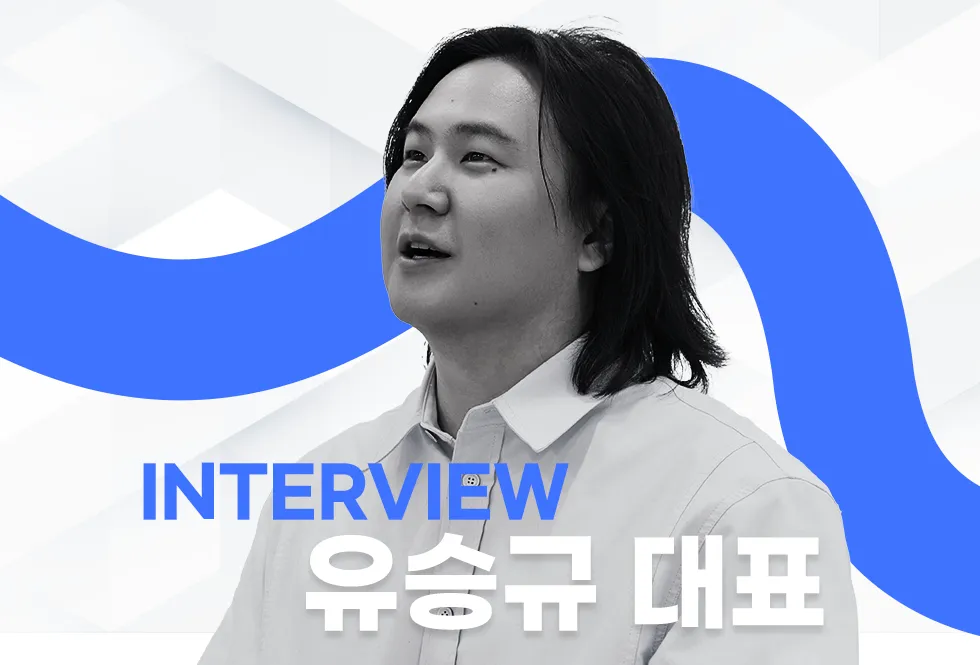
On the 12th, an actual-condition survey by the Office for Government Policy Coordination was released, showing that Korea's "isolated and reclusive youth" more than doubled over the past two years. The isolated-and-reclusive-youth problem is no longer an individual problem but has become a task our society must solve together. What is a better solution? ESG.ONL met Yoo Seung-gyu, CEO of the social enterprise "Notscary Company," to talk about a solution to the problem of Korean youth."Even if you do your best, someone can die."Yoo Seung-gyu (32), CEO of "Notscary Company," began the interview with a frightening statement. Recently too, he went through the sorrowful last moments of a friend who had experienced reclusion. The reason CEO Yoo can understand the deep feelings of the reclusive is that he himself experienced five years of reclusive life directly in his twenties. After coming to recognize, based on his own experience, that the isolated-and-reclusive-youth problem is not a private-realm problem for the individual to solve but a social problem, his time began to move again.This past February, I visited "Notscary Company," which is located in the "Social Economy Integration Support Center" in Gangbuk-gu, and met CEO Yoo Seung-gyu. A feature of this company is a "culture of sharing hardship through conversation." Even if one opens up about personal difficulties at the company, one is not criticized, because there is the CEO's wish that "I want to prevent people from getting sick because they can't speak." Notscary Company also operates a communal-living-type share house — a 10-minute walk from the office, in a family home — to help the self-reliance of isolated and reclusive youth.Self-Reliance Programs and Collaboration Experience as the Driving Force of ChangeCEO Yoo Seung-gyu was able to take the first step of meaningful change after getting to know a certain organization. The Japanese nonprofit "K2 International (hereafter K2)," which aims to be "a place where you can stay even while feeling bad," sought to help long-term recovery instead of rashly intervening in the lives of isolated and reclusive youth. In "a place where you can stay just as you are," fear faced in social life decreased thanks to a warm atmosphere that fully understands your state, and a social family is also formed. CEO Yoo also worked as a K2 employee, but K2 eventually closed due to long-term deficits. The sense of loss when a dense community disappeared was very great."Honestly, I too needed a place to stand."CEO Yoo confided that reclusion rather became a unique credential. After leaving K2, he founded "Notscary Company" with four colleagues. Their teamwork was good. Luckily, the work positions each was responsible for also matched well and complemented one another. And, in the spirit of crawling along the bottom, they took shape one by one and came to have the current business form. Thus, reaching out one by one to reclusive youth, they have pioneered new ground for them to stand on anew in the world.["Notscary Company" employees and CEO Yoo Seung-gyu at work © ESG.ONL]The Evolution of Goals and a Sense of Social ResponsibilityNotscary Company is known for its "parent coaching (Hiki Signal)" for parents with reclusive children, and its "Eundun Gosu (reclusion master)" program service for isolated and reclusive youth."From the start, our goal was not to go under."After K2's closure, seeing a friend he had previously helped through counseling become isolated again, CEO Yoo felt a great sense of responsibility. The case of a friend who had overcome aphasia entering reclusion again was especially heartbreaking. When facing the death of a friend he had worked with, doubt about the work would sometimes rush over him, beyond sorrow. But the desperate reason he must not give up this work is that it must not become "an act of causing yet more harm to someone."[CEO Yoo Seung-gyu talking about solutions to the isolated-youth problem © ESG.ONL]540,000 Isolated Youth: What Is the Problem?According to data released by the "Korea Institute for Health and Social Affairs," the isolated-and-reclusive-youth population aged 19–34 is 540,000. But experts estimate the actual number is far higher. After COVID-19, the social safety net collapsed, and the number of young people who, wounded in an infinite-competition society, fear coming out of the house increased. There is an analysis that this problem emerges especially in Japan and Korea worldwide because of a background of a similar cultural sphere. A major cause is a social atmosphere that values saving face and forces self-consciousness.The family collapse arising from isolated and reclusive youth is one especially serious social problem. The reason the isolated-and-reclusive-youth problem is not only a youth problem is that, including families, the population suffering from this problem increases twofold, threefold. In Japan, cases are reported of parents with children who have lived in reclusion for decades losing their ability to support them and developing dementia. How will society embrace young people who have become hard to socialize, and those who become middle-aged as they are? The worry over the isolated-and-reclusive-youth problem deepens as much as the concern over young people's marriage or birth rates.Reclusive-and-Isolated-Youth Support Projects Together with Public InstitutionsCEO Yoo says he is grateful that the first public projects related to reclusion-and-isolation support are being entrusted to "Notscary Company." Notscary Company jointly carried out the establishment of the "outreach-counseling methodology" of the "Seoul Youth Gijigae Center," a project for isolated and reclusive youth supported by the Seoul city government. Currently, collaboration with the government and public institutions seems set to continue — for instance, producing a "guidebook for share-house workers" for the "Youth Future Centers" of four metropolitan cities together with the Ministry of Health and Welfare.He revealed that he feels most understood especially when collaborating with the Seoul Youth Gijigae Center. Reasonable performance indicators and budget allocation could be discussed and coordinated together from the early stages of promotion. When working with public institutions, there are cases where the reality of the field and the response prepared do not match. Therefore, as with the experience in Japan, he proposes that it is necessary for private organizations to play a hub role connecting the public and reality. This is because the causes of reclusion are too varied, and it is a reality that a small number of institutions find it hard to solve all problems.[Companies that work together with "Notscary Company" © Notscary]As Much as Our Society's Interest, Opportunities for Awareness Improvement Open TooThe "Youth Foundation," which has worked with "Notscary Company" for a long time, has a high understanding of the isolated-and-reclusive-youth problem. A success case like CEO Yoo's — overcoming isolated and reclusive life and even starting a business — is greatly meaningful to the Youth Foundation too. He said that the Youth Foundation's support, which continues consistently based on trust, is a great help in carrying out this work. Notscary Company, selected as a fellow at the "Brian Impact" foundation, which supports the social-innovation ecosystem, also receives support of 3 million won per month for four years from Kakao. It is valuable that the human exchange created through Brian Impact foundation's support became a stepping stone opening opportunities to collaborate with companies.For example, the SK Happiness Sharing Foundation generously gave 50 million won to "Notscary Company"'s content business. Through this, Notscary Company created an occasion to secure content, such as overseas reporting, to increase insight into the isolated-and-reclusive-youth problem. Inquiries also increased from people who saw Notscary Company's YouTube channel where the content was posted. Through such publicly released content, one can aim for improvement in awareness of isolated and reclusive youth. CEO Yoo, who is thus building up the value of collaboration with various organizations in our society, emphasized that for successful collaboration with companies, the understanding of both the communication officer and the company's decision-maker is desperately needed.[Kakao "Brian Fellow" and the SK Happiness Sharing Foundation conference on YouTube © Notscary]The Ideal Social-Connection Model: "Things You Can Do Even in a Withdrawn State"In Japan, there is a café where isolated and reclusive youth can commune with society just through a hand they extend through a small hole while wearing bear-paw-shaped gloves, handing over coffee. This case, benchmarked in Korea under the name "Bear-Paw Cafe" too, provided an occasion for isolated and reclusive youth to wake from hibernation. CEO Yoo appealed for people to understand that "even in a withdrawn state, one can do something." Shueisha, a large Japanese publisher famous for its many hit works, presents an impressive social-return model. This company recognizes reclusion as a credential and employs manga-mania isolated and reclusive youth at bookstores to work as counselors recommending life-changing manga. CEO Yoo emphasized that, as with such cases, Korea too needs a model that recognizes the strengths of isolated and reclusive youth while helping their return to society.For example, what if isolated and reclusive youth, together with a game company, created within the game screen a window through which isolated and reclusive youth can receive mental counseling anytime? Among isolated and reclusive youth, those who play games are said to have a relatively better prognosis than those who do nothing. This is because they at least feel elements of healing and solidarity within the game and communicate with the world. With car companies, one could also support obtaining a driver's license. CEO Yoo, who presented such ideas, said, "It's impossible to throw a person who has been reclusive for ten years directly into a competitive society and make them adapt," saying a customized approach for isolated and reclusive youth is needed. Just by having programs for youth in difficulty proactively cheer young people's new start and let them know our society supports them can give great strength to isolated and reclusive youth.The Health of Youth and the Stability of the Organization That Notscary Company Dreams OfCEO Yoo sets as Notscary Company's goals firming up organizational stability within the next five years and creating its own revenue model in the seventh year. He plans to continue laying the foundation for the organization's activities by making the Eundun Gosu workforce elite, establishing know-how through guidebooks, and promoting donation fundraising and video content. In the long term, he also dreams of a co-living house business focused on young people's mental health. Furthermore, a plan to create a matchmaking company of the isolated-and-reclusive-youth version is also under way. Because we all know that the greatest driving force of growth in life is, in the end, love.On the other hand, CEO Yoo's realistic worries about running the company are also great. There is a share house facing the end of its lease, so the residing members may have to vacate. In this case, someone could become isolated again. So CEO Yoo, who sees the housing stability of isolated and reclusive youth as an important task, is desperately looking for a sponsoring company.A Sustainable Social Safety Net Made TogetherIn an age of 540,000 isolated and reclusive youth, the effort to lead them out of the house is by no means only for the young people who are the parties concerned. It is a matter of protecting their families and our society as a whole. Notscary Company CEO Yoo Seung-gyu will further bring the isolated-and-reclusive-youth problem into public discussion and, with the private and public sectors, individuals and society solving this problem together, create a sustainable social safety net made by all members together.By Editor L
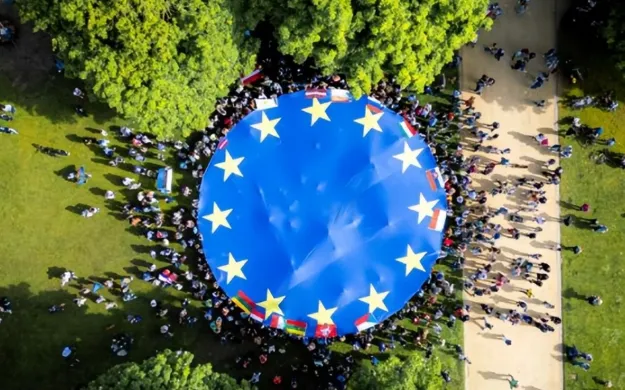
Due to the so-called "anti-ESG keynote" of the Trump second administration, the global ESG environment is greatly changing in 2025. Looking at the impact of this change across Europe and at the ESG policies of leading European countries and companies, we predict the future direction of European ESG policy.[People of member states holding the EU flag together © EU]Europe's ESG Is an Essential for Tangible ProfitWhy is Europe so serious about ESG? After the Industrial Revolution that began in the UK, Europe experienced serious environmental problems and came to recognize the importance of sustainable development relatively quickly. Because of this, Europe's early environmental policy established itself not as the realization of a mere ideal but as an essential strategy for tangible profit. Europe designated the environment as an object of legal-level protection. On this basis, the idea that acts threatening the environment need "more deterrent" punishment for effective environmental protection took hold among EU member states.The active investment in eco-friendly companies as the perception spread that companies practicing ESG succeed managerially and financially is also in line with this background. It is naturally the reason European large and small companies alike cannot help but attend to ESG. Europe, judging that environmental protection and solving structural social problems are a real profit, also premises this on the international-relations side and is pursuing the European Green Deal, aiming to become a net-zero greenhouse-gas emitter by 2050.The EU, Divided Over Trump's Abolition of ESG RegulationThe EU anticipated the possibility of trade conflict even before Trump's reinauguration. Now the EU faces a difficult choice. It is not to the extent of scrapping existing ESG policies on the grounds of the US policy change, but for the industrial competitiveness of EU countries, it has begun to consider loosening corporate regulation or delaying the timing of regulatory application. But EU countries are offering different opinions on easing the Corporate Sustainability Reporting Directive (CSRD).The CSRD stipulates a due-diligence-obligation law under which companies check human-rights and environmental issues in the supply chain. Spain requested that the EU not ease this obligation. Spain's Minister for the Environment, "Sara Aagesen," argued in writing, "Let us support the values and priorities of the European Union across borders and set an example of leadership." Italy also urged the EU not to delay the CSRD, stating that there are tens of thousands of companies that will report the CSRD this year under the existing regulations. On the other hand, Germany and France are demanding that the EU postpone the CSRD by two years.[A Volkswagen plant using solar energy for carbon neutrality © Volkswagen]Germany, Strengthening ESG with Renewable Energy and Electric CarsGermany has actively pushed CSRD implementation. So, as it stands, from 2025 large companies with 250 or more employees by German standards must begin sustainability reporting. But due to the aftermath of the Trump second administration's policy, Germany is troubled by the risk that US subsidiaries within Germany may resist Europe's environmental standards and cause confusion in industry. Even amid such risk, the German carmaker "Volkswagen" has already introduced energy-efficiency technology and achieved complete carbon neutrality as of January 1 this year. Volkswagen's Ingolstadt plant, which produces 340,000 cars a year, built renewable-energy infrastructure through the use of solar modules. Volkswagen announced a plan to raise the share of electric-vehicle production and establish a battery-recycling plant for eco-friendliness going forward. This is entirely the result of following Germany's existing ESG strategy of reducing carbon emissions. It is worth watching a little more whether the German government's and German companies' ESG strategy plans will meet great change in 2025 due to the US's influence.[The "L'Oréal for the Future" campaign video © L'Oréal]France, Leading on the CSRDFrance is a country paying great attention not only to climate issues but also to society's sustainability. France was the first among EU countries to transpose the CSRD into domestic law. From 2024 already, French large companies began CSRD-related reporting, such as carbon-emission supply-chain reporting. Meanwhile, it was also French companies that offered opinions on the move to simplify corporate environmental regulation by pushing the introduction of the EU Omnibus Simplification Package, which collectively refers to matters such as the EU Taxonomy — the standard classifying whether industrial activity is eco-friendly or not — and corporate sustainability due diligence.The French company "L'Oréal Group," which influences the whole world in the beauty field, also publicly emphasized the need to keep maintaining ESG standards by sending a letter to the EU. L'Oréal plans to use 100% recycled resources in its product packaging by 2030. It also stated that it would further expand hiring for vulnerable groups and women.France has so far led climate action within the EU. Therefore, it is expected to continue showing a leading stride, making balanced efforts toward the environment, society, and governance even amid Trump's anti-ESG policy.The UK, Implementing Its Own ESG RegulationThe UK, which left the European Union, has prepared its own ESG regulation separately from the EU and is maintaining a 2050 carbon-neutrality target. The UK energy company BP is pursuing a "Net Zero strategy" of increasing renewable-energy investment to 5 billion dollars annually by 2025 and reducing the share of oil-and-gas exploration. As a financial hub, the UK also had a plan to introduce a "Green Taxonomy" to clearly define ESG investment while making the "Task Force on Climate-related Financial Disclosures (TCFD)" mandatory for all listed companies this year. In an environment that contrasts with such policy, what choice the UK will make going forward is a matter to watch a little more.2025 ESG, a Challenge for EuropeHong Seung-pyo, an EU foreign attorney at Espée & Lancée based in the EU, predicted that "in the Trump 2.0 era, the conflict between the US's realist international politics and Europe's ESG policy could intensify." The point is that "Europe's ESG policy is based on realist interests and can change flexibly according to indicators such as the economic growth rate." He also explained that Europe, in particular, with the economic pressure from the current war in Ukraine and a deepening defeatist perception due to the absence of cutting-edge technology within Europe, says it is "simplifying" Green Deal regulation but is in reality pushing it at the level of "restructuring."With the launch of the Trump second administration, European countries too face challenges regarding ESG. Amid already-begun trade conflict and shifts in global investment strategy, countries with high export dependence, such as the Netherlands and Germany, are in a situation of having to find new outlets. Changes in the economic environment cannot help but drive changes in the ESG-policy trends that had aimed at a better life and sustainability. How the changed ESG flows of the US and Europe will affect Korea's economy and trade continues in the next installment.ESG.ONL's Three-Line Summary 💡- With the Trump second administration's "anti-ESG" move, Europe faces a situation where it could have difficulty in trade with the US and in attracting global investment.- European countries such as Germany and France are considering easing ESG-related corporate regulation and extending its implementation, but positions within Europe are also divided, with Spain and Italy arguing that existing ESG policy should be maintained. The UK operates its own ESG regulation separately from the EU.- In an environment where the ESG stride is apt to weaken — economic pressure faced by European countries such as the war in Ukraine, and the absence of cutting-edge technology — what choice Europe will make is still a fluid situation to watch.By Editor L

Before the launch of the Trump second administration, it was expected that there would be great change in ESG policy. But can the global effort that agonized over a sustainable future stop here? For those interested in ESG, what are the ESG-related changes of the Trump administration that one must know? How will the ESG policies of Europe and Korea change? ESG.ONL seeks to approach the global ESG environment expected in 2025 by finding answers to these questions through a total of three planned content pieces.[US President Trump signing an executive order abolishing ESG-related policies © AP]Trump 2.0's E: Climate-Change Response Is a Green Scam?The Trump second administration, launched in January 2025, is releasing negative views on ESG day after day. Each time President Trump releases opinions on ESG policy that run counter to the existing flow, a heated debate unfolds worldwide. Calling ESG a "Green New Scam," he puts forward thinking close to that of a climate-crisis disbeliever. Following the Trump second administration's executive orders, the US is withdrawing from the Paris Agreement — the global climate-crisis-response effort — and all agreements and treaties concluded under the UN Framework Convention on Climate Change. President Trump has shown such antipathy toward ESG since his first administration. He also has a history of having already withdrawn from the Paris Agreement, the promise to keep the world's temperature rise within 1.5 degrees.The Meaning of the Trump Second Administration's Re-withdrawal from the Paris AgreementThe Trump second administration has stated that it will run state affairs by prioritizing the interests of the US (America First) over global-level environmental agreements. This is the essential reason for withdrawing from international agreements such as the Paris Agreement. It can also be interpreted as a stepping stone to facilitate the US's fossil-energy business. In fact, he lifted the ban on offshore oil-and-gas drilling, and is showing the ambition to freely develop and use the abundant fossil energy from America's land and sea — natural gas, coal, and more — to make America strong again (MAGA; Make America Great Again) and recover its former glory.Trump 2.0's S: Is DEI (Diversity, Equity, Inclusion) a Leftist Ideology?America is a land where the living victory of the human-rights movement breathes. The "DEI (Diversity, Equity, Inclusion) policy," which began with the US Civil Rights Act of the 1960s, has gradually provided equality of opportunity for socially disadvantaged groups such as women, racial minorities, and people with disabilities. DEI was, over the past decade, a means of expanding human-rights protection widely applied not only to the US government and public institutions but to companies. But President Trump, criticizing DEI as a "leftist ideology," is forcing through its abolition. President Trump, going further, argues that DEI policy violates the US Civil Rights Act and is pressuring companies to reduce policies for sexual minorities as well. Saying, "I will return American society to when it was a merit-based system," he even shut down major diversity-related sites of government departments. The US White House, in a statement, justifies its discriminatory policy, stating that abolishing DEI is implemented "to end illegal preference and discrimination." This atmosphere raises concern about room for the strengthening of discrimination-permitting policies against the socially disadvantaged whom DEI had protected.Signs of Change at US Government Agencies and Global CompaniesThe movements of global companies within the US following Trump's such measures are also not to be taken lightly. Leading US global companies such as Google, Meta, Amazon, and Disney stated that they would restrict socially responsible investment through retirement pensions. Also, those in charge of DEI-policy-related programs within companies are being put on paid leave, and preparations are under way to carry out large-scale restructuring.[Apple CEO Tim Cook, who requested the board vote against abolishing DEI policy © Gettyimagesbank]Trump 2.0's G: The Great Upheaval in Global Governance Trump CausedThe more sensitive issue of international trade, in which the international community is densely intertwined, must (however much one must protect one's own citizens first) inevitably entail understanding and cooperation between nations. President Trump is releasing, one after another, policies that go beyond mutual understanding and cooperation — such as raising tariffs even on US allies and neighboring countries and further raising trade barriers. And these policies are having a great impact on America's global governance and on corporate governance within the US. Global governance refers to the way and system of dealing with global problems that nations, international organizations, multinational companies, non-governmental organizations, and civil society must cooperate to solve. Even if a counterpart country takes retaliatory measures against the US's such high-tariff policy, Trump's position is that he does not care. Therefore, from 2025, an invisible war among nations related to trade tariffs is anticipated.Governance Changes at America's Global IT CompaniesAmerica's large IT companies appear to be all accepting the Trump second administration's measures. "Google" changed its organizational-workforce composition, conscious of Trump's DEI abolition. "Meta" also eliminated its DEI team. "OpenAI" deleted DEI-related items from its website and said that going forward, "for intellectual freedom, even if controversial," ChatGPT will answer with relaxed DEI-related censorship. Meanwhile, unlike such moves by US companies, "Apple" CEO "Tim Cook" also revealed a position supporting DEI policy, before the February annual meeting stating a position asking the board to vote against abolishing the DEI program.Summary of the US ESG Outlook: The US ESG Keynote May Retreat, but the Global Flow Will ContinueAll of the preceding happened within two months of the Trump administration taking office. Overall, the Trump second administration is revising ESG-related policy in a direction that prioritizes US interests above all. Due to the Trump administration's such measures, the worldwide effort that had aimed at establishing global climate norms and building a fair society and reasonable governance has been put at risk of being shaken. But along with the great concern comes an optimistic prediction that the long-term direction of ESG that each country is pursuing will continue to be maintained. Yang Chun-seung, Standing Director of the Korea Sustainability Investing Forum, foresees, "With Trump's return to power, the ESG keynote within the US may retreat, but the ESG flow of the global financial world and Europe will still continue."Let us continue to learn, through the following articles, what change the fallout of the US's changed ESG policy will bring to Europe and Korea, and how we will cope going forward.ESG.ONL's Three-Line Summary 💡- The Trump second administration, following the first, is still negative on ESG-related policy and is pushing an "America First" policy.- With this stance, the Trump administration is inducing "anti-ESG changes" in various fields such as climate-change response, DEI policy, and global governance.- The US's policy change is highly likely to affect the global ESG environment, but there is also a positive outlook that the global ESG direction, including Europe's, will continue.By Editor L