Loading Data
Please wait a moment...
Update Cal.
2026.08
03
Mon
04
Tue
05
Wed
06
Thu
07
Fri
08
Sat
09
Sun
Update Calendar
2026.08
01
Sat
02
Sun
03
Mon
04
Tue
05
Wed
06
Thu
07
Fri
08
Sat
09
Sun
10
Mon
11
Tue
12
Wed
13
Thu
14
Fri

Loading Data
Please wait a moment...
Morning features and interviews. A morning story over a cup.

2026 marks the first year in which the carbon cost structure for Korean companies fundamentally changes. The 4th Planning Period (2026–2030) National Emission Allowance Allocation Plan, finalized by the government at a Cabinet meeting on November 11, 2025, includes provisions to phase up the paid allocation ratio for the power generation sector from the current 10.0% to 15.0% in 2026, 20.0% in 2027, 30.0% in 2028, 40.0% in 2029, and 50.0% in 2030. The EU’s Carbon Border Adjustment Mechanism (CBAM) also entered full-scale implementation this year. During the term of the 9th popularly elected local governments, when the dual pressures of escalating paid emission allowance phases and mandatory CBAM certificate purchases will operate simultaneously, the level of regional renewable energy infrastructure will directly determine the carbon costs of businesses in that region. Companies in regions with high renewable energy accessibility can lower their emission coefficients and reduce the cost burden under both regulations, while companies in regions with insufficient infrastructure may face higher carbon costs even when producing the same products. This is why the ESG competitiveness landscape of businesses in a given region shifts depending on which local government head is elected in the June 3 local election.[Nationally Determined Contribution Confirmation © Minister of Climate, Energy and Environment Kim Sung-hwan Instagram]CBAM Full-Scale Implementation: Challenges for Steel-Concentrated RegionsCBAM is a carbon tariff system formally enacted by the EU in May 2023. Following a transition period through December 2025, it entered full-scale implementation on January 1, 2026. Importers must report the total volume and carbon emissions of products imported in the previous year once annually by May 31 and purchase CBAM certificates equivalent to those emissions. Certificate prices are linked to EU Emissions Trading System (ETS) allowance prices, and failure to submit certificates incurs fines of up to €140 per ton of carbon emissions.South Korea’s cost burden for CBAM compliance is concentrated in steel. According to 2022 Korea International Trade Association statistics, steel accounts for approximately 90% of South Korea’s exports of CBAM-covered items to the EU. For regions such as Jeonnam, Gyeongbuk, and Chungnam, where major steelmakers including POSCO and Hyundai Steel and related parts and materials companies are densely located, CBAM is a regional economic issue directly tied to export competitiveness. To reduce the CBAM certificate costs applied to companies exporting to the EU, carbon emissions in the production process must be reduced, making renewable energy accessibility in the region a decisive variable.The Lee Jae-myung administration has designated the creation of RE100 industrial complexes as a national agenda item. The ‘2026 Economic Growth Strategy’ announced by the Ministry of Economy and Finance on January 9, 2026, includes tax support such as 100% income and corporate tax exemption for 10 years for startups in RE100 industrial complexes followed by an additional 50% reduction for 5 years, along with raised local investment promotion subsidy limits and national treasury subsidy ratios, streamlined permitting, and measures to lower renewable energy procurement costs. Emission Allowance Costs Rising One Step at a Time Throughout the TermThe core of the 4th Emission Allowance Allocation Plan is not a simple ratio adjustment. The partial amendment to the Emissions Trading Act promulgated on October 28, 2025, maintains free allocation for sectors at risk of carbon leakage and special-use sectors such as local governments, public transportation, schools, and medical institutions, but strengthens the Benchmark (BM) coefficient — the baseline value for allowable greenhouse gas emissions per unit of product — to the top 20.0% level by 2030. This means that the baseline for the emission efficiency-based allocation method itself rises each year, creating a structure in which companies bear higher costs even when emitting the same amount of carbon.[‘Shinan-Ui Offshore Wind Project,’ the first project of the National Growth Fund and related to RE100 Industrial Complex development © Jeollanam-do Provincial Government]There are two practical ways for companies to reduce carbon costs: reduce emissions themselves, or switch to renewable energy to lower their emission coefficient. Both methods are difficult to accelerate without infrastructure support from local governments. This is the context for the Ministry of Trade, Industry and Energy’s allocation of ₩1.2703 trillion for renewable energy-related budgets in 2026 — a 42.0% increase from the previous year — including a record ₩648 billion for financial support projects for RE100 industrial complexes, agrivoltaics, and offshore wind expansion. The execution of this budget takes place in the regions, and the speed of execution depends on the administrative capacity of local governments.The Renewable Energy Infrastructure Gap Determines Regional Corporate CompetitivenessIn the competition for RE100 industrial complex site selection, Jeonnam currently leads the pack. It boasts abundant renewable energy potential and relatively advanced solar and offshore wind infrastructure. An October 2025 issue report by the Jeonnam Research Institute, ‘Chronicling the Asset Report of the Energy Transition: Proposals for Building Jeonnam-Style RE100 Industrial Complexes,’ presented a full-cycle support framework encompassing energy supply–grid stabilization–corporate implementation–institutional/incentive support–performance management as the core conditions for RE100 industrial complexes, arguing that “Jeonnam’s renewable energy production capacity must be linked to job creation, improved living conditions, and the attraction of high-tech enterprises to build a virtuous economic cycle.” This is the context in which Democratic Party candidate Kim Young-rok’s core pledge for the integrated Jeonnam-Gwangju Special City includes the designation and creation of 2 million pyeong of RE100 industrial complexes in the Yeongam Samho and Sampo districts.In contrast, companies in regions with insufficient renewable energy infrastructure have limited means of achieving RE100. As of 2024, South Korea’s renewable energy generation share stands at approximately 9.0%, just one-third of the OECD average (31.0%). While the government is targeting 100 GW of installed capacity by 2030, the actual pace of expansion varies significantly by region. The solar potential of industrial complexes managed by the Korea Industrial Complex Corporation reaches 4.7 GW, but actual installed capacity stands at only 0.8 GW (17.0%). Companies in regions with low renewable energy accessibility face a structure in which they bear higher CBAM costs when exporting to the EU and also pay higher costs in the domestic emission allowance market.[Sample June 3 Local Election Ballot © National Election Commission]Issues and Limitations: Legal Gaps and By-Election VariablesThe challenge lies in the gap between pledge intent and actual execution. With the RE100 Industrial Complex Special Act yet to pass the National Assembly, it is difficult for local government heads to independently finalize RE100 industrial complex locations and establish power supply systems. Democratic Party lawmaker Kim Jung-ho pointed out during a National Assembly audit that “if the institutional and technological foundations are not in place before 2026, when RE100 industrial complexes are slated to begin full-scale development, achieving the targets will be difficult.”The results of the 14 National Assembly by-elections held on the same day are also important in this context. With all five RE100 Industrial Complex Special Act bills having been introduced solely by Democratic Party lawmakers, the by-election results directly affect the legislative timeline and momentum for these bills. The establishment of a Measurement, Reporting, and Verification (MRV) system for CBAM certification also falls on companies to handle independently, but the response speed of SMEs and mid-sized enterprises varies depending on how much intermediary support local governments provide. This is the significance of June 3, when the selection of local government heads and the composition of the National Assembly are simultaneously decided.The four-year term of the 9th popularly elected local governments is a period in which the paid allocation ratio in the power generation sector rises from 10.0% to 50.0%, CBAM certificate obligations become fully operational, and the statutory transition for ESG disclosure converges. Over these four years, during which all three systems are simultaneously strengthened, the ESG competitiveness of regional businesses becomes even more directly linked to the renewable energy infrastructure of the region and the carbon neutrality administrative capacity of the local government head. Companies in regions capable of sufficiently supplying renewable energy can remain in global supply chains by implementing RE100, while companies in regions that cannot will fall behind in competition as carbon costs accumulate. The local government head we choose on June 3 determines not only four years of regional carbon policy but also the ESG cost structure of businesses operating in that region. The direction of the transition is clear, but the pace and center of gravity are still pointing elsewhere. by Editor L
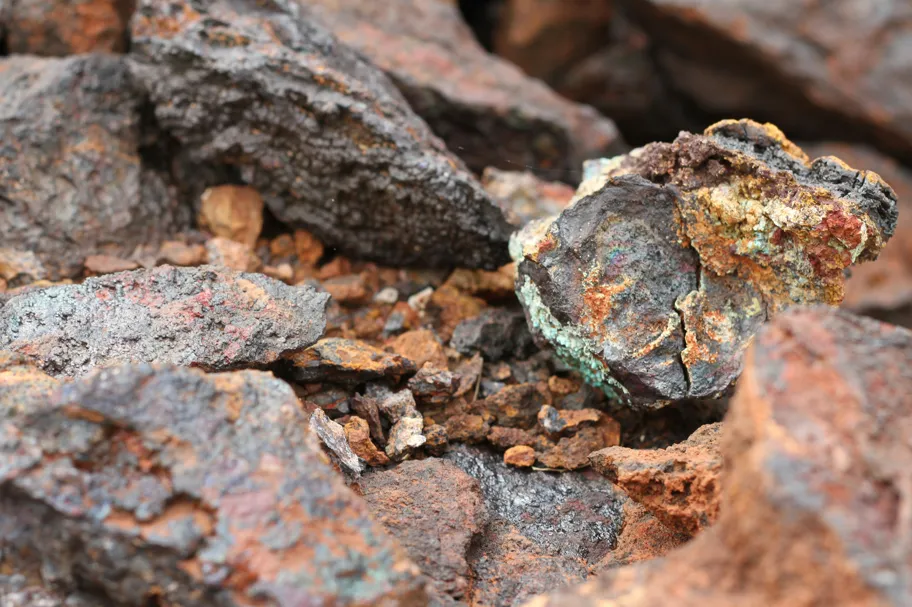
‘Critical Minerals’ are minerals so important to the economy that if their supply were cut off, entire related industries would be shaken. Smartphone batteries, electric vehicle motors, and semiconductor chips all require specific critical minerals in their manufacturing processes. The problem is that the distribution of these critical minerals is concentrated in only a few countries. The International Energy Agency (IEA)’s ‘Global Critical Minerals Outlook 2025’ report projects that by 2035, China will supply over 60% of the world’s refined lithium and cobalt, and over 80% of battery-grade graphite and rare earth elements. The fact that the critical mineral supply chain is concentrated in a single country means that if that country regulates supply, other nations’ industries could grind to a halt. [Critical Minerals and Diplomacy © ESG.ONL]From Raw Material to Diplomatic WeaponWhen the United States blocked China’s exports of advanced semiconductor equipment, China responded by progressively expanding export controls on critical minerals to the U.S. Starting with gallium and germanium in 2023, China introduced an export licensing system for seven rare earth elements in 2025. In January 2026, citing the Japanese Prime Minister’s remarks ‘hinting at intervention in the event of a Taiwan contingency,’ it abruptly banned exports of dual-use items — goods usable for both civilian and military purposes — to Japan. Critical minerals have become not merely raw materials but diplomatic bargaining chips. To reduce dependence on China, the United States chose a strategy of increasing domestic production of critical minerals while simultaneously joining hands with allies. In February 2026, it launched the Forum on Resource Geostrategic Engagement (FORGE), a trade consultative body ensuring stable mineral supply, with 56 participating countries including South Korea, Japan, and Australia. [View of the Malaysian refining and processing plant of Australian mining company Lynas © Lynas]Japan has the most advanced experience in stabilizing the critical mineral supply chain. It all started during the 2010 China-Japan territorial dispute, when China blocked rare earth exports to Japan. Since then, Japan has quietly spent 15 years building a critical mineral supply chain that bypasses China, joining hands with Australian mining company Lynas to create a route in which rare earths mined in Australia are refined in Malaysia. A Japanese Ministry of Economy, Trade and Industry official once noted, “The United States and Europe are only now realizing the urgency of the rare earth issue. Japan learned its lesson from the relevant problem 15 years ago.”Challenges for Domestic Critical Mineral Supply Chain Independence[Critical Mineral Re-Resource Recovery Activation Vision and Promotion Strategy © Government of the Republic of Korea]Compared to the countries mentioned above, South Korea’s critical mineral supply chain structure is somewhat more complex. For a long time, the model has been to import raw materials from China, import processed materials from Japan, and then manufacture finished products such as semiconductors, batteries, and displays in South Korea. It is a structure where if China imposes export controls on Japan, the ripple effects could be transmitted like a domino to South Korea as well. In response, in 2023, the South Korean government set a target of reducing the import dependence on specific countries for critical minerals from the current level of around 80% to the 50% range by 2030. In January 2026, it officially recognized ‘re-resource recovery’ — recovering metals from waste batteries and other sources to reuse as industrial raw materials — as a critical mineral manufacturing industry and began fostering it. A 250 billion won Critical Mineral Supply Chain Stabilization Fund is also being established. South Korea holds the FORGE chairmanship until June 2026, positioning it to lead international cooperation on critical minerals.That said, compared to Japan’s 15 years of preparation for stabilizing its critical mineral supply chain, South Korea still has a long way to go. It simultaneously needs to secure supply sources for various critical minerals, establish domestic facilities capable of directly refining and processing critical minerals, and systematically foster re-resource recovery companies, which are predominantly SMEs. Even a single smartphone we use every day contains dozens of types of critical minerals. We are living in an era where where those minerals come from and who controls them determines national competitiveness. by Editor L

The argument that ESG has a substantive impact on corporate value has now moved beyond the realm of theory. Stock price data is brutally honest. The market capitalization of companies that have internalized ESG as a core strategy is rising, while those that merely pay lip service to it or act counter to it are receiving harsh judgment from the market through opposite results. As investors have begun to consider the non-financial performance of companies as an investment factor, ESG has become a variable that directly affects stock prices. Microsoft: ESG Becomes a PremiumThe company most frequently cited as a representative ESG success story is Microsoft. Microsoft already achieved carbon neutrality in 2012 and has set a target of becoming ‘Carbon Negative’ — where carbon absorption exceeds emissions — by 2030. It has also continuously earned the highest ESG rating of AAA from Morgan Stanley Capital International (MSCI), ranking in the top 7% of the software development industry as of 2023–2024. According to MSCI research, a statistically significant gap in the cost of equity exists between top-tier and bottom-tier ESG companies. Microsoft is evaluated by investors as a ‘safe growth stock’ and continues to experience steady capital inflows. As a result, it has benefited from low capital procurement costs, raising large-scale funds at far lower interest rates than competitors. Since 2020, Microsoft’s stock price has consistently outperformed the S&P 500 index average, which is analyzed as the result of a synergistic combination of AI business expansion and ESG management.[Microsoft Carbon Negative Target Strategy © Microsoft Official Blog]BP: Investment Structure That Diverged from Campaign LanguageConversely, there are also cases of ESG management failure, and their repercussions were far greater than the success stories. British Petroleum (BP) changed its name to the present BP alongside a rebranding campaign in 2000. In that campaign, BP adopted the slogan ‘Beyond Petroleum’ and a green logo, declaring a leap forward as an eco-friendly energy company. The reality, however, was different. Around the same time, BP acquired the American oil company ARCO (Atlantic Richfield Company) for USD 26.5 billion to expand its oil exploration domain. Then in 2010, BP’s image as an ‘eco-friendly energy company’ collapsed in an instant due to the Deepwater Horizon oil spill. On April 20, 2010, the Deepwater Horizon drilling rig operated by BP in the Gulf of Mexico exploded and sank, causing a massive crude oil spill. The spill continued for 87 days and left 11 people dead. Immediately after the accident, BP’s stock price plummeted by approximately 50% over several months. It was the outcome of ‘image ESG’ — where ESG was put forward but not backed by substantive investment. Perhaps conscious of this, BP announced a ‘strategic reset (Reset BP)’ in early 2025, cutting clean energy investment by over USD 5 billion and raising fossil fuel production targets by 60%. In effect, it declared a break with its own mistake of 20 years ago.[BP International Business and Technology Centre © Broadway Malyan (architecture firm that designed the BP building) Official Website]Unilever: Erosion of Investor Trust Triggered by ESG RollbackThere are also cases that serve as a warning from the midpoint between ESG success and failure. Under former CEO Paul Polman from 2010 to 2019, the British cosmetics company Unilever established itself as a symbolic ESG company by pursuing the ‘Unilever Sustainable Living Plan’ as its growth strategy. However, newly appointed CEO Hein Schumacher in April 2024 significantly rolled back Unilever’s key ESG targets, including downgrading the previous target of reducing new plastic use by 50% by 2025 to a 40% reduction by 2028.Outside observers assessed this strategic shift as the result of capitulating to shareholder pressure, given that Unilever’s stock price had been in a prolonged slump since peaking in 2019. Meanwhile, institutional investors unleashed a torrent of criticism over Unilever’s ESG strategy change. This shows that the market reads not only whether a company implements ESG, but also the very act of retreating from stated commitments as a risk signal.[Cover of Unilever’s 2025 Climate Policy Engagement Review © Unilever Website]How Does the Stock Market Read ESG?The common thread running through all three cases is clear. The market judges ESG not as a matter of morality but as a matter of risk management capability. When ESG is deeply embedded in business strategy, as with Microsoft, substantive financial benefits follow in the form of lower capital costs and institutional investor preference. Conversely, when a company builds an image through ESG-themed campaigns without changing its actual investment structure — and when an environmental disaster is added on top — the brand image that had been accumulated collapses in an instant, as with BP. Unilever proved how costly a choice it is to retract trust once it has been established. At a time when mandatory ESG disclosure is being phased in from 2028, stock price data is already showing that ESG has shifted from being ‘the story of a good company’ to ‘an indicator of viability.’ by Editor L

ESG is now a familiar term to many. And today, once again, we have logged onto ESG Today to reflect on the meaning of ESG. While ESG is widely known today, its origins and history have not been sufficiently shared. On the occasion of Teachers’ Day, let us trace the history of ESG, focusing on the pioneers and mentor-like figures of this field.1950s–Early 1990s: From CSR to ESG, the Evolution into SustainabilityThe beginnings of ESG can be seen in the development of the concepts of Corporate Social Responsibility (CSR) and sustainability. The concept of CSR first appeared in American economist Howard Rothmann Bowen’s 1953 book, ‘Social Responsibilities of the Businessman.’ In it, Howard Bowen argued that businesspeople must follow policies and make decisions that align with the goals and values of our society. Considering the prevailing view of the time, which regarded the sole purpose of business as maximizing profit, the argument for corporate social responsibility was novel. [Howard Bowen © University of Illinois]Entering the 1960s, CSR research continued while various citizen movements arose. In 1962, American marine biologist Rachel Louise Carson published ‘Silent Spring,’ a book that demonstrated the comprehensive, negative impacts of indiscriminate pesticide use on ecosystems, and became a catalyst for the global spread of the mass environmental movement. From the mid-1960s to the early 1970s, the anti-Vietnam War movement opposing U.S. intervention in Vietnam also emerged. [Rachel Carson and her book <Silent Spring> © U.S. Fish and Wildlife Service Official Website / Ecolibre Publishers]Entering the 1980s, the full-fledged emergence of the ESG concept began. In 1987, the World Commission on Environment and Development (WCED) of the United Nations Environment Programme (UNEP) published the report ‘Our Common Future’ — better known as the Brundtland Report — which introduced the agenda of ‘sustainable development’ for the first time. The Brundtland Report defined this agenda as ‘development that meets the needs of the present without compromising the ability of future generations to meet their own needs.’ The sustainability agenda played a decisive role in establishing policy strategies enabling humanity to continue economic progress while protecting environmental values. After 1990, meaningful discussions began to take shape in each of the Environmental (E), Social (S), and Governance (G) domains. In 1992, with the adoption of the Rio Declaration containing fundamental principles on environment and development, the world’s three major environmental conventions (UNFCCC, Convention on Biological Diversity, and UN Convention to Combat Desertification) were advanced, establishing global evaluation criteria for the E domain of ESG.1990s: John Elkington’s ‘Triple Bottom Line’ — The Full-Fledged Emergence of the ESG ConceptThe most significant event in ESG history during the 1990s can be said to be writer and entrepreneur John Elkington’s introduction of the Triple Bottom Line (TBL) concept in 1994 — an authority in the field of sustainable management. TBL is the concept that forms the foundation of corporate ESG evaluation, signifying that when assessing corporate performance, not only financial profit but also the impact on the environment and society must be considered. The evaluation elements consist of the 3Ps (Profit, Planet, People), representing economic gain, environmental impact, and social responsibility, respectively. Conventionally, corporate profit is calculated at the bottom line of the income statement, but given the extensive influence companies have on society, social and environmental impacts should also be integrated into the final net profit. Starting from the emergence of TBL, the call for companies to shift from profit-centered management to sustainable management grew louder. In the 2020s, John Elkington even criticized TBL, arguing that it was being misused as a mere accounting tool contrary to its original intent. While TBL was conceived as a concept necessary for tracking what environmental and social value corporate activities create, it had come to justify even unethical corporate behavior. Subsequently, in his 2021 book ‘Green Swan,’ John Elkington emphasized that beyond the evaluation and transformation of individual companies, change is needed to overcome the pan-human crisis of climate change and environmental destruction.[John Elkington and his book <Green Swan> © Board Intelligence Official Website / Dunan Publishers]2000s: ESG First Appears as an Official Term in Kofi Annan’s <Who Cares Wins> ReportFinally, in the 2000s, the term ESG made its appearance. In 2004, ESG officially appeared for the first time in the report ‘Who Cares Wins,’ published by the United Nations Global Compact (UNGC). UN Secretary-General Kofi Annan, who led the establishment of the UNGC and the drafting of this report, sent letters to the heads of 55 financial institutions, persuading them to create guidelines for sustainable investment. The report, created together with 20 financial institutions, contains concrete recommendations from the financial industry for integrating ESG agendas into financial analysis, asset management, and securities trading. It also declares that companies must consider ESG if they wish to achieve sustainable growth. [Kofi Annan © UN]Based on this report, the Principles for Responsible Investment (PRI) was launched in 2006. PRI is an international code of conduct established under UN auspices with the goal of having investors reflect Environmental (E), Social (S), and Governance (G) factors in their corporate investment decision-making processes. PRI served as an important catalyst driving the global spread of ESG, and as of 2024, more than 5,000 financial institutions have signed on to PRI. South Korean institutions and companies, including the National Pension Service, are also PRI signatories.2020s: Larry Fink’s Annual Letter Makes ESG an Essential Corporate Management StrategyLarry Fink, CEO of BlackRock, the world’s largest asset manager, made ESG an essential management strategy for global corporations through his 2020 annual letter to the executives of the companies he had invested in. In that annual letter, Larry Fink declared he “would not invest in companies that fail to properly respond to climate change,” and stated that “investments may be withdrawn from companies that do not disclose their environmental, social, governance, and business performance.” In 2021, he also specifically requested that companies disclose business plans aligned with the goal of achieving ‘net zero.’ Larry Fink, once called the father of ESG management, abruptly declared in 2023 that he would no longer use the term ESG, citing that it had been weaponized by extremist politicians. Thereafter, Larry Fink began using the term ‘Transition Investing’ instead of ESG, while also stating that ESG activities themselves would continue. In 2024, after BlackRock acquired Global Infrastructure Partners (GIP), Larry Fink pledged to invest large-scale funds in renewable energy, AI, and decarbonization industries. [Larry Fink © BlackRock Official Website]The history of ESG and the definition of its concept have not been created and upheld by a single person or institution alone. It is a paradigm shaped by the efforts of numerous countries, companies, and international organizations, as well as changes in each domain of Environmental (E), Social (S), and Governance (G). Looking back at its history and the figures who had the greatest impact, let us once again reflect on the essence of ESG. by Editor L
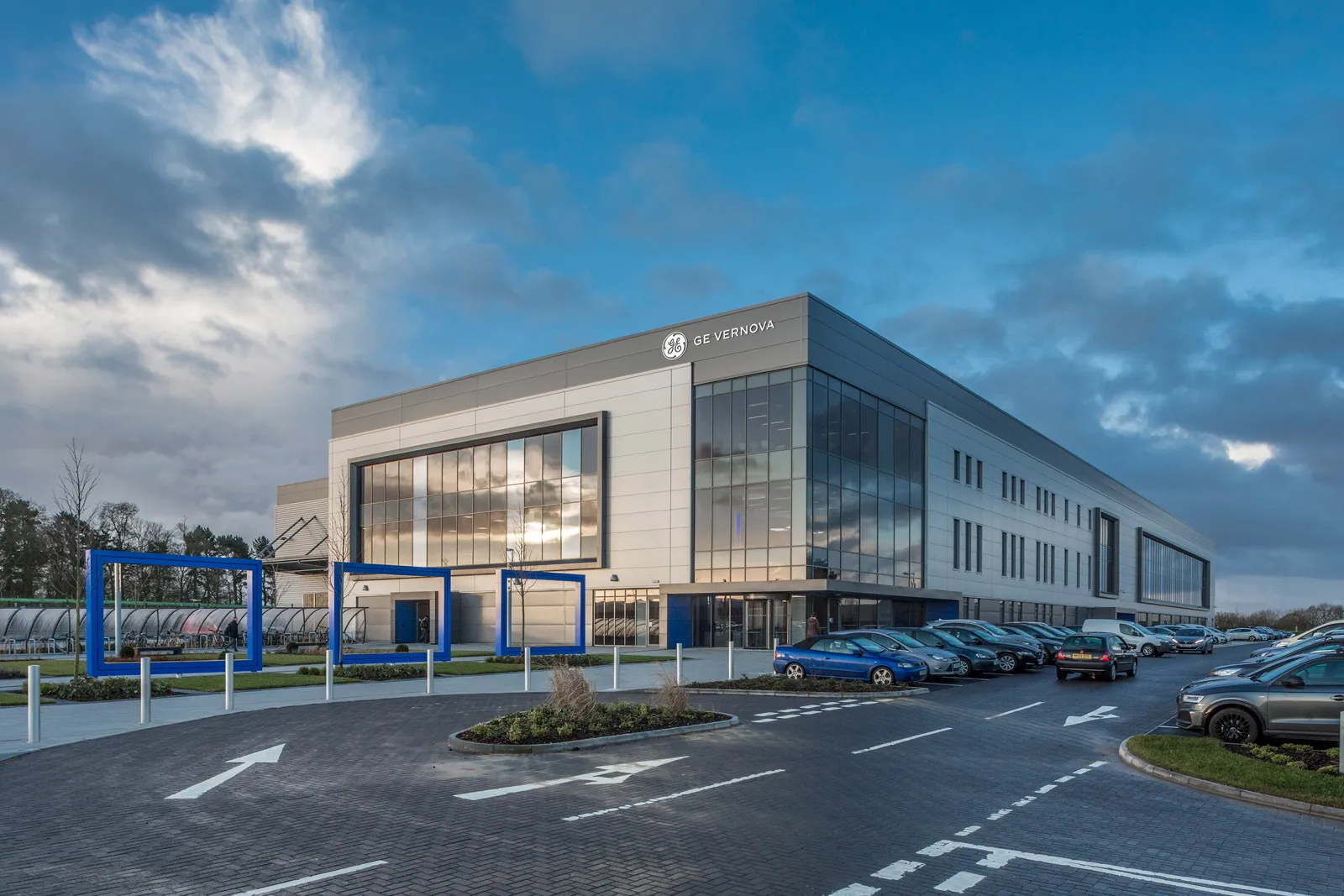
‘Energy transition’ refers to the long-term structural shift from fossil fuel-centered energy systems — based on coal and oil — to low-carbon energy sources such as solar, wind, and hydrogen. The energy transition company currently in the spotlight, GE Vernova, was established when the energy division of General Electric (GE) was spun off as an independent company in 2024. It has a portfolio spanning the full range of power generation and transmission and distribution, from gas power generation equipment, wind turbines, and nuclear and hydroelectric power facilities to electrification software. On April 22, GE Vernova’s stock price surged by over 13% in a single day on the New York Stock Exchange, hitting an all-time high. Its Q1 2026 earnings released the same day far exceeded Wall Street expectations, with revenue up 16% year-on-year to USD 9.3 billion. GE Vernova’s growth is a signal that the structure of the energy industry itself is changing. As the explosive power consumption of AI data centers simultaneously drives up orders for both gas power generation and power grid equipment, companies serving as a bridging role in the decarbonization transition process are drawing the attention of both investors and the industry.[View of GE Vernova’s UK operations, a key hub for power conversion and transmission technology © GE Vernova Official Website]The Paradox of Energy Transition Created by AIEnergy transition companies place the transition process itself at the center of their business: maintaining reliable power supply while progressively lowering carbon emissions. The global energy transition market was valued at USD 3.08 trillion as of 2024 and is projected to reach USD 5.56 trillion by 2030, growing at an annual average rate of 10.3%. The reason this market is drawing particular attention now is the ‘paradox of AI.’ As AI technology advances, the power consumption of data centers increases exponentially. In this situation, weather-dependent energy sources such as solar and wind cannot reliably supply hundreds of megawatts around the clock. Ultimately, companies supplying power to Big Tech — Microsoft, Google, Amazon, Meta — have begun to move to simultaneously secure generation capacity without abandoning their renewable energy targets. This is the background for the dual effect in which the AI revolution has explosively driven up not only demand for renewable energy transition but also demand for energy generation infrastructure.[Amazon data center sourcing over 95% of its power from renewable energy © Amazon News Official Website]GE Vernova and Siemens: Energy Transition Companies Racing TogetherThe areas that energy transition companies actually cover are broadly divided into three pillars: power generation, power grids, and renewable energy. What is interesting is that all three areas are expanding simultaneously under the single impetus of surging AI demand. The hottest area is the gas power generation equipment market. Since being spun off from GE in 2024, GE Vernova has emerged as the biggest beneficiary in the gas power equipment market. In Q1 2026 alone, its Power segment achieved USD 10 billion in orders, a significant portion of which are contracts for securing power for data centers. Siemens Energy, which competes in the same market, also announced in its February earnings release that its net profit had roughly tripled year-on-year. The simultaneous benefit accruing to both companies shows that the gas power equipment market has now shifted into what is known as a ‘seller’s market.’ Long-term contract structures in which actual delivery takes years after equipment orders have become commonplace, and pricing initiative is shifting to the supplier side.The Long-Term Goal Is Renewable EnergyPower grid infrastructure is another key area. GE Vernova strengthened its grid supply capability last quarter by fully acquiring the remaining 50% stake in transformer specialist Prolec GE. In its Electrification segment alone during Q1, equipment orders for data center support reached USD 2.4 billion — a figure that surpassed the previous year’s full-year performance in just a single quarter. Siemens Energy is also moving in the same direction, putting its Grid Technologies division forward as a core growth engine. The renewable energy sector is a different story. GE Vernova’s Wind segment saw Q1 revenue fall 23% year-on-year, with losses expanding to approximately USD 382 million. GE Vernova has stated that the Trump administration’s offshore wind regulatory changes are creating a challenging business environment, though there is no issue with project execution. While raising the share of renewable energy is the long-term goal, in the short term, gas power generation and power grids are the structure driving growth. [GE Vernova Wind Turbine © GE Vernova Official Website]GE Vernova has set a target of achieving an order backlog of USD 200 billion by 2027 — a goal advanced by one year from the original plan. However, there are also variables. GE Vernova estimates cost increases from the 2026 global tariff shock at USD 250 to 350 million. U.S.-China trade conflict and supply chain uncertainty could affect both equipment parts procurement and pricing. A more fundamental question is alignment with climate goals. The role publicly claimed by energy transition companies is that of a temporary bridge reducing carbon, not one that perpetuates fossil fuel use. Yet currently, their profits are concentrated in gas power equipment, while the renewable energy segment is still generating losses. The direction of the transition is clear, but the pace and center of gravity are still pointing elsewhere. by Editor L
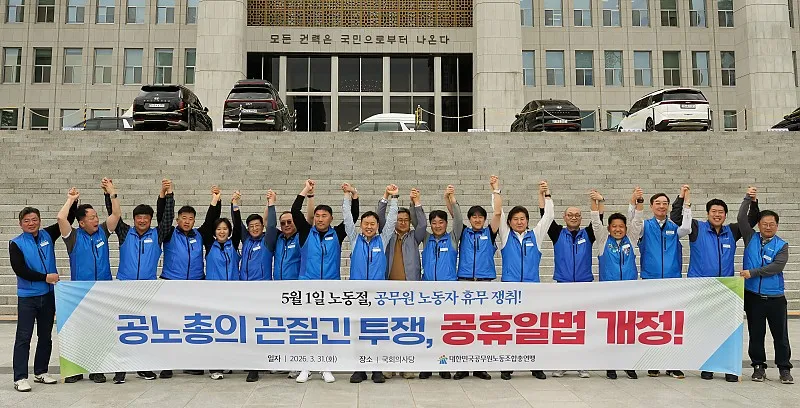
On May 1, 2026, South Korea marks its first Labor Day on which all workers take the same day off. The two changes — the restoration of the name and its designation as a statutory holiday — are not mere institutional fine-tuning but a societal answer to the age-old question of ‘who is a worker.’[Labor Day-related post © Ministry of Employment and Labor Instagram]In 1963, the word ‘labor’ was erased from the law. After seizing power through the May 16 military coup, the government restructured labor-related legislation in a direction that suppressed the autonomy of the labor movement, and in that process, the ‘Act on the Designation of Workers’ Day’ was created. The choice was ‘geullo’ (diligent work) instead of ‘nodong’ (labor). According to the National Institute of Korean Language, ‘geullo’ means working diligently, while ‘nodong’ means working by moving the body. One demands an attitude; the other describes a fact. It was a choice aligned with the spirit of the times, which emphasized the faithful provision of labor services over workers’ rights. After being maintained for 63 years, on October 26, 2025, the National Assembly passed a full revision of the ‘Act on the Designation of Workers’ Day’ into the ‘Act on the Designation of Labor Day.’ A single word changed, but considering the weight of the era contained in that word, this is not merely a name swap. And the change did not stop at the name.What Has Changed and What Has NotAlongside the statutory holiday designation, new criteria also emerged. The Ministry of Employment and Labor issued an official interpretation that substitute holidays are not permitted for Labor Day. This is because, unlike other public holidays, the special act directly fixes the date of May 1. If work is unavoidable on Labor Day, employers must choose between paying premium wages or granting compensatory leave under a written agreement. The elimination of size thresholds also heightens the sense of change, as Labor Day is guaranteed as a paid holiday regardless of workplace size. Until now, workplaces with fewer than five employees had effectively fallen into a legal blind spot, but the principle of Labor Day, at least, applies uniformly regardless of size.[Public servants also included in this year’s Labor Day holiday © Korean Government Employees’ Union]However, there are places this standard does not reach. Workers in special types of employment are often not recognized as workers under the Labor Standards Act, so time off is not legally mandated for them. The government is aware of this gap. The Ministry of Employment and Labor is promoting a labor-respecting legislative package for 1.44 million workers in special employment types who are not protected by labor laws as AI advances. It is also working on introducing a ‘worker presumption system,’ under which a person is presumed to be a worker and protected by labor law unless the employer proves otherwise. From the Conditions of a Worker to the Definition of a WorkerWhen Chicago workers took to Haymarket Square in 1886 demanding the eight-hour workday, the core issue was ‘how long do we work.’ Now, 140 years later, the issue has shifted to ‘who is recognized as a worker.’ And this question does not remain confined to the workplace.[The Haymarket affair, the origin of Labor Day © Wikipedia Commons]Amid the trend of strengthening global supply chain due diligence standards, the working conditions and rest rights of workers employed by partner companies are being elevated to quantitative indicators in sustainability reports reviewed by investors. Yet, workers who are not legally ‘workers’ go uncaptured even in these reports. They are labor actually utilized by companies, yet they exist outside disclosure indicators. Just because a risk is not yet visible does not mean it does not exist. Global buyers and institutional investors have begun looking directly into supply chains. If the reality of labor forces not captured in reports is revealed during due diligence, it leads to questions of disclosure reliability and the very business relationship can be shaken. The definitional vacuum around ‘whom to consider a worker’ accumulates unmanaged, eventually bursting as a risk all at once. This institutional change has partly raised that baseline. The statutory holiday designation has broadened the language of ‘worker’ somewhat, but for Labor Day to truly become a day for everyone, a broader structural change is needed beyond a single line of law. This May 1 marks the starting point of that journey. by Editor L
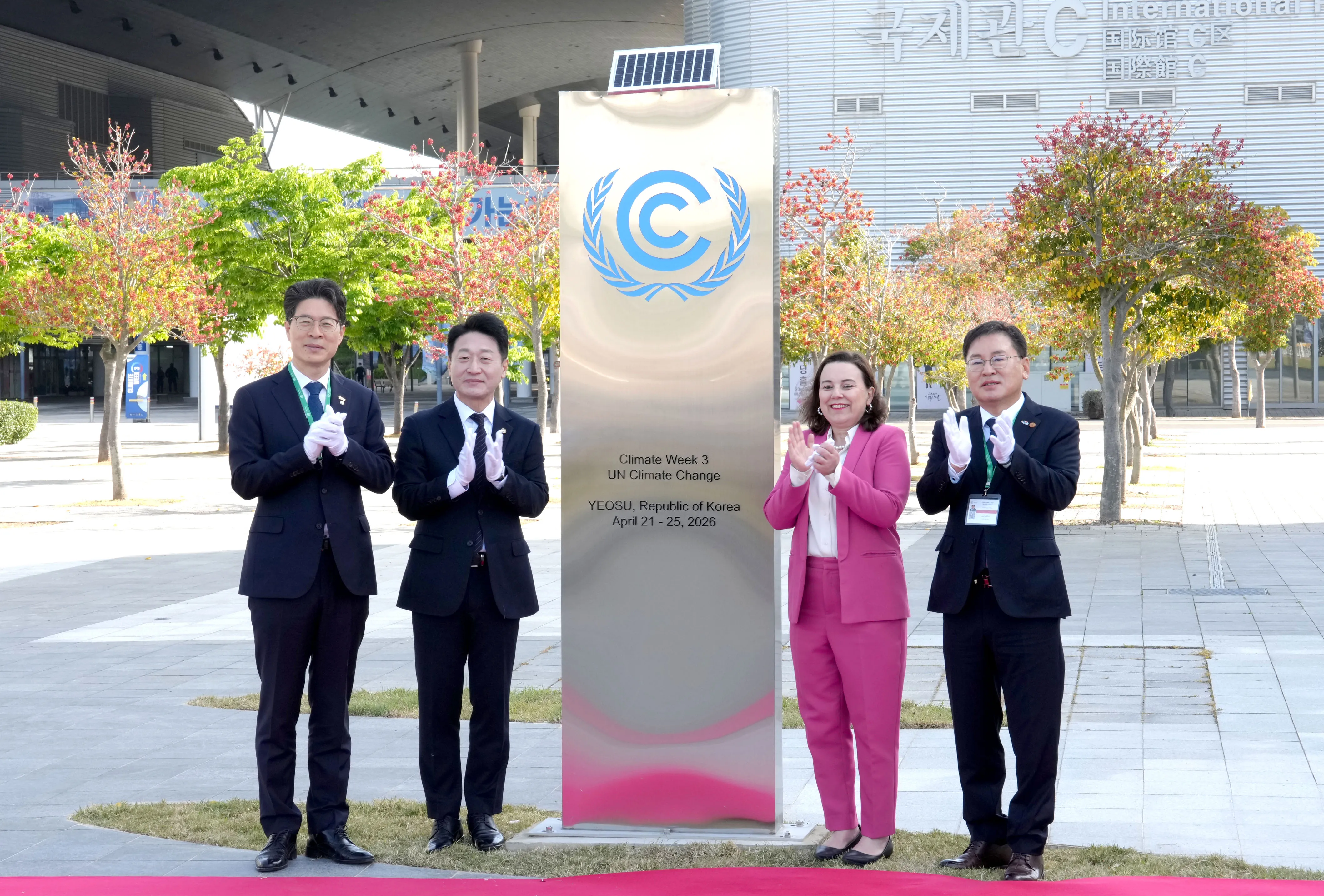
The Green Transformation International Week (GX Week) and UNFCCC Climate Week, which kicked off on April 20 at the Yeosu Expo Convention Center, is nearing its close. Beginning with an opening ceremony that brought together approximately 800 participants including ministerial-level climate officials from major countries and senior figures from international organizations, a total of 67 sessions ran nonstop throughout the event period. At the negotiating table, the current state of Paris Agreement implementation — covering mitigation, adaptation, finance, and implementation — was officially reviewed, while outside the venue, Earth Day lights-out events and eco-friendly experience programs served as a bridge connecting citizens’ daily lives with the climate agenda. ESG Today examines the significance that this GX Week and UNFCCC Climate Week has left for South Korean climate diplomacy through the flow of the week.Climate Negotiations and Energy Transition in One VenueThe UNFCCC Climate Week — held for the first time in South Korea — was jointly convened in conjunction with GX Week. Climate Week is a forum in which the 198 Parties to the UN Framework Convention on Climate Change gather in one place to officially review the current state of Paris Agreement implementation. To this end, a total of 67 sessions were operated throughout the event period: 25 thematic events related to climate and energy, 11 citizen participation events, and 31 UNFCCC sessions. The government and industry jointly created a venue for cooperation on diverse themes, including a discussion forum on the electrification of transport modes for carbon neutrality in the transport sector, a forum on promoting local government carbon neutrality, and a forum on climate-tech innovation and transition finance. One citizen who visited Yeosu during Climate Week expressed that it was meaningful to glimpse the efforts being made by the nation and institutions amid the climate and energy crisis through the variety of programs. [GX Week Opening Ceremony at the Yeosu Expo Convention Center © ESG.ONL]UNFCCC Climate Week Opens, Entering the Substance of NegotiationsAt 9:00 AM today, the official plenary opening ceremony of the UNFCCC Climate Week was held at the Expo Hall of the Yeosu World Expo site. At the event, attended by key figures from the international community including UNFCCC Deputy Executive Secretary Noura Hamladji, representatives of the COP Presidencies from Brazil and Türkiye, and delegations from the Parties, Vice Minister of Climate, Energy and Environment Lee Ho-hyun announced plans to accelerate carbon neutrality, including building an ‘energy expressway’ and expanding renewable energy installed capacity, stating that “the Republic of Korea, as a leading actor in climate action, will make renewable energy the central pillar of the future energy system.” [UNFCCC Climate Week Opening Ceremony held this morning © Jeollanam-do]While GX International Week was a forum dealing with the Korea-led green transformation agenda, the UNFCCC Climate Week is a separate international negotiating stage at which the 198 Parties officially review the progress of Paris Agreement implementation. At this gathering attended by officials from international organizations and non-governmental organizations, pending issues are reviewed ahead of the 31st Conference of the Parties (COP31) to the UNFCCC, to be held in Türkiye this November. In addition, a global forum on Green Taxonomy and transition finance, as well as a Korea Exchange roundtable for upgrading the carbon emissions trading market (K-ETS), still remain on the agenda through the event’s close.Climate Action Practiced at the VenueDuring Climate Week, various scenes encouraging citizen practice unfolded both inside and outside the venue. The use of disposable products was restricted and reusable containers were encouraged throughout all areas of the venue, and eco-friendly hydrogen electric buses operated in circulation between major hotels and the event site. Yeosu City reduced paper printouts and introduced a digital information system to promote administrative efficiency and carbon neutrality. [Eco-friendly hydrogen electric buses operated near the event venue © ESG.ONL]On Earth Day, April 22, during the event period, major cities and landmarks across the country — including Yeosu City, the government complexes in Gwacheon and Sejong, Suwon Hwaseong Haenggung, and Busan’s Gwangan Bridge — participated in a simultaneous lights-out event for ten minutes starting at 8:00 PM. If approximately 10,000 households participate in the lights-out event, two tons of greenhouse gases can be reduced, an effect equivalent to planting about 200 thirty-year-old trees. For that moment, the carbon neutrality being discussed in the conference halls was connected through a single switch across the nation.[Yeosu Expo Convention Center, where GX Week and UNFCCC Climate Week were jointly held © ESG.ONL]The Ministry of Climate, Energy and Environment stated that through this event it plans to build international consensus on the ‘Republic of Korea Green Transformation Promotion Strategy,’ scheduled to be announced in June, and further solidify South Korea’s role in the climate and energy field. What the soon-to-conclude Climate Week has left in Yeosu is not a consensus document but possibility. Let us look forward to the fruit that the agendas exchanged at the negotiating table will bear at the COP31 plenary this November, and to South Korea’s climate diplomacy as it leaps toward becoming a global standard-setting nation for green transformation. by Editor L

‘Earth Day’ is the world’s largest environmental commemorative day, established to raise awareness of the seriousness of environmental pollution and encourage the practice of environmental protection. Every year on April 22, Earth Day, buildings and landmarks around the world participate in a lights-out event, turning off their lights for ten minutes. In that moment when everything is immersed in darkness, the Earth takes a brief rest alongside a brightly shining night sky. Let us learn about Earth Day — a day to recall the meaning of the environment that the Earth bestows upon us and to practice environmental protection. [Earth Day Official Poster © Ministry of Climate, Energy and Environment]Sympathy Leading to Action: Why 20 Million People Took to the StreetsAn oil spill occurred in the United States. In January 1969, an offshore drilling facility of the Union Oil Company exploded off the coast of Santa Barbara, California, releasing approximately 11.36 million liters of crude oil. The sight of oil-covered shorelines and dying marine life sent a huge shock across the United States, and a social consensus to confront environmental issues was formed.Spurred by this accident, then-U.S. Senator Gaylord Anton Nelson declared April 22, 1970, as ‘Earth Day’ to galvanize nationwide attention to environmental issues. That year, Denis Hayes, then a Harvard University student, led Earth Day-related events and drove their spread across the nation. Around 20 million American citizens participated in these events. Citizens took to the streets and parks in a nationwide demonstration for a sustainable environment. Following this, from 1990 onward, Earth Day events expanded internationally.[Gaylord Anton Nelson, who led the establishment of Earth Day © Earth Day Organizing Committee]Environmental legislation discussions were also activated in other countries, and substantial policy changes followed, including a succession of corporate sustainability management declarations. In the year Earth Day was declared, 1970, the Clean Air Act was amended in the United States, and in 1972, the Clean Water Act was enacted and the Environmental Protection Agency (EPA) was established.Ten Minutes of Lights Out, Ten Minutes of Consciousness OnIn 2022, the domestic environmental media outlet Greenium calculated just how effective the Earth Day lights-out event could be. First, referencing a Ministry of Climate, Energy and Environment press release, the number of Earth Day participants was assumed to be approximately 3 million. Then, each participant was assumed to represent one household, and each household was estimated to have 4 lights at a fluorescent lamp standard power consumption of 60W. According to the results, the 10-minute lights-out saves approximately 120 MWh (megawatt-hours) of electricity — equivalent to the annual generation of a 91 kW solar power plant. Converted to greenhouse gas reductions, this also amounts to approximately 55 tons CO₂eq. The results of the small actions practiced on Earth Day do not seem so small after all. [N Seoul Tower exterior lighting turned off for Earth Day 2020 © Ministry of Climate, Energy and Environment and Ministry of Culture, Sports and Tourism Public Communication Office]However, compared to South Korea’s total greenhouse gas emissions, this figure becomes modest. Out of the 2024 provisional national greenhouse gas emissions of 691.58 million tons CO₂eq, the reduction from a 10-minute lights-out accounts for only about 0.000008%. This is because ten minutes later, the lights of all buildings return to normal, failing to translate into permanent energy reduction activities.Thus, compared to the total amount of greenhouse gases we actually emit, the impact of the Earth Day event may not seem large. But there is a clear reason why numerous institutions participate in Earth Day events: the Earth Day event cannot be evaluated solely by the number of greenhouse gas reductions. Just as plogging — picking up trash while running or walking — makes environmental issues feel like more of an everyday concern, Earth Day events likewise prompt us, in a moment when daily life briefly pauses, to reflect on the relationship between the energy we use and the Earth.Along with the ten minutes of darkness we accept on Earth Day, let us reflect on what this light and warmth that we take for granted right now has been exchanged for. If we use even just those ten minutes out of the year to think about the debt we owe the Earth, our daily lives will begin to change, little by little. by Editor L