Loading Data
Please wait a moment...
Update Cal.
2026.08
03
Mon
04
Tue
05
Wed
06
Thu
07
Fri
08
Sat
09
Sun
Update Calendar
2026.08
01
Sat
02
Sun
03
Mon
04
Tue
05
Wed
06
Thu
07
Fri
08
Sat
09
Sun
10
Mon
11
Tue
12
Wed
13
Thu
14
Fri

Loading Data
Please wait a moment...
Morning features and interviews. A morning story over a cup.
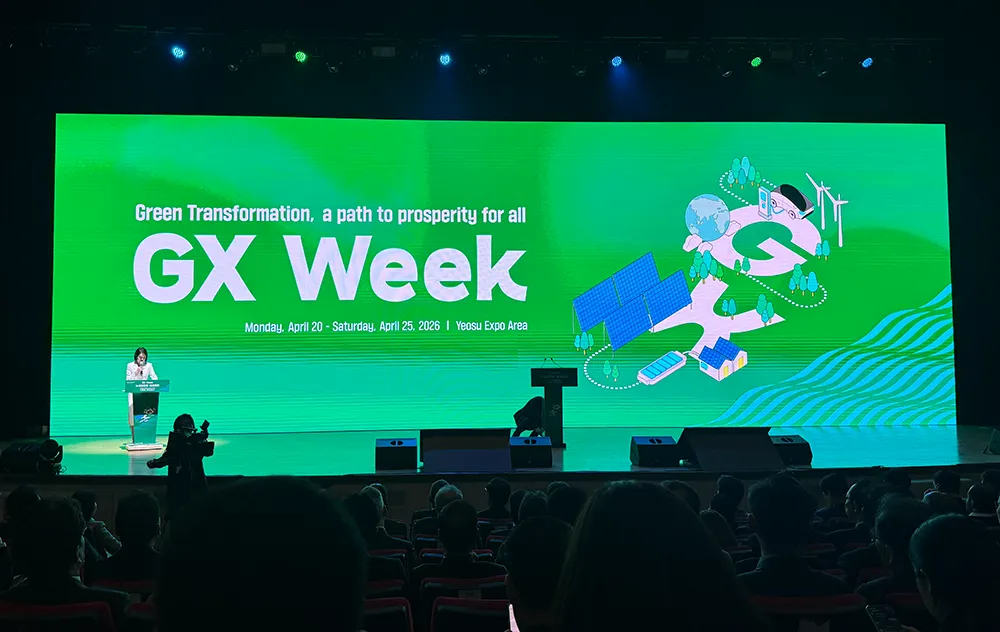
The 3rd United Nations Framework Convention on Climate Change (UNFCCC) Climate Change Week is being held for the first time this year in Yeosu, Jeollanam-do, South Korea. UNFCCC Climate Change Week is an international environmental event that pre-coordinates the official agenda of the annual Conference of the Parties (COP), held each November. At the COP, the 198 countries that have acceded to the UNFCCC gather to discuss climate change response measures and determine greenhouse gas reduction targets. In conjunction, the government is hosting the ‘Republic of Korea Green Transformation International Week (GX Week)’ during this Climate Change Week. We report from the field on the significance of GX Week, which shares the direction of South Korea’s energy transition policy with the international community.[Yeosu Expo Convention Center, venue for UNFCCC Climate Change Week and GX Week © ESG.ONL]Yeosu’s Determination Reaches All the Way to BrazilThe road to hosting Climate Change Week in Yeosu was, in fact, preceded by a long preparation period. In September 2025, Yeosu in Jeollanam-do was selected as the host candidate through a nationwide open call by the Ministry of Climate, Energy and Environment. Then in November of the same year, the city of Yeosu went so far as to form a delegation and fly directly to the COP30 venue in Brazil. The delegation held a policy presentation at the COP30 Korea Pavilion, explaining the strategy and response measures for attracting Climate Change Week, as well as Korea’s carbon neutrality vision, while conducting a panel discussion. At the same venue, Jeollanam-do Governor Kim Young-rok personally delivered a letter to UNFCCC Executive Secretary Simon Stiell, succeeding in securing the bid.What It Means for South Korea to Stand on the International StageSince launching the nation’s first Climate Protection Week in 2008, Yeosu issued the ‘Yeosu Declaration’ urging marine ecosystem conservation at the 2012 World Expo. In 2021, it created a forum through the Yeosu Summit of the Urban Environment Convention to discuss carbon neutrality with city leaders from around the world. It was the history of climate action built up over some 20 years that brought Yeosu to this position. Fittingly, at the GX Week opening ceremony held this morning alongside the start of Climate Change Week, one could savor the significance of Yeosu as the key stage setting the climate agenda for the Asia-Pacific region. The opening ceremony was attended by approximately 800 people, including Minister of Climate, Energy and Environment Kim Sung-hwan, UNFCCC Executive Secretary Simon Stiell, Japanese Vice Minister of Economy, Trade and Industry Takehiko Matsuo, EU Ambassador to Korea Ugo Astuto, ministers and vice ministers of climate and energy ministries from various countries, senior officials from international organizations, academic experts, and citizens. Prime Minister Kim Min-seok and Jeollanam-do Governor Kim Young-rok also added to the significance of the event through their congratulatory remarks and attendance. [Participants taking part in the GX Week Declaration © ESG.ONL]The World’s Resolve Gathered in YeosuSpeakers participating in the Yeosu GX Week opening ceremony and discussions pointed to the crisis arising from fossil fuel dependence. At the same time, they emphasized that, given the global energy crisis including the surge in super-scale power demand in the AI era, energy transition has become a core task that determines national competitiveness and future survival, going beyond environmental protection. In their presentations, each country shared the current state and pace of their concrete implementation strategies. The South Korean government is speedily advancing green transformation as a core national strategy, including expanding the renewable energy ratio to 20% by 2030 and spreading solar and wind income nationwide. Jeollanam-do is stepping forward as a leading hub for low-carbon transition through the hydrogen conversion of the Yeosu World Petroleum Complex and the expansion of blue carbon. Japan is accelerating decarbonization with its GX2040 vision, the introduction of an emissions trading system, and a 150 trillion yen investment over 10 years. The EU is legally driving forward a 55% reduction in greenhouse gases and 45% expansion of renewable energy by 2030 under ‘Fit for 55.’ [GX Week opening ceremony discussion © ESG.ONL]In the second part of the opening ceremony’s panel discussion, senior figures from various countries — including GGGI Director-General Kim Sang-hyup, UNFCCC Deputy Executive Secretary Noura Hamladji, the Norwegian Ambassador to Korea, and vice ministers from Bolivia and Vietnam — engaged in in-depth discussion on the theme of how to simultaneously achieve energy transition and security. With a shared recognition that energy security and climate policy are inseparable and must be pursued simultaneously, substantive implementation strategies were discussed, including resolving geopolitical risks through diversification of renewable energy sources, establishing stable regulatory frameworks such as carbon pricing, and measures to attract private investment. The need for expanded international technology cooperation in offshore wind and hydrogen sectors was also emphasized.[Outdoor event booths at the Yeosu Expo Convention Center © ESG.ONL]A Sustainable Everyday Life Encountered at the Exhibition HallOutside the Expo Hall where the agenda was presented, exhibitions and hands-on programs conveying the message of green transformation are underway. At the Ministry of Climate, Energy and Environment booth, a quiz was held through which recycled umbrellas and turtle-shaped bottle openers made from discarded fishing nets were given as souvenirs, raising interest in marine waste upcycling. The Sudogwon Landfill Site Management Corporation, which leads the eco-friendly treatment and resource recovery of Seoul metropolitan area waste, directly demonstrates the possibilities of resource circulation in everyday life through a craft activity making pot holders from sock toe offcuts left over from sock manufacturing.At an exhibition hall lined with government and public institution booths, H&M stood out as a private fashion brand, sharing information on its Stella McCartney collection based on innovative materials to present the direction of sustainable fashion, as well as its supply chain management in which 91% of all materials are procured through recycled or sustainable methods. All the booths at the event venue share a common significance in demonstrating that carbon neutrality is not a grandiose policy goal but is already being practiced across everyday life and throughout industry.Starting with today’s opening ceremony, Yeosu GX Week continues through the 25th. During this period, a total of 67 sessions will be held sequentially, including the AI Era Energy Strategy Dialogue on the 21st, the Climate Technology Innovation Forum on the 23rd, and the Green Taxonomy and Transition Finance Global Forum on the 24th. Through this event, the government plans to preemptively build international consensus on the ‘Republic of Korea Green Transformation (K-GX) Promotion Strategy’ scheduled for announcement in June, and to concretize the foundation for global climate and energy cooperation. With Yeosu standing at the center of international agenda-setting, attention now turns to what resolutions and outcomes will fill this one week. by Editor L
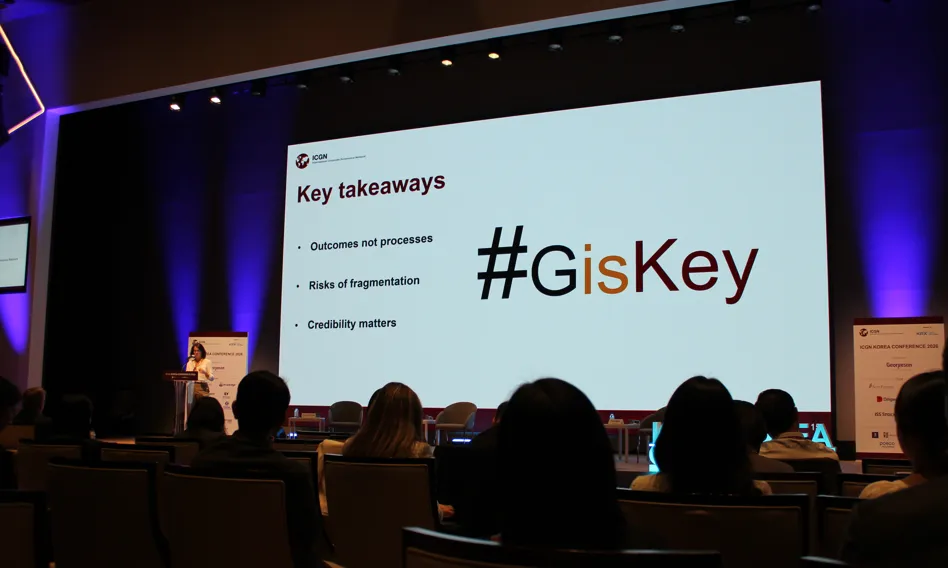
The KOSPI 6,000 era. At a time when the Korean stock market is attracting high interest from the international investor community, the gaze of global investors turned not to financial performance but to the board of directors. On April 14, at the Korea Exchange Conference Hall, speakers from South Korea, Japan, the United Kingdom, the United States, and other countries repeatedly posed a single question: Is corporate governance fulfilling its proper role? The ‘ICGN Korea Conference 2026,’ co-hosted by the International Corporate Governance Network (ICGN) and the Korea Exchange, was a forum for diagnosing the structural changes in the Korean capital market within a global context. The experts gathered at the conference focused their discussions on the performance of the Value-Up Program, the evolution of the Stewardship Code, and the standards that investors demand of companies.[ICGN Korea Conference 2026 Official Poster © Korea Exchange]What the Numbers Say About Value-Up PerformanceThe overall assessment of the rapidly growing Korean securities market was positive. At the center of the assessment was the Value-Up Program, which began in July 2024. The Value-Up Program is a policy that encourages listed companies to voluntarily go through the process of diagnosing their current state, setting targets, formulating plans, implementing them, and communicating, thereby enhancing shareholder value and transparently disclosing those efforts to investors. Aimed at resolving the so-called Korea Discount — the undervaluation of domestic companies — and promoting market growth and shareholder value enhancement, a revision to the Commercial Act was also carried out last February. Amid this trend, the Value-Up Program has taken root in the market, and the results have begun to appear in numbers. This year, the KOSPI surpassed 6,000, the scale of share buybacks and cancellations — an indicator of growing shareholder returns — roughly doubled year-on-year, and the market capitalization share of Korea Value-Up Index disclosing companies, launched in September 2024, reached approximately 72% of the total market. A change as noteworthy as the numbers is the shift in corporate decision-making criteria. Previously, discussions among board members only occurred after investors exercised opposing voting rights at shareholders’ meetings, but recently, a shift in communication methods has been observed in which board members proactively reach out to ask for investors’ perspectives. It is a signal that corporate governance is shifting its direction from post-facto response to preemptive improvement.Substantive Changes Unable to Keep Pace with Institutional SpeedHowever, the conference also highlighted challenges we must overcome. Cases were raised in which companies dispersed director terms or reduced the board’s overall size to effectively neutralize the cumulative voting system, which was designed to allow candidates favored by minority shareholders to enter the board. The corporate practice of establishing vague ‘business purposes’ in the articles of incorporation when disposing of treasury shares also came under criticism, as it was pointed out that this runs directly counter to the intent of the Commercial Act revision to strengthen shareholder returns.The substantive independence of independent directors also remains an unresolved challenge. Because director appointments are typically made through personal networks, the form may be in place, but genuinely checking management is difficult. The problem is deepened by the fact that even global proxy advisory firms fail to properly capture this gap. The shared conclusion of the conference sessions was that, as institutions change rapidly, the speed of filling in measures that give life to their intent must also keep pace.[Panel discussion on ‘Korean Corporate Governance Reform: Today’s Changes and Tomorrow’s Opportunities’ at the ICGN Korea Conference 2026 © ESG.ONL]Investor Standards Co-Evolving with the Stock MarketAs the Korean stock market is showing unprecedented growth, the criteria by which global investors paying attention to our market evaluate companies are also changing. At the core is the Stewardship Code. This private-sector self-regulatory code, which requires institutional investors to go beyond being mere shareholders and responsibly engage in the management of investee companies, had been maintained without significant change. However, last December, the Financial Services Commission, the Korea ESG Standards Institute, and other relevant ministries and agencies announced the ‘Stewardship Code Substantiation Plan,’ setting in motion a major transformation. Specifically, the substantiation plan contains a phased development direction for this year onward, prioritizing inspections starting with asset management firms and pension funds, and strengthening implementation reviews for institutional investors. This is not a movement unique to South Korea. The United Kingdom operates a structure in which Stewardship Code signatory institutions report on their actual activities each year, while Japan is accelerating reform by releasing draft amendments to its Corporate Governance Code during the conference period. Hong Kong and Singapore are also showing movement toward advanced disclosure.What Global Investors Are Actually Looking ForWhile ICGN participating countries are jointly shaping such changes, in the United States, the Securities and Exchange Commission (SEC)’s shift in attitude since the Trump administration took office — moving away from substantive review of shareholder proposals — has become controversial. Previously, when a company sought to exclude a shareholder proposal from the agenda of a shareholders’ meeting, SEC pre-review was required, but from 2025, the SEC has declared that it will not provide substantive judgment on exclusion requests. This effectively expands companies’ discretion to exclude agenda items on their own, raising concerns that shareholder proposals may be neutralized from an ESG perspective. The situation in the European Union is different. The Omnibus Package announced by the European Commission last February raised concerns that it would reduce the scope of sustainability regulations including the Corporate Sustainability Reporting Directive (CSRD) and relax disclosure obligations. Criticism that this is the result of accepting industry backlash over excessive regulation of companies is substantial. The trend of strengthening ESG disclosure and the trend of weakening it are operating simultaneously. [ICGN CEO Jen Sisson presenting at the ICGN Korea Conference 2026 © ESG.ONL]Despite this, the standards that investors demand of companies are becoming more concrete. Rather than whether a company operates an ESG committee, what global investors are actually examining is whether the committee’s discussions actually lead to capital allocation decisions, whether ESG objectives are reflected in executive compensation and performance evaluations, and whether the results are reported to the full board. The English-language ESG portal newly established by the Korea Exchange now functions as the first window through which foreign investors assess Korean companies. Starting this year, all KOSPI-listed companies must submit a corporate governance report, and from May, KOSPI-listed companies with assets of KRW 2 trillion or more must begin comparative disclosure of executive compensation against company performance. Disclosure standards in each country are also increasingly aligning with the global standards set forth by the International Sustainability Standards Board (ISSB). The message delivered by this conference is clear: the Korean capital market is already within the radar of global investors, and the criteria they are looking at are shifting from numbers to structure and actual practice. by Editor L

Can virtual assets be donated? Even when individuals or companies holding virtual assets wished to participate in donations for public interest purposes, doing so had been difficult. This was because no official procedure had been established for non-profit corporations to receive and convert such assets into cash within the institutional framework. However, virtual asset donations, which had long remained only a possibility, have now begun to actually materialize. The Institutionalization of Virtual Asset DonationsIn June 2025, the financial authorities announced guidelines for the sale of virtual assets by non-profit corporations and virtual asset exchanges, and permitted qualified non-profit corporations to open real-name accounts for selling such assets. These guidelines are significant in that they focus on ensuring internal control systems for non-profit corporations and virtual asset exchanges, imposing pre- and post-sale disclosure obligations, and preventing money laundering. The conditions of public interest and transparent operation necessary for virtual assets to be utilized as public benefit resources have thus been institutionally established. [Comparison of Sale Guidelines for Non-Profit Corporations and Virtual Asset Exchanges © Financial Services Commission]How Virtual Asset Donations Are OperatedFrom December 18, 2025, to March 18, 2026, Korbit, South Korea’s first virtual asset exchange, and the non-profit corporation Social Solidarity Bank conducted a virtual asset donation campaign to support the self-reliance of vulnerable groups. Korbit utilized its technical capabilities to build a donation platform environment and support donors in safely and conveniently donating virtual assets. The donations raised through the campaign will be used to strengthen the foundation for self-reliance of vulnerable groups supported by the Social Solidarity Bank. This campaign is an example demonstrating the conditions and procedures required for virtual asset donations to be converted into actual public benefit resources.[Korbit x Social Solidarity Bank Virtual Asset Donation Campaign Representative Image © Social Solidarity Bank]In the specific operational stages of the campaign, the two organizations verified whether participants qualified as related parties based on the participant list, and established operating procedures for a Virtual Asset Donation Review Committee, disclosing the appropriateness of the donations and the monetization plan to internal and external stakeholders. They also enhanced operational transparency by proceeding with monetization without delay according to the schedule announced by the Review Committee and informing participants of the results. Beyond Investment Instruments, Toward Tools for GivingThe Social Solidarity Bank announced its plan to use the virtual asset donations raised through this campaign for the ‘Together Warmth Fund.’ The Together Warmth Fund is a social finance fund operated by the Social Solidarity Bank, aimed at supporting the livelihood stability and financial education of the financially vulnerable. [Korbit x Social Solidarity Bank Virtual Asset Donation Campaign Image © Social Solidarity Bank]This campaign, in which Korbit and the Social Solidarity Bank collaborated, demonstrated the possibility that virtual assets — which had until now only been used as investment vehicles and means of payment — can play a role as social finance and be connected to sustainable funding sources. The campaign is also a meaningful attempt in that participants familiar with existing financial structures and asset flows resonated with the fund operation model in which they help those outside the institutional financial system achieve self-reliance and ensure that such support continues steadily.This campaign, which has broadened the scope of virtual asset utilization by one step, will serve as one answer to the question of how companies can design virtual asset donations for public interest purposes and build the trust of donation participants. by Editor L
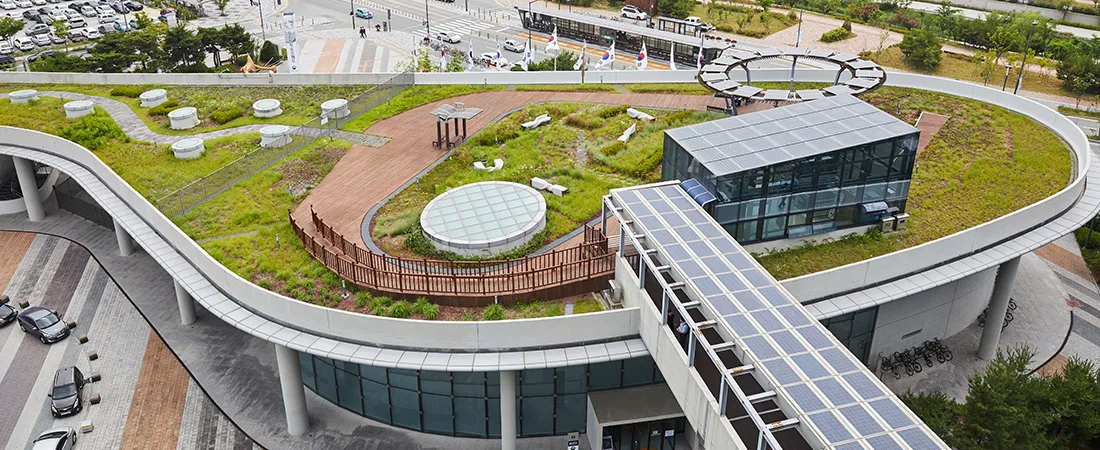
April 11 is ‘Urban Agriculture Day,’ a day to raise awareness of the importance of urban agriculture. Designated as a statutory commemorative day in 2017, the date was chosen by combining April, when spring farming begins, with 11, symbolizing soil (土). Urban agriculture, literally the fusion of ‘urban’ and ‘agriculture,’ refers to the act of utilizing land, buildings, or various living spaces within the city to cultivate crops, trees, or flowers, or to raise insects such as beekeeping. From tending rooftop gardens to growing lettuce on the balcony, we encounter agriculture in the city far more often than we think. As Urban Agriculture Day marks its 10th anniversary this year, let us explore the effects and examples of how urban agriculture is closely linked with ESG in daily life.The History and Value of Urban AgricultureUrban agriculture in South Korea began with the weekend farms of the Seoul Metropolitan Government Agricultural Technology Center in 1992. Entering the 2000s, as leisure time increased with the five-day workweek and wellness culture gained popularity, urban agriculture activities began to gradually increase. In the 2010s, amid concerns over imported agricultural products, controversies over genetically modified foods, and the mad cow disease scare, more people began to consume or directly grow eco-friendly organic produce. In 2011, the Act on the Promotion and Support of Urban Agriculture was enacted, establishing the legal basis for national and local government support of urban agriculture, and from 2017, the Urban Agriculture Manager certification system began fostering specialized urban agriculture personnel. [Urban Garden Participation Status © Everyone Is an Urban Farmer (Korea Agency of Education, Promotion and Information Service in Food, Agriculture, Forestry and Fisheries)]The total economic, social, and environmental value of urban agriculture exceeded KRW 5 trillion as of 2023. Urban agriculture is assessed to have generated not only economic effects from consuming agricultural products and creating related jobs, but also social value worth KRW 1.3416 trillion and environmental value worth KRW 768.1 billion. Social value includes strengthening bonds and building community, environmental education, and mental relaxation. Environmental value includes promoting biodiversity, reducing carbon, and mitigating the urban heat island effect. Additionally, utilizing waste heat for farming or converting building rooftops into gardens can cut heating and cooling costs by 16.6%, so the value of urban agriculture is by no means small.Urban Agriculture Sites: From Subway Stations to RooftopsVarious forms of urban agriculture sites exist around us, from school gardens to rooftop gardens of public institutions. There are three representative examples of urban agriculture. First, let us examine ‘Metro Farm,’ the smart farms in subway stations that we frequently encounter. The Seoul Metropolitan Government and Seoul Metro have created Metro Farms in unused spaces within subway stations, using ICT technology to cultivate and supply crops regardless of season or climate. Metro Farms are currently located in five stations: Sangdo, Dapsimni, Cheonwang, Chungjeongno, and Euljiro 3-ga. The farms primarily grow leafy vegetables and herbs, a choice designed to avoid causing harm to farms that grow leafy wrap vegetables.[Minister of Agriculture, Food and Rural Affairs Song Mi-ryung visiting the Sangdo Station Metro Farm © Ministry of Agriculture, Food and Rural Affairs]Incheon Metropolitan City’s ‘Ieum Garden’ pursues not only farming but also climate crisis response, community building, and social contribution. Created on idle land in Songdo-dong, Incheon, the Ieum Garden is operated by citizens who have formed their own steering committee. While there is no participation fee, community operation education is mandatory, and participants must carry out required activities including shelter maintenance, drainage repair, and volunteer work on donation garden farming. The operation office uses electricity generated through solar and small-scale wind power, and farming is done using rainwater instead of tap water or groundwater — points also worthy of note. In 2025, the Ieum Garden had 334 citizen participants and 26 organizations, and spread the value of urban agriculture by donating a total of 872 kg of produce to the local community over 14 occasions. Finally, ‘urban beekeeping’ is also a representative example of urban agriculture. Urban beekeeping may be a somewhat unfamiliar concept, but it is making a significant contribution to urban ecosystem restoration. Paradoxically, as the overall bee population declines due to the climate crisis, cities have become a favorable environment for small honeybees, with lower risks from pesticides and the like. The Seoul Metropolitan Government operates urban beekeeping training programs in each autonomous district. Gwanak-gu has installed and operated an urban apiary at the Nakseongdae garden since 2015, harvesting a total of 1,597.5 kg of honey by 2022. Meanwhile, companies are also turning their attention to urban beekeeping as part of ESG activities. Last year, IKEA conducted urban beekeeping projects on the rooftops and outdoor spaces of its Gwangmyeong and Goyang stores in collaboration with the urban beekeeping social venture Urban Bees Seoul, and the harvested honey was sold at pop-up stores inside IKEA. [IKEA, which carried out an urban beekeeping project © IKEA Korea]Each year, on the occasion of Urban Agriculture Day, government-level commemorative events and various hands-on programs are held. During the Urban Agriculture Day commemorative week from April 7 to 12, the Ministry of Agriculture, Food and Rural Affairs is promoting Urban Agriculture Day events in collaboration with the Sejong National Arboretum. Various companion plant and seed sharing events will also be held in conjunction with local governments.Let us enjoy the coexistence of the city and nature around us by participating in the diverse events demonstrating that urban agriculture is expanding beyond the environment into community and culture, and by taking part in urban agriculture sites. by Editor L

The bustling March campus filled with students returning for a new semester has passed, and April, when cherry blossoms bloom and fall, has arrived. In this season of new beginnings, ESG Today met with members of the ‘Seoul National University Society for Sustainable Business Management (SSBM)’ — the only ESG-specialized academic society at Seoul National University — to hear about their activities and what they have learned from studying corporate ESG. From CSR Origins to an ESG-Specialized Academic SocietySince its founding in 2006, SSBM has been analyzing corporate activities from a student’s perspective and pinpointing the current state of ESG management. SSBM’s roots lie in an academic society called ‘SNU CSR,’ which studied corporate social contribution. Entering the 2020s, as ESG emerged as a keyword across the business landscape, the scope of research broadened to encompass both CSR and ESG, and the name was changed to the current SSBM. The approximately 20 members of SSBM conduct up to 12 sessions per semester to study ESG. The sessions conducted by SSBM are broadly divided into four stages. The first is the ‘ISSB Disclosure Session.’ Reflecting the recent trend in which ESG disclosure is being legally mandated under International Sustainability Standards Board (ISSB) standards, the disclosure session devotes two weeks to studying ISSB disclosure standards. SSBM has built a unique position bridging academia and industry through ongoing industry-academia collaboration with major companies such as Samjong KPMG, KB Financial Group, and CJ CheilJedang. Since all of the society’s sessions are designed with the final stage — industry-academia collaboration, i.e., hands-on experience — in mind, the second session, ‘ESG Management Strategy Study,’ brings together past and current cohorts of members to create and solve ESG problems relating to management strategies by industry sector.In the third session, key companies are selected by industry sector and ‘corporate ESG analysis reports are written.’ The reports primarily evaluate the key ESG issues of companies that have recently attracted notable attention, conducting in-depth analysis centered on corporate sustainable management policies. The final stage of the sessions is ‘industry-academia collaboration.’ After completing industry-academia collaboration — an opportunity to empirically unpack the content studied over the semester — one semester draws to a close. In addition to these main sessions, the society’s activities also include ‘guest lectures by external speakers.’ These are occasions to hear lectures on ESG practice from company professionals and engage in Q&A; last semester, ESG experts from companies such as HD Hyundai Oilbank and ERM gave lectures. [Guest lecture by an external speaker (ERM Korea Partner Shin Eon-bin) © SSBM]Experiencing ESG in the Field: What Industry-Academia Collaboration Has LeftFor university society members, industry-academia collaboration — working alongside corporate practitioners — inevitably carries special meaning. SSBM President Moon Han-bit, who participated in the CJ CheilJedang collaboration, revealed, “Before becoming a society member, I vaguely imagined an industry-academia collaboration project as something like an internship experience. But having gone through it, what the corporate contacts actually wanted from us was the perspective of students,” acknowledging the gap between a student’s approach and a corporate approach. Vice President Lim Jae-young, who took part in the Samjong KPMG collaboration, also noted, “It is easy to assume that ESG strategy is usually aimed at achieving a leading position within the industry, but I learned that this is not necessarily always the case.” It was a fresh discovery for the students that among companies pursuing ESG consulting, some approach ESG at the level of mere regulatory compliance, or as a means to explain ESG regulatory compliance to the board, rather than aiming to lead the industry through ESG. Member Moon Na-young, who participated in the Sopung Ventures collaboration, said, “It was refreshing to be able to experience the startup ecosystem, the investment perspective of venture capital, and ESG approaches that are normally difficult to observe directly.” President Moon Han-bit summarized that industry-academia collaboration was a time that provided not only experience but also assistance in setting the direction of research from the perspectives of corporate management and ESG management.[SSBM President Moon Han-bit discussing industry-academia collaboration © ESG.ONL]Capturing the State of ESG: The Society Journal <Sustainability Review>SSBM also publishes what it has learned through study sessions in its journal. Members of SSBM regularly publish the society journal Sustainability Review (SR). Members themselves write and edit articles on topics closely tied to ESG, such as COP30 and RE100. SR primarily covers issues that have recently drawn social attention — such as Commercial Act amendments or changes in labor issues following the introduction of AI — as well as topics that individual students find difficult to study alone. For instance, Vice President Lim Jae-young, who recently contributed an article on the European Sustainability Reporting Standards (ESRS) to SR, explained the editorial direction, saying, “While ISSB is the usual focus for disclosure standards research, with ESRS being introduced in Europe but still not applied by any domestic company, it was a difficult topic to study together with society members. That is why I took it up as a topic for SR.” He added that members also contribute to SR by developing topics covered in their various major courses.[SSBM group photo © SSBM]Beyond Theory, Broadening HorizonsPresident Moon Han-bit explained the reason for participating in the society: “In university courses, the focus is on theory rather than practice, so there are inevitably limits to what one can learn. Activities at SSBM provide a great opportunity to satisfy the thirst for both theory and practice.” Considering that most society members are keenly interested in the consulting industry and the companies with which they have conducted collaborations, and that they are concretizing their career paths by expanding into those companies after industry-academia collaboration, these students are poised to grow into the talent that will create and lead ESG practice at companies in the future. Vice President Lim Jae-young added, “I came to feel that realizing ESG at the corporate site ultimately requires financial performance to back it up, and now I am accumulating financial knowledge,” explaining that society activities are simultaneously broadening career paths and horizons. In South Korea, it is still difficult to say with confidence that ESG is perceived as a key indicator influencing corporate value. The SSBM members’ aspiration to hasten the day when ESG is regarded as being as important as financial metrics in corporate management stands not on grandiose slogans but on the practical sense honed at the sites of industry-academia collaboration and the knowledge they have meticulously built up. When the steps they are now preparing accumulate and ESG becomes the authentic language of the corporate field, how will our business environment change? The first page of that transformation is being written by today’s university students. by Editor L

The greenhouse gases emitted by the global healthcare sector account for approximately 4.4% of net emissions. ‘Medical waste,’ which makes up roughly 5% of those emissions, refers to waste discharged from healthcare institutions and veterinary hospitals that poses a risk of infection. While this may seem like a small percentage, its environmental impact is significant. Let us imagine visiting a hospital for a cold. After the consultation, how much disposable waste was generated? A mask, syringe and needle, the vial containing the injection solution, the bag that held the sterilized medical instruments, and alcohol swabs — the amount visible to the naked eye alone is considerable. It is also easy to imagine that countless amounts of medical waste are being generated in the unseen spaces of the hospital. Medical Waste Treatment Through Incineration and Sterilization ShreddingSouth Korea’s medical waste regulations are somewhat stringent compared to other countries. In 2022, domestic medical waste generation was approximately 230,000 tons, of which 97.5% was incinerated. There are currently 13 medical waste incinerators nationwide. While not a small number, there are no incinerators in Seoul or Jeju, where the most medical institutions are concentrated, leading to significant carbon emissions and infection risks from the long-distance transportation of medical waste. Building new incinerators is also difficult due to resident opposition. Some argue that with medical waste generation decreasing to 190,000 tons as of 2024, there is now some slack in incinerator operations. However, compared to a decade ago, the volume has increased by 23%, so reducing medical waste and pursuing eco-friendly treatment remain issues requiring deliberation.[Medical Waste Generation Trends in South Korea Over the Past 10 Years © Korea Environment Corporation]Beyond incineration, another treatment method is sterilizing medical waste at high temperature and pressure, then shredding it and discharging it as general waste. This method can reduce greenhouse gas emissions by approximately 70% compared to incineration. Overseas, methods such as high-pressure sterilization or chemical treatment of medical waste are common. In South Korea, this method had been used at only four large hospitals, but with the recent adjustment allowing sterilization shredding facilities to be installed even at small and medium-sized hospitals, various domestic research teams and companies are actively developing related technologies.Proper Segregation: The First Step to Reducing Medical WasteWhat everyone emphasizes for reducing medical waste is proper segregation. The WHO has also highlighted segregation, noting that approximately 85% of hospital waste is non-hazardous. In 2019, the Ministry of Climate, Energy and Environment estimated that medical waste could be reduced by about 20% through proper segregation.Domestic hospitals are undertaking various efforts to reduce medical waste, with Samsung Medical Center as a representative case. According to the 2025 Samsung Medical Center ESG Report, the hospital reduced medical waste by a remarkable 791 tons. Compiling the content shared by hospital officials at a forum and the ESG report, first, at nursing stations where nurses handle their tasks, packaging for medical supplies — which accounted for a large share — was segregated as general waste.Additionally, upon confirming that 70–80% of the contents in medical waste bins placed at each bed were general waste, the positions of general waste bins and medical waste bins were changed. Through such simple methods, the hospital reduced the amount of medical waste generated in a short period. Furthermore, based on nurses’ input that a significant amount of recyclable medical waste or general waste is generated among operating room waste that is conventionally treated as medical waste, Samsung Medical Center is currently conducting a pilot test on the segregation of operating room medical waste. [Samsung Medical Center © Samsung Medical Center]From Disposable to Reusable: The Eco-Friendly Transformation of Medical SettingsMost gowns worn by doctors and nurses in operating rooms are disposable. The WHO has stated that there is no difference in safety, including infection rates, between disposable and reusable medical gowns. Reusable gowns are already widely used overseas. The University of Maryland Medical Center has been using reusable gowns since 2000, reducing medical waste by 690 tons. The domestic company SteriCare, which provides hygiene services to medical institutions, has also developed reusable gowns from new medical materials and supplies them to domestic hospitals. Changes toward the reuse of medical devices are also underway in endoscopy rooms. The medical communities in Europe and the United States began analyzing the environmental impact of endoscopy procedures around 2020. The annual carbon emissions of gastrointestinal endoscopy units across the United States alone amount to 86,000 tons, and an average of 3 kg of medical waste is generated per bed per day. To address this, Europe has issued the ‘Green Endoscopy Guidelines,’ which refer to activities that minimize environmental pollution by reducing the medical waste, carbon emissions, and energy consumption generated during gastrointestinal endoscopy procedures.Domestically, the Korean Society of Gastrointestinal Endoscopy has followed suit by launching a Green Endoscopy TF to reduce medical waste generated during endoscopy procedures and is running an eco-friendly endoscopy campaign. The content of the campaign includes thoroughly disinfecting and reusing the tubes used for endoscopes, and guiding Koreans — who undergo an unnecessarily high number of endoscopies — to receive only the necessary examinations appropriate to their life stage. The domestic Green Endoscopy TF aims for a strategy of pursuing sustainable endoscopy examinations through eco-friendly endoscopy. Not all of us can be well-versed in the specialized field of medical procedures. Yet we cannot afford to lose interest, because its impact is connected to the health and lives of all of us. If we understand and welcome the efforts being made in the field, change in hospitals and policy institutions can also begin. by Editor L

A life form that breathes oxygen and a life form that evolved in an ammonia atmosphere shared no biological commonality. Their sensory organs, methods of communication, and the physical conditions of their existence were all different. Yet in the film ‘Project Hail Mary,’ the two beings — Ryland Grace (played by Ryan Gosling, hereinafter Grace) and Rocky — cooperated. They shared a single commonality: the fact that their respective home stars were on the verge of extinction from the same threat.[Scene 1 from the film ‘Project Hail Mary’ © Sony Pictures]‘Project Hail Mary’ is based on the 2021 novel of the same name by American author Andy Weir. When humanity faces extinction due to the microbe ‘Astrophage,’ which consumes solar energy, science teacher Grace is dispatched on a mission to save humankind. Waking up alone light-years away in space, he encounters the alien being Rocky, and the two communicate through the medium of mathematics and frequency. This film contains questions too precious to be consumed merely as a sci-fi blockbuster. Is cooperation possible even when the conditions of existence differ? And that question points precisely to the point at which international ESG governance is currently stuck. A Reality Different from the FilmIn the film, Grace and Rocky could not communicate at first. There was no common language between a being that speaks through sound waves and one that speaks through light. The two invented their communication system from scratch, using mathematics and frequency as intermediaries. There was one premise that made that cooperation possible: the shared crisis that if the stars died, both would perish. Real-world ESG governance satisfies only half of that premise. Developed and developing countries recognize the shared threat of the climate crisis, but for 30 years they have been unable to narrow their differences over ‘who should reduce first and by how much.’ While IPCC reports urge immediate action, the nations gathered at the negotiating table first pull out safety nets for protecting their own industries. When Europe introduced the Carbon Border Adjustment Mechanism (CBAM), developing countries pushed back, calling it ‘climate colonialism.’ In effect, the crisis was shared, but no common language was created to solve it together.[Scene 2 from the film ‘Project Hail Mary’ © Sony Pictures]A Half-Baked Common Language Amid Countless StandardsWhen the International Sustainability Standards Board (ISSB) issued the IFRS S1 and S2 standards in 2023, many welcomed it, saying “at last a common language for global ESG disclosure has emerged.” But adoption was left to each country, and the mandatory application timeline, disclosure scope, and third-party verification requirements all varied. The European Union (EU) began phased mandatory disclosure from 2024 through the Corporate Sustainability Reporting Directive (CSRD). The U.S. Securities and Exchange Commission (SEC) had its climate disclosure rules suspended by litigation after introduction. The Taskforce on Nature-related Financial Disclosures (TNFD) released a biodiversity disclosure framework, but corporate adoption rates remain at an early stage. It is not that standards are lacking; it is that there are too many, and no one is reconciling how they differ from one another.The absence of a common language manifests identically at the corporate level. Korean export companies are experiencing ESG fatigue as they face different disclosure standards from each client. For the ISSB framework to function, regulatory authorities and companies in each country must submit comparable data, but if standards exist without data, the common language exists only in the dictionary. The solution is not unification into a single standard but the establishment of ‘interoperability.’ The ISSB is already working with the Global Reporting Initiative (GRI) to reduce duplicative disclosures. The direction is right; the problem is speed.A Climate Crisis That Does Not WaitIn the film, Grace was on a deadline. He had to find a solution before the Astrophage consumed all the sun’s energy. There was no leisure to deliberate over cooperation, so cooperation was not optional. Climate science sends the same warning. The IPCC Sixth Assessment Report specifies that mitigation actions by 2030 will significantly determine climate risks in 2100. This means there is not much time to sort out the fragmentation of ESG governance. Now, with regulations in each country, global supply chains, and the ESG demands of capital markets all changing rapidly at the same time, what Korean companies need is a strategy not for ‘which standard to follow’ but for ‘how to flexibly connect between the standards.’ The fact that beings who share a crisis reached out their hands is sometimes, in itself, a sufficient beginning. by Editor L

Few titles in the Pokémon series have ever put forward such a somber starting point. The world the gamer will encounter is withered; humans have vanished, leaving only ruins and wasteland. Yet paradoxically, this game is showing signs of being regarded as a masterpiece of the Pokémon series. This is the story of ‘Pokémon Pokopia,’ the game series released on March 5. Pokémon Pokopia is the first slow-life simulation game in the Pokémon franchise, selling 2.2 million copies worldwide and one million in Japan alone within four days of release. It received a favorable 89 points on the game review site Metacritic and, with sell-outs continuing at major retailers, it even drove a reverse momentum surge for the Nintendo Switch 2 console. Ecosystem Crisis Becomes the Game’s SettingThe basic premise is also quite different from the familiar grammar of Pokémon games up to now. The game user becomes a Ditto in human form and must restore a land that once was home to Pokémon and humans together but has now withered and been abandoned. Gathering materials to craft items and building houses and habitats, the player creates an environment to which Pokémon can return. The in-game time is linked to real time, and weather and day-night changes are reflected as well. It is not a game about catching stronger Pokémon or raising captured ones as in the existing series. It is simply a game about rebuilding a world where humans and Pokémon can live.Previous entries in the Pokémon universe had already hinted at climate change and ecosystem threats through the cases of certain Pokémon such as Koffing and Corsola. The traces of industrialization spewing air pollutants and bleached coral reefs showed that the shadow of the ecological crisis was seeping into an IP beloved by children and the public. Pokémon Pokopia took that implication one step further. This time, climate and ecosystem issues did not remain as background decoration but became the very rules of gameplay. The gamer comes to realize how the world was devastated through dialogue, diaries, letters, and books. The story does not move forward unless the withered world is restored. [Pokémon Pokopia © Pokémon Pokopia Official Website]The Game Teaches the Grammar of SymbiosisWhat makes this game interesting is that its core loop itself can be read as a metaphor for environmental management. The more you restore the devastated village and create habitats where Pokémon can thrive, the more Pokémon come to visit. The game features an ‘environmental level’ indicator; as you maintain the village, restore nature, and make Pokémon comfortable, the value rises. This unlocks new materials and opens up facilities. In short, the more livable an environment you create in the game, the more the world comes back to life, and the more rewards return to the gamer.In this respect, Pokémon Pokopia displays a different ethic from existing Pokémon games. Whereas past Pokémon games were closer to the logic of capture, battle, and the growth narrative of becoming stronger than opponents, Pokémon Pokopia centers on building a good home for Pokémon to live together. For instance, instead of borrowing Pokémon’s moves to fight, Ditto uses them to grow grass, draw water, and clear terrain. Bulbasaur adds vegetation to barren land, and Squirtle breathes vitality into that greenery. In this way, the ‘moves’ that Pokémon possess perform the role of tools for stewardship and restoration, not as means of destruction or competition. Another impressive aspect is the way it handles diversity. Each Pokémon prefers a different environment. Some prefer dry places, some prefer the waterside, and some prefer greener, more humid settings. Therefore, instead of building a uniform village, the game user must design multi-layered habitats where different conditions can coexist. It is not about making all environments the same, but about harmonizing so that different beings can live together under their own conditions. At this point, Pokémon Pokopia portrays not only the restoration of ecosystems but also the value of diversity — of different beings living together — in a very gentle grammar.[Pokémon Pokopia gameplay scene © Nintendo Official YouTube Channel]Conveying a Way of Embodying CoexistenceOf course, there are clear limitations. Pokémon Pokopia is not a game that directly accuses the climate crisis. What the official introduction and core systems emphasize is not the language of real-world politics — ‘carbon, fossil fuels, energy transition, responsible agents’ — but the language of restoration: ‘restoration, gardening, habitat creation, comfort level.’ So rather than sharply criticizing the problems of cause, power, and capital, this work is closer to a healing-type reconstruction narrative that repeatedly instills the intuition that “when you nurture the environment, life returns.” Yet it is precisely because of this that it can reach a broader audience. This is because it persuades through resonance and experience rather than direct criticism. Ultimately, the achievement of Pokémon Pokopia lies here. Rather than delivering environmental issues in a heavy and difficult manner, it makes the sensation that “when you create a good environment, more life returns, more diverse beings can live together, and the community also becomes richer” something that is learned through gameplay. It has transformed Pokémon from targets to be caught into neighbors to live with, moves from means of attack into tools of restoration, and growth from competition into action for coexistence. Content that deals with climate and the environment need not always mobilize the fear of disaster or guilt. Sometimes, this kind of imagination of gentle recovery can emerge from the most somber worldview. The educational potential is also great, in that it is a case of seamlessly integrating climate crisis and ecosystem collapse into gamification. Pokémon Pokopia, in that sense, can be called both a transformation of Pokémon and a clever evolution of climate and environmental communication. by Kim Won-sang (Climate Solutions, Media Communications)