Loading Data
Please wait a moment...
Update Cal.
2026.08
03
Mon
04
Tue
05
Wed
06
Thu
07
Fri
08
Sat
09
Sun
Update Calendar
2026.08
01
Sat
02
Sun
03
Mon
04
Tue
05
Wed
06
Thu
07
Fri
08
Sat
09
Sun
10
Mon
11
Tue
12
Wed
13
Thu
14
Fri

Loading Data
Please wait a moment...
Evening ESG news and briefings to wrap up your day.

A few years ago, as small local breweries entered convenience store distribution channels, ‘craft beer’ began filling convenience store shelves. Collaboration products triggered sell-out frenzies, and it seemed the craft beer industry was ushering in a new wave of change in the domestic alcohol market. Then this past April, Amazing Brewing Company, which had anchored Seoul’s Seongsu-dong for a decade, filed for rehabilitation proceedings with the Seoul Bankruptcy Court.The rehabilitation filing of Amazing Brewing Company — which had been the first domestic craft brewery to attract Silicon Valley capital and had completed two large-scale breweries in Icheon, Gyeonggi Province — came as a significant shock to consumers. While the industry cites excessive facility investment as a primary cause, reading this event merely as one company’s strategic failure is somewhat superficial. The case of Amazing Brewing Company can be seen as a symbolic event signaling that alcohol consumption culture is fundamentally changing.From Craft Beer to Global Brands: A Broad Downturn Across the Alcohol MarketThe worsening conditions in the alcohol industry are not limited to Amazing Brewing Company. Last year, the domestic alcohol market shrank by over 5%, and the number of restaurants and bars decreased by approximately 10%. In the aftermath, Sevenbräu, known for its ‘Gompyo Wheat Beer,’ is also undergoing corporate rehabilitation, and Hanul & Jeju, widely known to the public as ‘Jeju Beer,’ continues to face management pressure as it has been unable to escape its deficit structure.It is not only the craft beer market; the performance of major liquor companies has also slumped. In 2025, Lotte Chilsung Beverage’s domestic alcohol segment revenue plunged 31.1% year-on-year, and HiteJinro’s annual operating profit fell 17.3% to ₩172 billion, recording an ‘earnings shock’ that fell far short of major securities firms’ estimates. [Amazing Brewing Company CEO Kim Tae-kyung’s post on the bankruptcy © Seongsu Bible Official Instagram]Notably, major global alcohol companies are also commonly facing difficulties. Constellation Brands, a leading North American alcohol company, saw its recent annual revenue decline by approximately 10% year-on-year to about ₩12.5 trillion, and the operating profit of Moët Hennessy, the spirits division of the world’s largest luxury group LVMH, plummeted 25% in 2025. Diageo of the UK, the world’s number one Scotch whisky company, is also experiencing a sharp drop in Asian market sales.How Changes in Lifestyle Are Reshaping Alcohol ConsumptionThe decline in alcohol consumption both domestically and internationally is a result of changing lifestyles. According to Gallup, the recent downward trend in U.S. drinking rates is being driven by young people aged 18 to 34. The situation in South Korea is not much different. Based on the Korea Disease Control and Prevention Agency’s National Health Statistics, the monthly drinking rate in Korea was 57.1% in 2024, down 1.2% from the previous year. Among these, the daily alcohol intake of people in their 20s fell by over 30% year-on-year to 64.8g, making it not only the sole age group to show a decrease but also lower than the alcohol intake of people in their 60s.Underlying this phenomenon is the practical reason of cutting spending amid high inflation, but more fundamentally, the wellness trend — which prioritizes ‘health and daily well-being’ above all else — is deeply embedded. Today’s younger generation is displaying strong fatigue toward the existing drinking culture of excessive consumption at the expense of the next day’s sleep, focus, and daily stability. The ‘Sober Curious’ culture of consciously drinking less or choosing non-alcoholic beverages can be seen as part of this vast wellness trend.A Drinking Culture as ‘Sustainable Taste’[Traditional liquor tasting class promotional poster ©Gaekje Brewery Official Instagram ]Human history is inseparable from alcohol. There is even a theory that the very reason humanity began agriculture was to brew alcohol — to such an extent that alcohol transcends mere preference to become a core element of religion, social life, and ritual. Today, however, we are contemplating ways to enjoy alcohol in a relatively healthier and more sustainable manner. This shift could become an opportunity to reshape drinking culture. The alcohol market is already experimenting with this potential through the expansion of non-alcoholic and low-alcohol product lines, and a tasting-centered drinking culture in which small quantities are savored using the senses of smell and taste.The era of a drinking culture in which pleasure is followed by regret or addiction harms one’s health is drawing to a close. What will take its place is a drinking culture as a ‘sustainable taste’ — one that enriches life while fully preserving one’s daily well-being. by Editor N

The government has extended the vehicle fuel tax cut until July 31, and international flight fuel surcharges will also drop by approximately 20% from June compared to their peak levels. Both measures aim to ease the burden on the public amid soaring oil prices triggered by the Middle East war, but from an ESG perspective, these two measures create a tension between Environmental (E) and Social (S) considerations. Seemingly Similar but Different: Fuel Tax Cuts vs. Fuel Surcharge Drops [Vehicle Fuel Tax Comparison Table© ESG.ONL] First, it is necessary to distinguish between the nature of the ‘fuel tax cut’ and the ‘fuel surcharge drop.’ The vehicle fuel tax cut is a policy decision in which the government directly adjusts tax rates. On May 21, 2026, the Ministry of Economy and Finance convened a meeting of the Special Task Force (TF) of relevant ministers for livelihood price management and announced that the fuel tax cut, originally scheduled to expire on May 31, would be extended for two months until July 31. The reduction rates remain unchanged at 15% for gasoline and 25% for diesel. Accordingly, the per-liter fuel tax will continue to apply at the reduced rates of ₩698 (down from ₩763) for gasoline and ₩436 (down from ₩523) for diesel. Compared to pre-cut rates, this translates to a reduction effect of ₩122 per liter for gasoline and ₩145 per liter for diesel at consumer prices. [Korean Air Boeing 787-10 © Korean Air Official Website]In contrast, the decline in aviation fuel surcharges is not a government decision but an automatic adjustment linked to international oil prices. Aviation fuel surcharges are calculated across 33 tiers based on the daily average price of jet fuel traded on the Singapore spot market (Mean of Platt’s Singapore Kerosene, MOPS), and are reflected in the following month’s ticket issuance on a monthly basis. After the Middle East war broke out in February 2026, the highest tier, Tier 33, was applied to May ticket issuances, but with expectations of war negotiations and declining international oil prices, from June issuances onward it has been adjusted downward by six tiers to Tier 27. Based on Korean Air standards, round-trip fuel surcharges for the longest-haul routes such as to New York have dropped from ₩1,128,000 to ₩903,000, a reduction of ₩225,000. The Fuel Tax Dilemma: Between Climate Goals and Vulnerable PopulationsThe fuel tax is not simply a tax. It functions as a ‘carbon price signal’ that imposes a cost on fossil fuel consumption to suppress usage and encourage the transition to eco-friendly alternatives. Lowering the fuel tax reduces the short-term burden on consumers, but in the long term, it may increase fossil fuel consumption and greenhouse gas emissions — moving in the opposite direction of carbon neutrality.South Korea has declared carbon neutrality by 2050 as a statutory goal and submitted a Nationally Determined Contribution (NDC) to the United Nations of reducing greenhouse gases by 40% by 2030 compared to 2018 levels. The Organisation for Economic Co-operation and Development (OECD) has consistently pointed out that fossil fuel subsidies and fuel tax cuts conflict with carbon neutrality goals. The more the fuel tax cut becomes a repeated practice rather than an emergency response, the lower international trust in South Korea’s carbon reduction pathway will inevitably fall. [Framework Act on Carbon Neutrality and Green Growth for Climate Crisis Response © Carbon Neutrality and Green Growth Commission] That said, the fuel tax cut cannot be evaluated solely on environmental grounds. The damage from soaring oil prices is not evenly distributed. The impact of surging fuel prices is far greater for residents of rural areas with limited access to public transportation, workers in freight and transportation industries whose livelihoods depend on fuel costs, and small business owners for whom energy costs constitute a significant portion of their expenses. This is the context behind the Ministry of Economy and Finance applying a higher reduction rate of 25% to diesel, considering the ripple effects on industrial and logistics sectors. With consumer price inflation recording a 2.6% year-on-year increase last month — the steepest rise in roughly 21 months — leaving energy price increases unchecked would amount to directly shifting the burden onto socially vulnerable groups. To Achieve Both Livelihood and the EnvironmentUltimately, this fuel tax cut is a policy where you gain one thing and lose another. As a temporary crisis response, the fuel tax cut is an unavoidable choice. However, the more the reduction is repeated and prolonged, the more necessary it becomes to verify whether its benefits are sufficiently reaching the truly vulnerable, and how it will connect with post-expiration eco-friendly transition support policies. Rather than uniformly cutting the entire fuel tax, more precise alternatives could include expanding energy vouchers for low-income households and small business owners, or EV transition subsidies.This fuel tax cut debate serves as a reminder that ESG is not merely an eco-friendly campaign but a practical decision-making framework for striking a balance between the dual values of Environment and Social. by Editor N

The ‘Wax Break Ball’ — a squishy toy wrapped in wax that you crack open with your hands — is currently all the rage. This toy, whose appeal lies in the satisfying sensation of breaking the wax shell encasing the squishy interior, is the latest example of a ‘consume-then-discard’ structure that raises concerns each time a new trend item emerges.A Trend Driven by Sensory Stimulation, Debris That Becomes WasteWhile conventional squishy toys are meant to be repeatedly touched and enjoyed, the Wax Break Ball derives its fun from the fleeting sound and tactile sensation of cracking the wax shell. The rapid spread of such sensory-driven products is fueled by the content consumption environment reorganized around short-form platforms such as TikTok and Instagram Reels. The problem with these products lies in their ‘materials.’ The wax used in the toys is typically petroleum-based paraffin wax, which has very low biodegradability, and the polyurethane-based synthetic resin of the internal squishy material is virtually impossible to sort for recycling. Mixing wax fragments and synthetic resin, Wax Break Balls have no applicable category under separated waste disposal standards and are mostly treated as general waste. [Wax Break Ball © ESG.ONL]This pattern of toy materials being discarded without proper recycling is nothing new. During the COVID-19 pandemic, as time spent at home increased, a craze erupted for silicone-based toys such as ‘Pop Its.’ Advertised as semi-permanently reusable devices that let users repeatedly press bubbles, these toys were discarded in large quantities once the trend faded. Since silicone materials are not covered by standard plastic separation and collection systems, most were incinerated or landfilled. The same goes for keycap consumption, which has even evolved into a collectibles culture amid the mechanical keyboard and merchandise craze. While the keycap material itself is plastic, its small, mixed-material nature prevents it from entering the recycling system. Moreover, replaced older keycaps end up in standard garbage bags destined for incineration or landfill. Waste Disposal Slower Than the Speed of TrendsThe structure of all these cases is identical. Trends spread rapidly through short-form platforms, and massive amounts of waste are generated during the brief trend cycle. Once the trend ends, social attention disappears along with it. According to research by Greenpeace and a team led by Professor Jang Yong-chul of Chungnam National University, disposable plastic waste accounts for nearly half of all plastic waste in South Korea. Trend-driven consumer goods that are difficult to separate for collection and impossible to recycle are exactly what is driving up this share of plastic waste. [Comparison of EU Environmental Regulation Impacts© Korea International Trade Association]Alongside consumer-level efforts to address plastic waste, institutional approaches must be pursued in parallel. Since 2021, the EU has imposed a tax of €0.80 per kilogram on non-recyclable plastic waste, and Spain and Italy have been levying separate taxes on non-reusable plastic products since 2023. The Extended Producer Responsibility (EPR) system, under which companies that produce trend-driven consumer goods also share the cost of material waste, needs to be concretized in South Korea as it has been in Europe. A single Wax Break Ball will not destroy the planet. But as long as trends repeat, so too will the accumulation of waste. by Editor N
Early voting for the June 3 local elections begins in three days. What choice should we make? If you have not yet decided, it may be worth consulting the ‘2026 Local Election 10-Domain Climate Policy Proposal (hereinafter the Proposal).’ Jointly announced on May 21, the first day of the official election campaign period, by Climate Politics Baram, Cultural Solidarity, and Citizens’ Coalition for Walkable Cities, the Proposal is a policy proposal presented by civil society as a framework for vetting candidates. Under the banner of ‘Reduce Carbon, Increase Welfare,’ it contains a total of 30 policies across 10 domains. Civil society has taken the initiative in providing criteria, from Environmental (E), Social (S), and Governance (G) perspectives, for evaluating the pledges of metropolitan and local government heads.[2026 Local Election 10-Domain Climate Policy Proposal © Green Transition Institute]The 10 domains covered by the Proposal are: ▲Region-Led Carbon Neutrality Policy ▲Energy Transition ▲Mobility Rights ▲Housing Rights ▲Education ▲Green Jobs ▲Climate Care ▲Agriculture & Food ▲Ecology ▲Resource Circulation. As the slogan suggests, the policy focus is oriented toward reducing the burden on citizens. The common goal across the 30 policies is to create regional circular structures for transportation costs, heating and cooling costs, food costs, energy, jobs, food, and care. In this way, the Proposal places weight on articulating concrete items through which citizens can experience and verify climate pledges. In the publication statement, civic groups argued that “voters must directly seek out and scrutinize the climate pledges that local election candidates have not put forward,” and that “they must demand that candidates strengthen their climate pledges and policies by election day.”Analysis Also Shines Light on Governance Blind SpotsAmong the quantitative data presented in the Proposal, there are figures worth noting from the ESG Governance perspective. A comprehensive analysis by the Green Transition Institute of the 1st Carbon Neutrality Master Plans of all 226 local governments revealed that the average 2030 carbon emission reduction rate was 25.3%, falling short of the Nationally Determined Contribution target of approximately 40% reduction from 2018 levels. A total of 87 local governments (38.5%) received a D grade, requiring a full-scale redesign.The state of governance operations is even more deficient. Among the 226 local governments, only 147 (65.0%) have actually constituted and are operating a Carbon Neutrality and Green Growth Commission, and even those that are constituted have been limited to holding just 1–2 meetings per year on average. Only 7 (3.1%) operate subcommittees dealing with more detailed agendas. The fact that 28.5% of appointed members are concentrated in academia and research, while labor and farmers account for only 2.0% and youth and students for just 1.3%, is also disappointing from a diversity perspective. Among the 147 operating commissions, 51 (34.7%) were found to be male-dominated in violation of statutory gender balance provisions. This is the backdrop for the Proposal’s first domain — ‘Region-Led Carbon Neutrality Policy’ — calling for a citizen-participatory plan redesign and the establishment of a climate deliberation body.The disparity in the energy domain is also clear. As of 2024, South Korea’s renewable energy generation share stands at approximately 9%, just one-third of the OECD average (31.0%). While Germany installed an additional 430,000 balcony solar units in 2024 alone, South Korea remains at the initial stage for both institutional frameworks and deployment infrastructure. Energy-poor households are estimated at 1.58 million, and homes aged 30 years or older total 5,563,000, accounting for roughly 28% of all housing. The Proposal’s ‘One Household, One Solar’ deployment system and ‘Grand Housing Renovation’ are policy cards directly targeting these disparities.[2026 Local Election 10-Domain 30 Climate Policy Proposals © Green Transition Institute]Partial Alignment Between Proposal and Candidate PledgesExamining metropolitan government head candidates’ pledges against the 30 policy items presented by civil society reveals variation in the degree of alignment by domain. In the mobility sector, Democratic Party Seoul mayoral candidate Jeong Won-o’s pledge for ‘full expansion of the Climate Companion Card across the metropolitan area’ points in the same direction as the Proposal’s call for expanding flat-rate climate passes. Data showing 20 million cumulative Climate Companion Card top-ups and 800,000 monthly users were even cited in the Proposal itself as evidence of policy effectiveness. In the green jobs sector, Democratic Party candidate Kim Young-rok’s pledge for 2 million pyeong of RE100 industrial complexes as Governor of the integrated Jeonnam-Gwangju Special City partially aligns with the Proposal’s call for offshore wind and renewable energy industrial belt creation.Conversely, some domains are key items in the Proposal yet rarely appear in candidate pledges. The ‘Grand Housing Renovation’ policy in the housing rights domain barely features in core metropolitan government head pledges, despite the building sector accounting for 22.2% of domestic greenhouse gas emissions. The protection of climate-vulnerable groups, mandated by the amended Framework Act on Carbon Neutrality that took effect on April 7, is only mentioned at the party level — the Democratic Party’s ‘Climate Insurance’ and the Rebuilding Korea Party’s ‘Climate Allowance’ — while implementation plans at the metropolitan government head level remain rare.Another signal of party-level interest was evident at the debate hosted by Climate Politics Baram on May 7. While officials from the Democratic Party, Rebuilding Korea Party, Progressive Party, and Justice Party attended the mayoral and gubernatorial debate, the People Power Party and New Reform Party did not respond to the organizer’s invitation.[‘Climate Pledges That Change My Life: Are Mayors and Governors Ready?’ Debate Venue © Green Transition Institute]By-Elections as a Legislative VariableThe 14 National Assembly by-elections being held on the same day are also a variable. This is because the legislative momentum for bills pending in the 22nd National Assembly — such as the ESG Adoption and Promotion Support Act, the SME Carbon Neutrality Support Act, and the RE100 Industrial Complex Special Act — will be influenced by the election results. While metropolitan and local government heads will steer policies for the next four years, the composition of the National Assembly that will provide the legal basis for those policies is being decided on the same day. The Proposal also addresses the division of roles between local and central governments. In the publication statement, the civic groups noted that “while the central government can secure funding and introduce institutions for carbon neutrality, the actual realization of climate response requires local governments, regional communities, and citizens to act,” and that “the success or failure of the Nationally Determined Contribution ultimately rests with local governments.”Ko Yi-ji-sun, Regional Transition Team Lead at the Green Transition Institute who oversaw the drafting of the Proposal, explained in the press release that “the emphasis was on restructuring climate policy not as a mere environmental agenda but as a civic livelihood agenda,” and that “both candidates and voters must recognize that policies that substantively reduce transportation, heating, cooling, and food costs are the very policies that reduce carbon.” In particular, the ‘Region-Led Carbon Neutrality Policy’ — which the Proposal placed as the first domain — calls for establishing carbon neutrality targets before 2050, installing dedicated carbon neutrality organizations, creating regional climate funds, and redesigning citizen-participatory plans, all of which must be initiated in the first year of the elected official’s term. The extent to which the 30 items flagged by the Proposal take root in local administration within the four-year term will also provide a rough outline of the ESG report cards of South Korean local governments in 2030. by Editor N

The Stewardship Code, a self-regulatory code requiring institutional investors to responsibly engage in the management of their investee companies, is undergoing a full-scale overhaul after ten years since its introduction. Since its domestic adoption in December 2016, a total of 249 institutional investors have joined, including the four major pension funds — National Pension Service, Government Employees Pension Service, Teachers’ Pension, and Korea Post — as well as asset management firms, insurers, and venture capital firms. While the scale has grown compared to the early days of adoption, its effectiveness remains in question. According to a December 2025 report by the Korea Capital Market Institute, among 72 participating institutions including pension funds, asset managers, insurers, securities firms, and banks, only 10 had published a Stewardship Code implementation report. Even those that did publish were limited to pension funds and asset managers, with no confirmed cases among insurers, banks, or securities firms. [Stewardship Code Implementation Report Publication Status © Korea Capital Market Institute]Measures to Substantiate the Stewardship Code The UK has revised its Stewardship Code three times since its introduction in 2010, and Japan has also been steadily refining it, yet South Korea has not had a single revision since enacting its Stewardship Code in 2016. Change began in December 2025. The Stewardship Code Development Committee and the Korea ESG Standards Institute, together with relevant ministries and agencies including the Financial Services Commission and the Ministry of Health and Welfare, announced measures to substantiate the Stewardship Code. The core of the substantiation effort has three pillars.First, the formalization of implementation review procedures. Participating institutions must submit self-reports on 12 items including fiduciary duty policies, conflict of interest management, and voting rights exercise, and the ESG Standards Institute will practically review these self-reports through the implementation review process. Second, the integration of the disclosure system. Implementation reports that were previously scattered across each institution’s website will be collectively posted on a dedicated Stewardship Code website, and a comprehensive report enabling inter-institutional comparison of item-by-item implementation levels will also be published. Third, the revision of the Stewardship Code content itself. The scope of fiduciary responsibility, which was previously centered on governance (G) within ESG such as board composition and governance transparency, will be expanded to include environmental (E) and social (S) considerations, and the application of stewardship principles at the investment selection stage is also under review. The Stewardship Code Development Committee plans to prepare amendments to the code and detailed guidelines within the first half of 2026.[Stewardship Code Implementation Review Items by Principle © Korea ESG Standards Institute]From Pro Forma Participation to Subject of Real ScrutinyIn tandem with the institutional overhaul, the National Pension Service, the largest institutional investor, has also picked up pace. President Lee Jae-myung directly ordered the strengthening of the Stewardship Code at a work report session with the Ministry of Health and Welfare and its affiliated institutions, stating that “the National Pension Service must actively exercise its voting rights in companies with backward management practices.” The National Pension Service is pursuing plans to establish separate fiduciary responsibility activity standards for outsourced managers and to reflect inspection and evaluation results in fund allocation and redemption. Concrete examples have already emerged: the National Pension Service voted against SK Hynix’s proposal to dispose of treasury shares for employee compensation purposes at its shareholders’ meeting.Starting this year, the Financial Supervisory Service will inspect asset management firms’ Stewardship Code implementation status and disclose the evaluation results. The scope of inspection will begin with 68 asset management firms and pension funds in 2026, and expand in phases to private equity fund managers and insurers in 2027, securities firms, banks, and investment advisory firms in 2028, and to venture capital by 2029. Internal controls and compensation systems for private equity fund managers will also be reformed. The Financial Supervisory Service indicated that corporate leaders need to personally inspect performance-based compensation structures and internal organizations.After Japan introduced its Stewardship Code in 2014, institutional investors actively demanded shareholder returns from undervalued companies with low Price to Book Ratios (PBR). Companies responded with share buybacks and expanded dividends, and as a result, the Nikkei index, Japan’s benchmark stock index, more than tripled over the course of a decade. This is a case where the Stewardship Code went beyond mere normative dimensions to transform the fundamental character of the entire capital market. Once the Stewardship Code amendments are finalized in the first half of this year, those standards will immediately set the bar for investors. This is precisely why companies should now review their internal ESG management systems and disclosure readiness. by Editor N
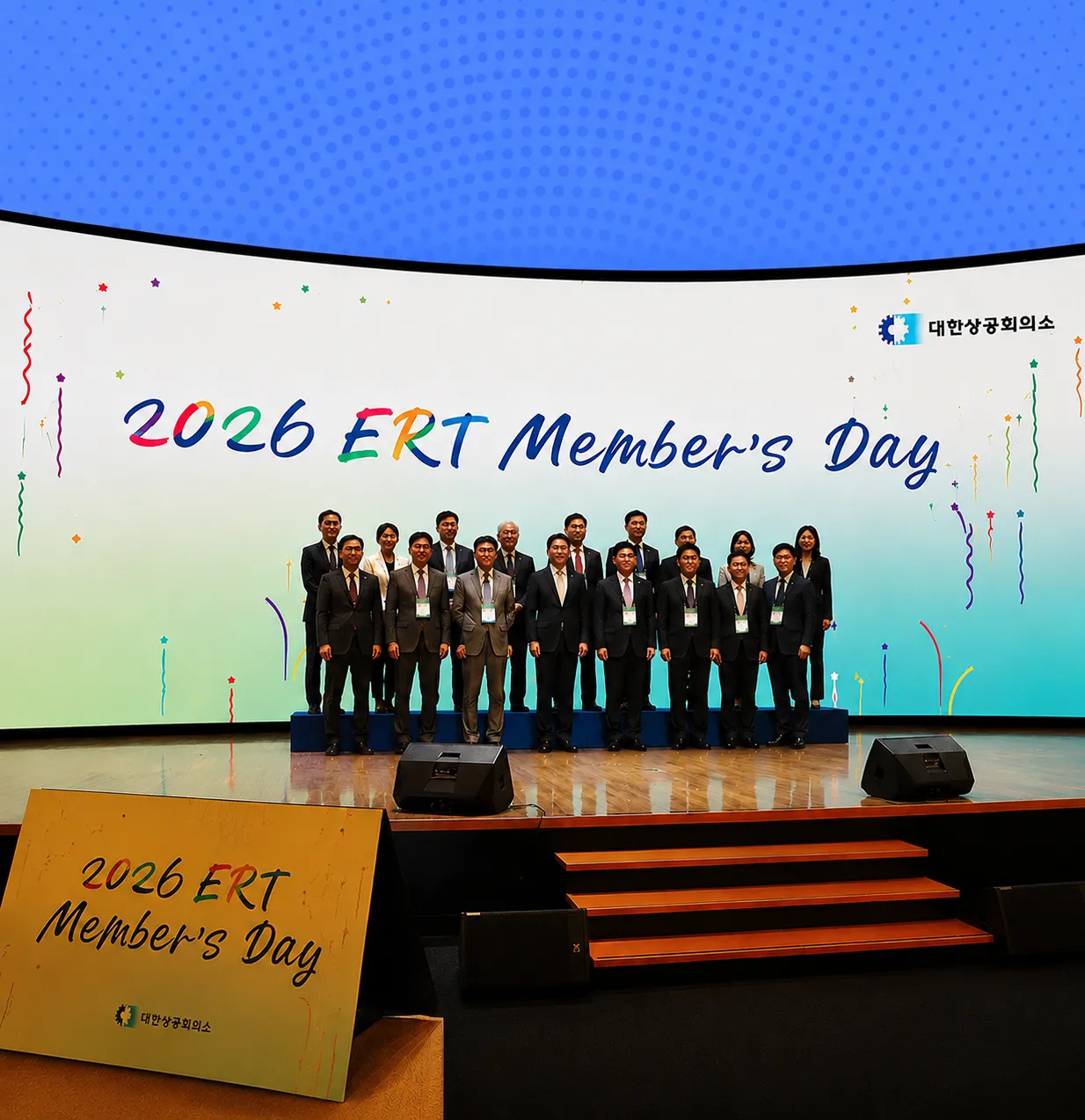
At 1:00 PM on May 20, the International Conference Hall of the Korea Chamber of Commerce and Industry in Jung-gu, Seoul, was filled with a diverse range of stakeholders — from government, regional, and social enterprise officials to citizens interested in ESG and solving social issues. They had gathered to attend ‘ERT Members Day 2026,’ hosted by the Entrepreneurship Round Table (ERT). ERT is a voluntary council of companies that leverage technology and capabilities to contribute to solving social issues, currently joined by some 1,900 companies and 72 regional chambers of commerce and industry. Now in its third year, Members Day is an annual event where ESG and social contribution managers from ERT member companies share examples of each company’s activities, experience hands-on programs, and expand inter-company exchange. This year’s event theme was ‘The AI Era: Connection and Collaboration.’ It started from the awareness that it is not that technology will solve social issues on its own, but rather that the more we enter the AI era, the more sophisticated the structures of collaboration among businesses, government, regions, and consumers must become. The event did not treat this theme as a single lecture, but concretized it through a flow that began with a keynote address presenting the concept, followed by member company collaboration case presentations and an experiential exhibition zone. The targets of collaboration were also distributed across sessions by level — government, platform, local community, and consumers — helping attendees understand the concept. [Group photo of key figures attending ERT Members Day 2026 © ESG.ONL]Before the full-fledged panel session programs began, the importance of collaboration among diverse actors for solving social issues was emphasized in the keynote speech and congratulatory remarks. In his keynote address, Korea Chamber of Commerce and Industry Chairman Chey Tae-won stated, “As social issues have become more complex than before, they are difficult to resolve through the efforts of a single company or government alone,” adding that “companies, government, social enterprises, and consumers must organically connect their respective capabilities to solve structured social issues.” Vice Minister of the Interior and Safety Kim Min-jae also shared in his congratulatory remarks, “Regional issues cannot be solved by institutions alone. When local governments, field expertise, and public-private ideas are combined, practical solutions can be found.” Government·Platform·Regional Collaboration Creating Sustainable Structures In the panel sessions that followed the keynote, examples of collaboration between regions, companies, and government were presented, along with specific cases of company-platform collaboration. The ‘Solvathon’ case — a regional problem-solving idea competition in which LG HelloVision collaborated with the Ministry of the Interior and Safety last year — and McDonald’s Korea’s ‘Taste of Korea’ campaign that incorporated regional specialty products demonstrated new possibilities for mutual prosperity that spreads regional distinctiveness while enhancing brand value. Naver Happy Bean introduced the ‘Drunk Driving Prevention’ Good Action campaign, a consumer-participatory social contribution activity carried out with OB Beer, showcasing ‘the power of a platform that connects companies and society.’ [LG HelloVision ESG Director Noh Sung-rae presenting on ‘Local Impact Created by Connection’ at ERT Members Day 2026]The ways in which companies measure social value and spread it together with consumers were also a major pillar of this year’s ERT Members Day. SK introduced its Social Progress Credit (SPC) model for measuring and rewarding social value. SPC is a policy experiment that measures the social performance created by social enterprises and provides incentives proportional to that performance. Over the past 10 years, SK has accumulated experience in measuring performance through collaboration with 468 social enterprises. Through the SPC case, SK presented the possibility that social value can lead to a structure of sustainable corporate growth. Hyundai Department Store added further depth to the session by sharing its ‘365 Recycle Campaign,’ part of its ESG program, in which customers’ unworn clothing is reborn as upcycled padding vests.[SK Social Value Institute Planning Director Park Sung-hoon presenting on ‘Social Progress Credit (SPC) Cases’ at ERT Members Day 2026 ]Where Technology Meets PeopleIn addition to the speaker presentation sessions and workshop networking, the ERT Members Day venue featured a workation exhibition zone addressing regional tourism and local extinction. The exhibition zone offered regional workation information for Jeju, Gangneung, Busan and other locations, as well as a test to find the workation type best suited to oneself and activities to discover desired workation destinations, drawing crowds of participants eager to experience regional value alongside entertainment.[The ‘Workation Exhibition Zone’ and ‘Helpful AI Experience Zone’ set up at the ERT Members Day 2026 venue]In another experiential space, the ‘Helpful AI Experience Zone,’ various companies showcased their latest technologies: ‘Dot,’ which supports information access for the visually impaired through proprietary braille cell technology; ‘WHEELY-X,’ which provides exercise solutions enabling wheelchair users to mount the wheelchair themselves; and ‘Local Universe,’ which demonstrated map-based AR (augmented reality) local content. A defining feature of this year’s ERT Members Day was that it did not leave the theme ‘The AI Era: Connection and Collaboration’ as a mere slogan but embedded it in the very structure of the event. Government, companies, local communities, and consumers each took the stage in their respective roles, and even the methods of measuring social value and spreading it together with consumers were addressed in a single venue. That said, the distance between the language of collaboration filling the event hall and its translation into substantive change remains. As ERT Members Day marks its third edition, we can look forward to next year’s event to see what record of collaboration it will accumulate beyond being an annual forum for sharing. by Editor N

The World Day for Cultural Diversity, observed every year on May 21, is an international commemorative day established by the UN General Assembly to promote the importance of mutual respect and understanding between cultures. Following UNESCO’s ‘Universal Declaration on Cultural Diversity’ in 2001, it was officially proclaimed by the UN General Assembly in 2002. UNESCO, which designated the World Day for Cultural Diversity, continues to carry out a variety of activities to protect cultural diversity, taking ‘promoting the rich diversity of cultures’ and ‘the free flow of words and images’ as its core values. The Universal Declaration on Cultural Diversity adopted in 2001 and the Convention on the Protection and Promotion of the Diversity of Cultural Expressions adopted in 2005 are regarded as representative international norms that recognize the cultural diversity of each nation as the common heritage of humanity and acknowledge the right to diverse cultural expressions. In today’s world, where cultural exchange is more active than ever due to globalization and the spread of digital media, what significance does the World Day for Cultural Diversity hold?The Growing Importance of Cultural Diversity in Our SocietyThe cultures of various countries are closely connected to our daily lives. It is natural to hear foreign languages spoken on the streets, and on social media, we easily find people sharing and enjoying culture across languages. The number of foreign residents in South Korea has steadily increased, now reaching approximately 2.6 million, accounting for about 5% of the total population. Roughly 5 out of every 100 people around us are foreign nationals. The number of international students has also surged from around 50,000 in 2013 to over 180,000 by 2023, rapidly transforming South Korean society into one that lives alongside people of diverse cultural backgrounds. Moreover, with the spread of social media and OTT platforms, it has also become natural to consume and exchange global content in real time — music, films, and dramas from all over the world. [2026 Cultural Diversity Week Official Poster © Cultural Diversity Archive Official Website]As intercultural exchange becomes more active, the importance of respecting cultural diversity in each country is also growing. South Korea joined the international community’s momentum by acceding to the Convention on the Protection and Promotion of the Diversity of Cultural Expressions in 2010. Subsequently, it enacted the ‘Act on the Protection and Promotion of Cultural Diversity’ and designates the week beginning May 21 each year as Cultural Diversity Week, continuing various activities to spread the value of cultural diversity.World Day for Cultural Diversity Events Taking Place Across the CountryIn celebration of this year’s World Day for Cultural Diversity, the Ministry of Culture, Sports and Tourism and the Korea Arts and Culture Education Service selected regions including not only Seoul but also Jeonnam, Busan, Chungbuk, and Gyeonggi Ansan as ‘2026 Cultural Diversity Hub Cities.’ This initiative is being promoted to spread the value of cultural diversity within local communities by connecting regional cultural assets, citizens’ lives, and artistic activities.[2026 Cultural Diversity Week Hub City Operating Foundation Logos © Korea Arts and Culture Education Service]A variety of cultural diversity programs — including film festivals, exhibitions, performances, forums, and citizen-participatory projects — will be operated in each region. Cultural Diversity Week events are held around May 21, the World Day for Cultural Diversity, providing opportunities for citizens to experience local cultural assets and diverse cultural values firsthand. Detailed information about related events and programs can be found on the Korea Arts and Culture Education Service website and the Cultural Diversity official Instagram channel.[<Cultural Diversity Curation Exhibition> Director Lee Ok-seob Poster © Cultural Diversity Week Official Instagram]The value of cultural diversity does not merely reside within grand discourses, but connects to daily life through our interest and participation in understanding and respecting each other’s cultures. In celebration of the World Day for Cultural Diversity, how about experiencing culture firsthand through film screenings, exhibitions, and citizen participation programs held across the country, and lending an ear to the stories of different cultures? We hope this Cultural Diversity Week will become a venue for culture where people go beyond enjoying culture only on digital platforms and come together to enjoy culture as one. by Editor N

Texas Senate Bill 13 (SB 13), enacted in 2021, is an ‘anti-ESG law’ that restricts government dealings with financial institutions that boycott the fossil fuel industry. On February 4, 2026, Judge Alan D. Albright of the U.S. District Court for the Western District of Texas ruled SB 13 unconstitutional, finding that it violates the First Amendment’s freedom of speech and the Fourteenth Amendment’s due process. A local government law targeting financial institutions that turn away from fossil fuels was thus blocked by the courts. The Collision Between the Fossil Fuel Industry and ESGSince the late 2010s, ESG-conscious investing has grown rapidly in the global investment industry. This worked to the disadvantage of fossil fuel companies, as an increasing number of financial institutions declared they would not invest in coal, oil, or natural gas companies on climate change grounds. The problem began in earnest when global mega financial institutions such as BlackRock publicly declared in Texas — America’s largest oil-producing state — that they would “reduce investment in fossil fuel companies.” When large investors pull out, fossil fuel companies find it harder to raise funds, and stock prices fall, posing a threat to the very foundation of Texas’s regional economy.[Texas Oil Plant © gettyimages]To address this, the Texas state government enacted SB 13 in 2021. Specifically, SB 13 is divided into two provisions. The first is the ‘divestment provision.’ The Texas Comptroller compiles a list of financial institutions deemed to be boycotting fossil fuels and notifies those institutions. If a listed institution fails to cease its boycott activities or demonstrate a legitimate business purpose within 90 days, it becomes subject to divestment. In that case, the institution must phase out its holdings of securities: 50% within 180 days and 100% within 360 days. The second is the ‘contract prohibition provision,’ requiring companies with 10 or more employees and contracts totaling USD 100,000 or more to attach verification stating they will not boycott fossil fuel companies. In practice, global mega financial institutions such as BlackRock and French bank Société Générale were among those listed as entities subject to SB 13. Rising Borrowing Costs and the Policy Paradox[Rising Texas Bond Yields © ChatGPT/ESG.ONL]Paradoxically, SB 13 shifted costs onto Texas residents. The Texas state government issues bonds when it needs money for public projects such as roads or schools, but when large financial institutions were excluded from the dealing list under SB 13, bond purchases declined. With fewer bidders, Texas had to promise higher interest rates for its bonds to sell, and that interest comes out of the state budget — in other words, residents’ taxes. The law created to protect the fossil fuel industry for the sake of the region ended up increasing the tax burden on Texas residents. The Brookings Institution, a U.S. policy research organization, analyzed that in the first eight months after SB 13 took effect, Texas public entities incurred an additional USD 300–500 million in interest on USD 32 billion in borrowing.The Future of SB 13 Amid Ongoing Legislative Battles[U.S. Federal Court Ruling © ChatGPT/ESG.ONL]Texas appealed the ruling two days later, on February 6. Depending on the appellate outcome, SB 13 could be revived or could disappear entirely. Multiple U.S. states beyond Texas — including Alabama, Arkansas, and Kentucky — are also operating similar laws. If the ruling is upheld on appeal, a cascade of lawsuits over similar rulings could follow.It is difficult to view this ruling as having been issued in favor of ESG-conscious investing. The court found the law unconstitutional because the definition of ‘boycott’ was so broad that even the expression of opinions became subject to punishment — not because regulating actual refusal to transact with fossil fuel companies is itself unconstitutional. If Texas were to narrow the definition of boycott and re-enact the law to punish only the actual refusal or reduction of transactions, a structure could be created in which financial institutions that do not invest in fossil fuel companies are expelled from Texas. Legal experts predict that Texas may attempt to pass amended legislation with a narrowed definition. The federal court ruling may have, from Texas’s perspective, provided an opportunity to craft a more precise law. The battle over what criteria should guide corporate investment will continue inside and outside the courtroom, and beyond Texas as well. by Editor N